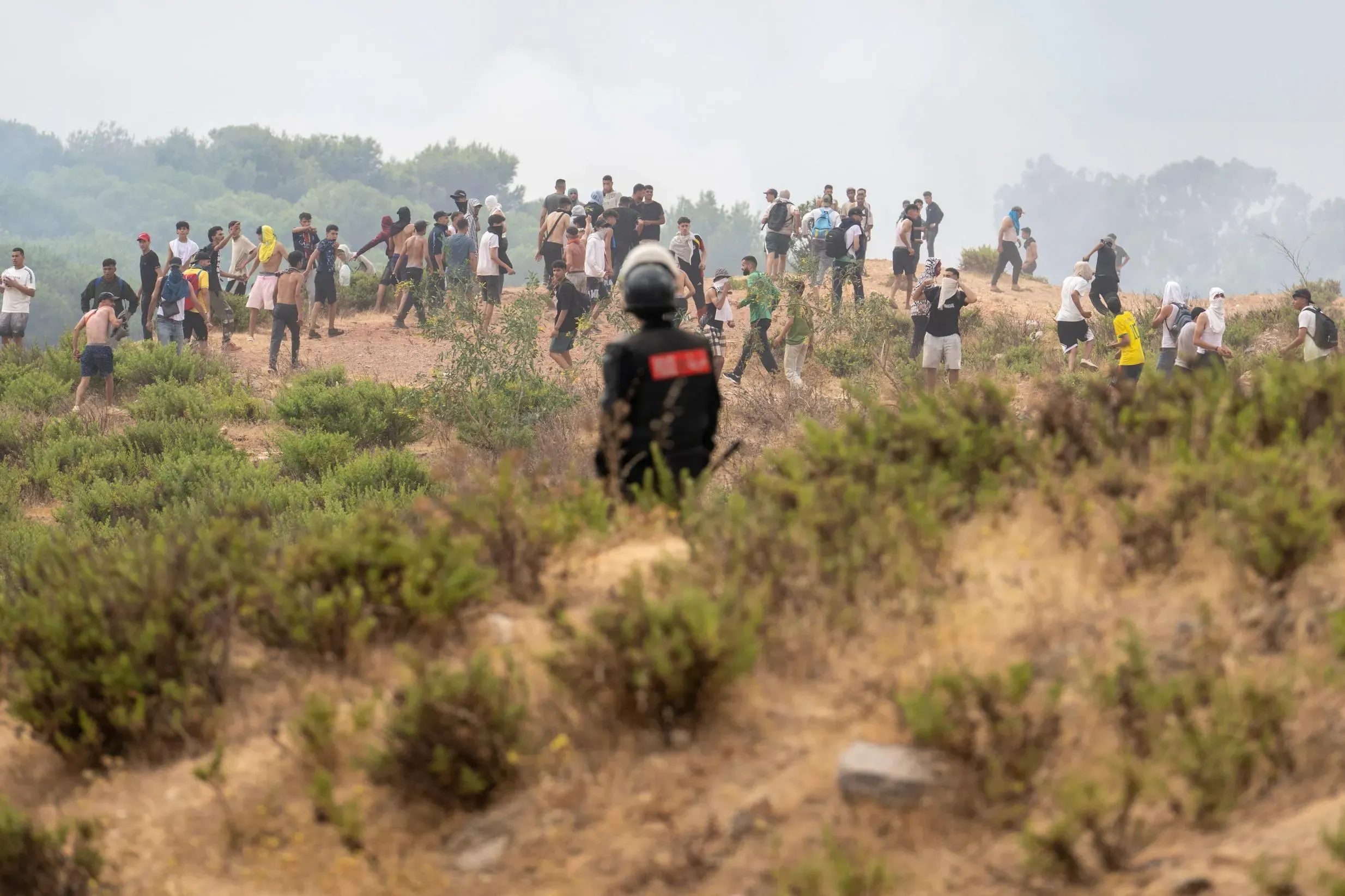

Severe Migrant Influx Causes Crisis in Ceuta
In a dramatic turn of events, at least 18 migrants have lost their lives while a staggering 60,000 others have crossed into the Spanish North African enclave of Ceuta from Morocco, as reported by local authorities on Friday. Juan Jesús Vivas, the president of Ceuta’s regional government, expressed grave concerns about the situation, labeling it "absolutely unsustainable," as the influx has now constituted over 70% of the enclave's population. This unprecedented migration wave has compelled the Spanish government to take military action in a bid to control the escalating crisis.
Despite Vivas’s calls for Spain to declare a national emergency and bolster police and military presence, the Interior Ministry denied the request, stating that a national emergency could not be declared solely on migration grounds. Prime Minister Pedro Sánchez characterized the situation as a breach of Spain’s territorial integrity and emphasized that the government is mobilizing necessary resources while coordinating with Moroccan and international authorities to address the crisis effectively.
Political Reactions and Historical Context
Eyewitness accounts and social media reports depict scenes of chaos as thousands of migrants surged into Ceuta, prompting Rachid Sbihi, head of the local border police association, to describe it as a "total collapse" of the border. The opposition leader, Alberto Núñez Feijóo, from the conservative People’s Party, described the situation as "desperate," insisting that the government must uphold its obligations in the face of a national security crisis.
Internationally, Italian Prime Minister Giorgia Meloni announced that her administration is prepared to implement extraordinary measures in response to the migrant influx, hinting at stricter border controls for Spain. The European People’s Party criticized Sánchez, accusing him of failing to secure Spain's external borders, thereby impacting the broader European landscape. Ceuta, a small Spanish city with roots dating back to the 16th century, remains a focal point for African migrants seeking access to Europe, alongside Melilla, another Spanish enclave in North Africa. The sudden surge of migrants is shrouded in uncertainty, although some attribute it to a policy change earlier this year that could grant legal status to approximately half a million undocumented immigrants in Spain.
Videos showcasing the large numbers of migrants crossing into Ceuta have gone viral, with right-wing commentators labeling the situation an "invasion." Notably, billionaire Elon Musk described the crisis as "absolutely an invasion" and highlighted the potential economic implications for Spain. Santiago Abascal, leader of the far-right Vox party, echoed similar sentiments, accusing Sánchez’s administration of corruption and irresponsibility. Looking back, Ceuta experienced a similar crisis in May 2021, when over 8,000 migrants entered the territory in just two days, leading to military deployment and strained relations with Morocco. As tensions continue to rise, the mood among Ceuta's residents is one of anxiety and uncertainty.
As reported by forbes.com.