
Calm Returns to Ceuta as Security Measures Prove Effective
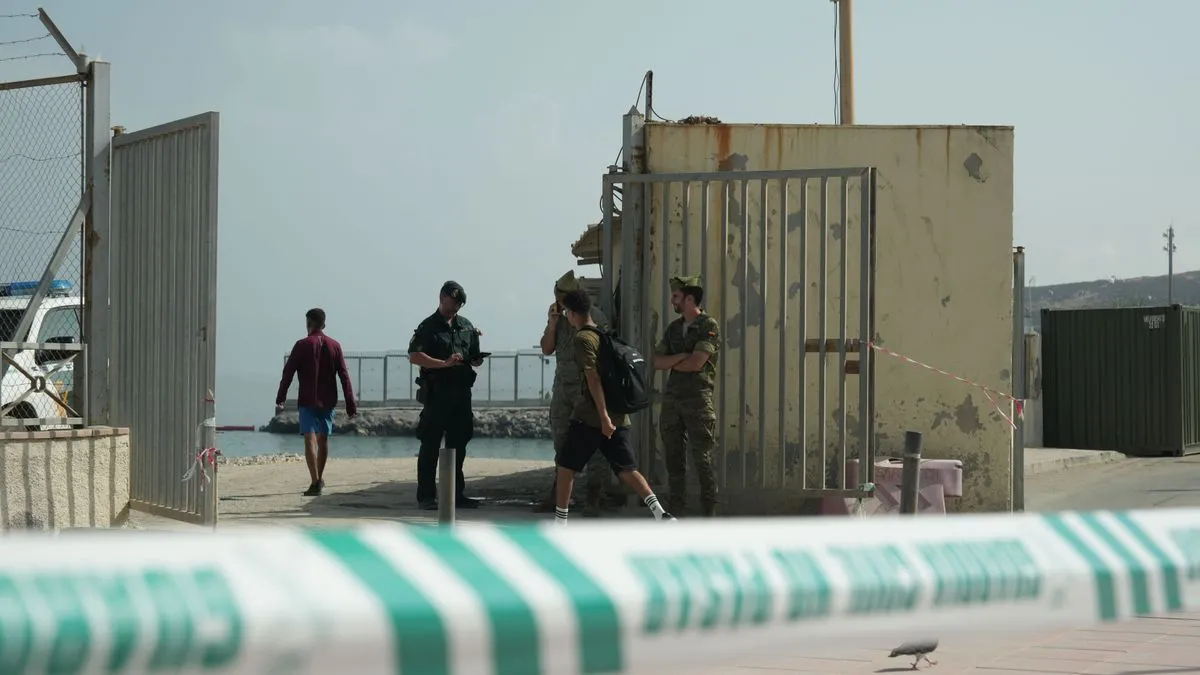
The Spanish enclave of Ceuta, located on the northern coast of Africa, has experienced a much-needed respite as fears of a new wave of migrants have failed to materialize. In the wake of significant social media calls for action, the anticipated influx did not occur over the weekend, allowing both local residents and authorities to breathe a sigh of relief. In response to previous crises, Spain and Morocco had ramped up their security measures considerably, deploying soldiers and police to patrol supermarkets and erecting barbed wire fences at the border crossing.
In late July, a staggering number of over 70,000 individuals attempted to cross the border from Morocco into Ceuta, with most returning shortly thereafter. Tragically, official reports from Madrid indicate that 83 bodies have been recovered from the sea, while NGOs estimate that the actual death toll may exceed one hundred. This weekend, approximately 300 migrants were intercepted by security forces near Fnideq, a border town roughly 20 kilometers away, but this number is considered typical in the ongoing situation. Reports from the Spanish news agency Efe revealed that Moroccan police used tear gas to disperse groups of migrants gathered in the hills about three kilometers from the border, while the border crossing itself remained relatively quiet.
Residents of Ceuta expressed their relief at the calm that descended upon the enclave. Spanish media outlets, including El Correo, reported that many locals felt a weight lifted from their shoulders, with one elderly resident stating on television, "We feel a stone has been lifted from our hearts. Many here were very afraid that chaos would repeat itself." Moroccan security forces were deployed in large numbers around Ceuta and the border with Melilla, another Spanish enclave, effectively preventing potential crossings well before reaching the actual border.
According to Moroccan security sources, 294 individuals were arrested, including 248 from sub-Saharan African countries and 46 Moroccans. Additionally, at least 61 others were detained on suspicions of promoting or inciting irregular migration through social media channels. The increase in security measures was designed to avert a repeat of the July events, with Spain's Interior Minister Fernando Grande-Marlaska reiterating that the mass arrival at that time was an "extraordinary" occurrence that would not happen again.
In Fnideq, Morocco has reportedly set up additional barriers made of barbed wire and natural wire, while patrol boats monitored the coastline, and water cannons were stationed at the border. Numerous checkpoints were also established on access roads to further bolster security. Spain has similarly heightened its security presence, deploying 880 National Police officers in Ceuta—270 more than were present at the end of July—supported by around 2,000 soldiers and over 700 officers from the militarized Guardia Civil police unit.
Interior Minister Grande-Marlaska noted that approximately 5,000 migrants currently remain in Ceuta, acknowledging that it will take some time for the enclave to return to a state of normalcy. The ongoing tensions in the Spanish enclave continue to be a topic of discussion, highlighting the complex dynamics at play in this region of North Africa.
As reported by spiegel.de.