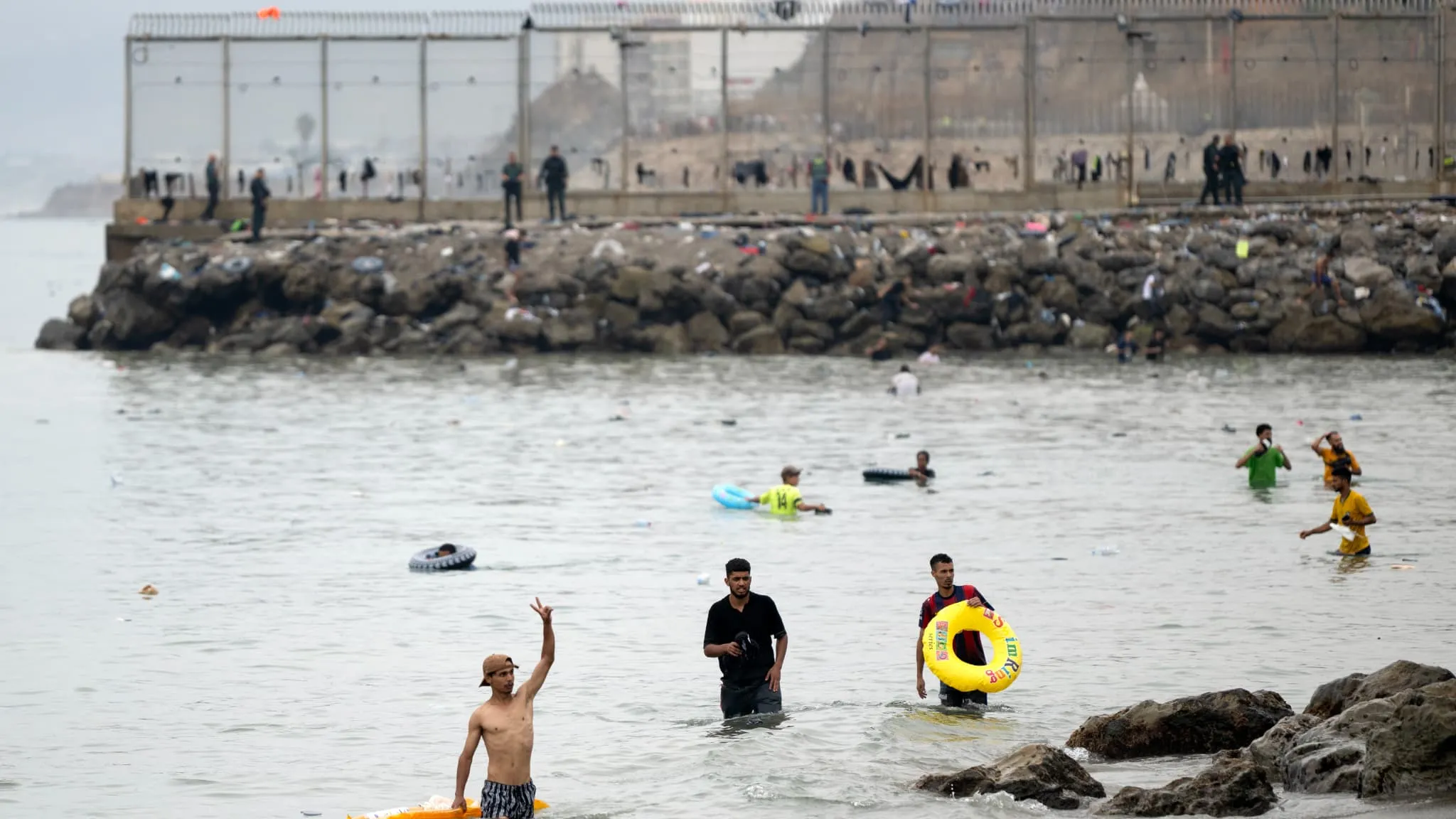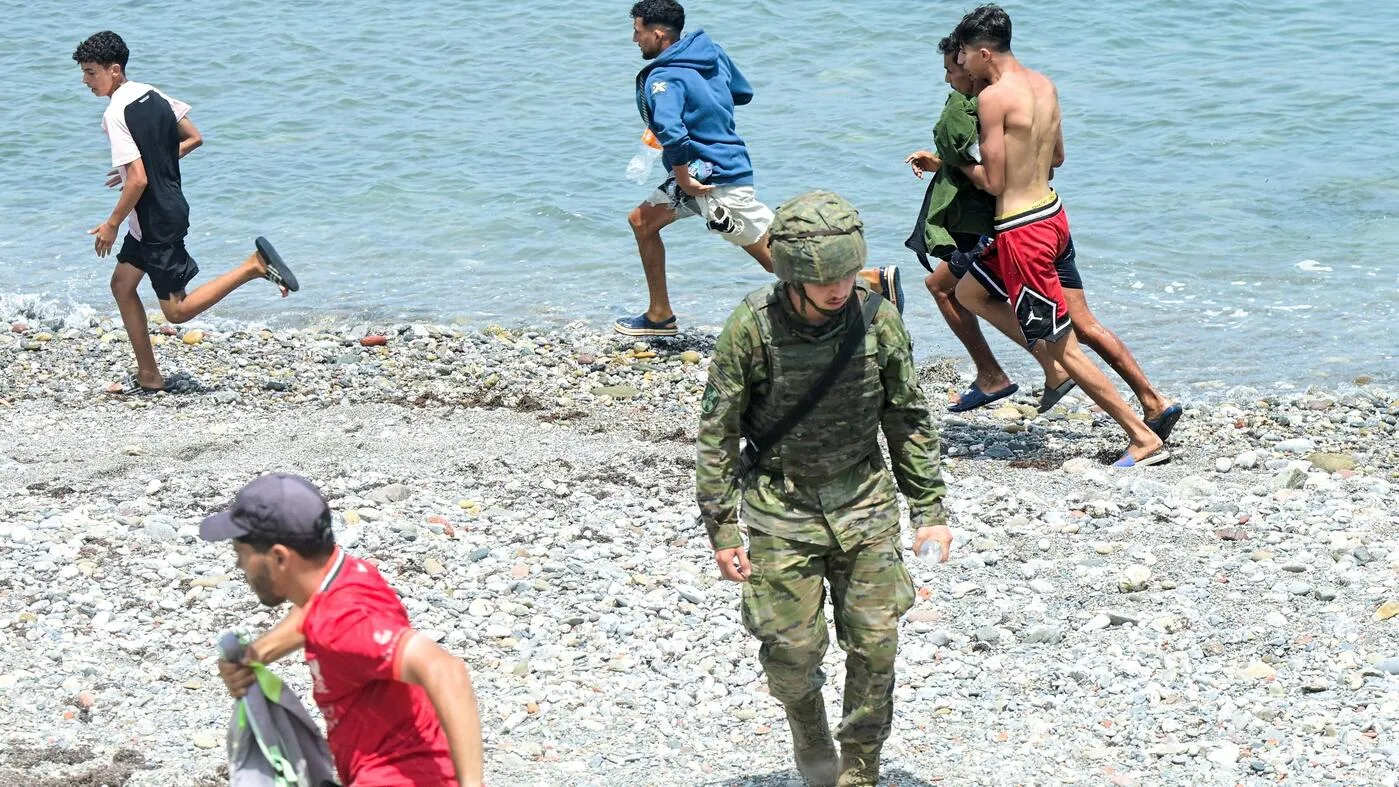

The recent surge in migrants arriving in Ceuta, a Spanish enclave in North Africa, has led to a diplomatic fallout, with many of the tens of thousands of individuals reportedly having returned to Morocco. This unprecedented influx has prompted several European heads of state and government to jointly express their concerns through an open letter directed at Spain. Among the signatories is German Chancellor Friedrich Merz, who, along with his counterparts, has voiced apprehension regarding the situation, insinuating that recent decisions by Madrid have sent unwanted signals that could exacerbate the crisis.
The letter criticizes the Spanish government's migration policy, particularly highlighting its recent initiative to legalize approximately 500,000 irregular migrants as a measure to combat labor shortages. The signatories argue that political measures should be taken to address potential incentives for migration, explicitly mentioning the legalization of a significant number of irregular migrants, which they believe could attract new arrivals rather than assist those already seeking asylum who applied before the end of 2025.
Furthermore, the correspondence connects the influx of migrants to a ruling by the Spanish Supreme Court, which has been interpreted as a misuse in the context of the ongoing crisis. According to the court's decision, immediate expulsion of migrants is permissible only if they have crossed a fence or other barrier during their irregular entry; those arriving via unfortified routes, such as the sea, require individual assessments.
The letter, addressed to EU Council President António Costa, European Commission President Ursula von der Leyen, and Irish Prime Minister Micheál Martin, has been initiated by Italy's Prime Minister Giorgia Meloni and Denmark's Prime Minister Mette Frederiksen, with a total of 22 European leaders signing it. Notably, Spain, Ireland, France, Luxembourg, and Portugal chose not to endorse the letter.
In light of these developments, the signatories are calling for an immediate and coordinated European response to the migration crisis. They assert that uncontrolled mass crossings and the instrumentalization of migration must not lead to the perception that illegal entry into the European Union is feasible. The letter urges the current EU Council presidency to convene an extraordinary videoconference of interior ministers to assess the situation and discuss additional support for Spain and measures to protect the EU's external borders. This request echoes earlier calls made by Spanish Prime Minister Pedro Sánchez.
In response to increasing criticism regarding Spain's handling of the migration crisis in Ceuta, Sánchez has also called for a digital special session of the interior ministers from all 27 EU member states. He criticized the prejudiced, misinformation-driven, and politically motivated attitudes that have emerged in reaction to Spain's policies, stating that such views violate European and humanitarian law principles and undermine Europe's long-term interests. He emphasized that the EU cannot afford a selfish and divisive response in the current international context.
The catalyst for this dispute was the arrival of around 60,000 migrants from Morocco into Ceuta since the beginning of the week, with reports indicating that at least 67 individuals tragically lost their lives during their attempt to reach the enclave. The Spanish government has since reported that nearly all of the newcomers have returned to Morocco.
Right-wing populist and conservative politicians from Europe and the United States have sharply criticized Spain for what they perceive as a lax migration policy. Italian Prime Minister Meloni reacted particularly strongly, describing the scenes from Ceuta as shocking and raising the possibility of suspending Schengen cooperation with Spain, which Italy has temporarily reinstated for both air and sea traffic. Italian Foreign Minister Antonio Tajani further emphasized that the images from Ceuta reflect a failure of Sánchez's migration policy, a sentiment echoed by leading politicians from Denmark, Sweden, Finland, the Czech Republic, and Austria, who also support calls to suspend the Schengen Agreement with Spain.
Madrid has dismissed threats from other countries regarding the potential exclusion of Spain from the Schengen Area as demagogic, asserting that such measures would not be feasible under current EU law. Spanish Foreign Minister José Manuel Albares reiterated that uncontrolled crossings from Ceuta to the Spanish mainland and the wider Schengen Area are not possible, as the regular free movement rules do not apply to Ceuta.
Sánchez characterized the events as an attack on Spain's territorial integrity, attributing the surge to rumors propagated by smuggling networks regarding an allegedly opened border. Almost all those who had arrived in Ceuta have reportedly returned to Morocco, as corroborated by independent media reports. The Spanish government has dispatched 60 soldiers and 200 specialized police forces to Ceuta, marking the first deployment of military support for border security since 2021.
As tensions rise, experts from EU member states are set to discuss the situation in a crisis meeting. EU Migration Commissioner Magnus Brunner confirmed that no individual has crossed into the EU mainland from Ceuta. The recent events have reignited political debates in Spain, with the socialist government facing accusations from right-wing parties attributing the escalation to Sánchez's policies.
The surge in migrant crossings is reminiscent of a similar situation in May 2021, when around 10,000 youths from Morocco and sub-Saharan countries reached Ceuta amid a diplomatic crisis between Spain and Morocco over Madrid's medical treatment of Brahim Ghali, the leader of the Polisario Front. Reports indicate that this latest wave of migration has been fueled by the perception of easier entry to Spain, prompting a significant presence of border police and security forces along the Moroccan coast.
Ceuta and Melilla represent the only land borders of the European Union with the African continent, and attempts by migrants to enter the EU through these cities are a recurring issue. In light of the current situation, it is essential for European leaders to find a balanced and humane approach to migration that respects both human rights and national security.
As reported by tagesspiegel.de.