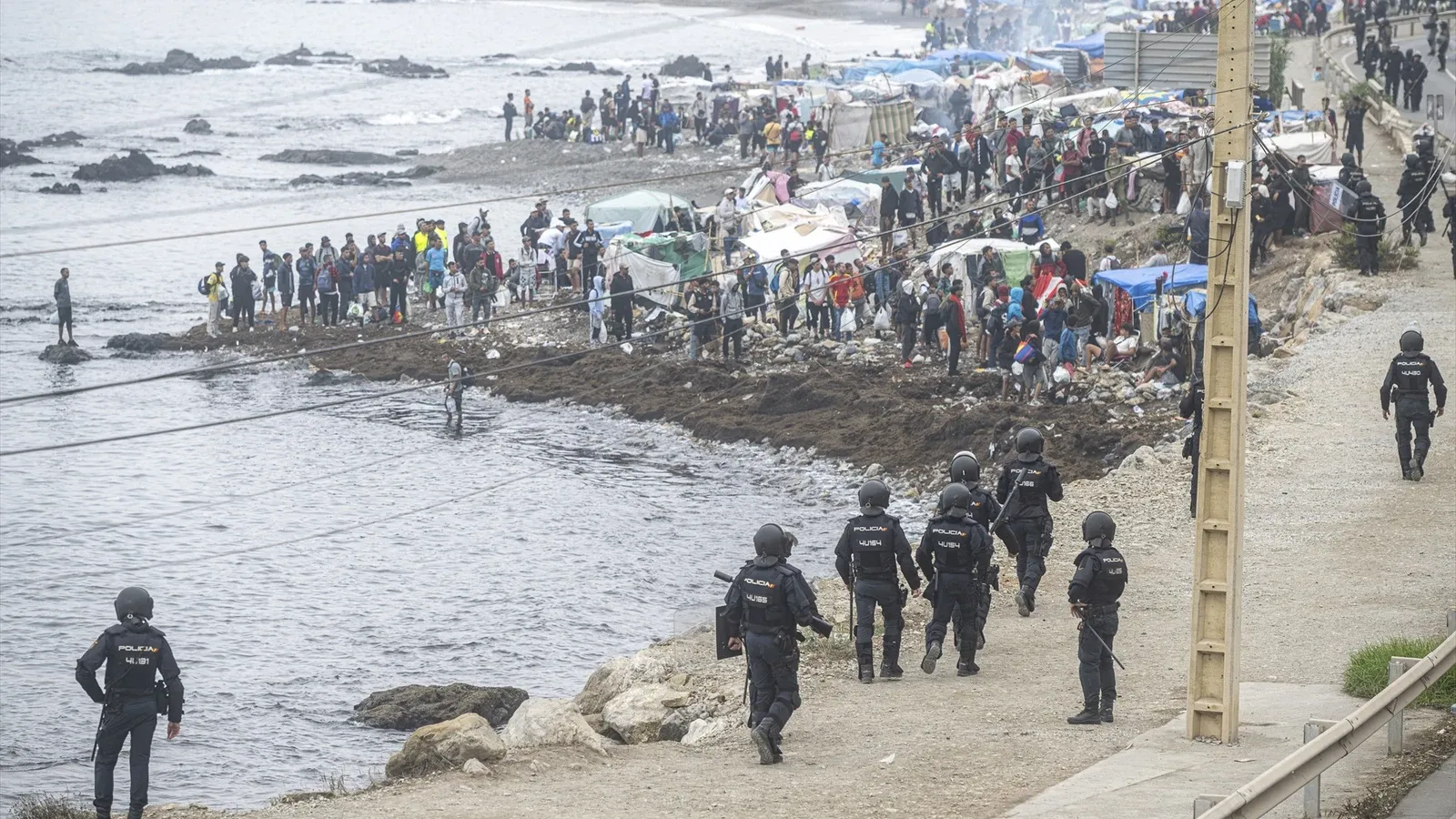

The ongoing migration crisis in Ceuta has seen significant developments as over 1,100 migrants have been successfully relocated from the Trampolín beach area to designated facilities. According to Ángel Víctor Torres, the coordinator of the Unified Command managing this crisis, the operation was executed without any incidents from early morning until sunset. The National Police escorted buses filled with migrants to the Tarajal border, where many chose to stay at the Temporary Attention Center for Foreigners (CATE) to register, while others opted for voluntary return to Morocco. The authorities have yet to release official figures detailing the exact number of migrants transferred or those who returned home.
In light of impending rainstorms and unsanitary conditions, this relocation effort was deemed necessary to ensure the safety and health of the migrants. The operation involved over 350 police officers and various resources, highlighting the collaborative effort among state security forces and the military. Torres expressed gratitude to all parties involved, including translators, reinforcing the commitment to restoring normalcy in Ceuta.
Following the evacuation of Benítez beach, it was reported that the majority of migrants preferred to return to Morocco rather than undergo registration, as per unofficial sources. The National Police explained that the transfer facilitated by the Ministry of Inclusion, Social Security, and Migration aimed to provide safe shelter during adverse weather conditions. However, specific details regarding the number of available places in the reception facilities, including the Loma Colmenar camp, remain unclear, although there may be between 300 and 400 spots following recent expansions.
The government is also working on establishing a new camp at Caballería, which is expected to be designated exclusively for women, although this has not been officially confirmed. Further plans include the construction of a camp near the Fuerte Mendizábal Penitentiary, yet no work has commenced in that area, and its capacity is still unknown.
The police operation, which began at 8:00 AM, was supported by multiple specialized units, including UIP, UPR, GAC, and others, with an extensive deployment of resources including armored vehicles designed for intervention. The Civil Guard contributed divers and boats in anticipation of potential escapes by swimmers, while local police managed traffic disruptions in the vicinity of the operation. Additionally, logistical resources and cleaning services were provided by the Autonomous City, underscoring the multifaceted approach to this ongoing crisis.
As reported by lasexta.com.