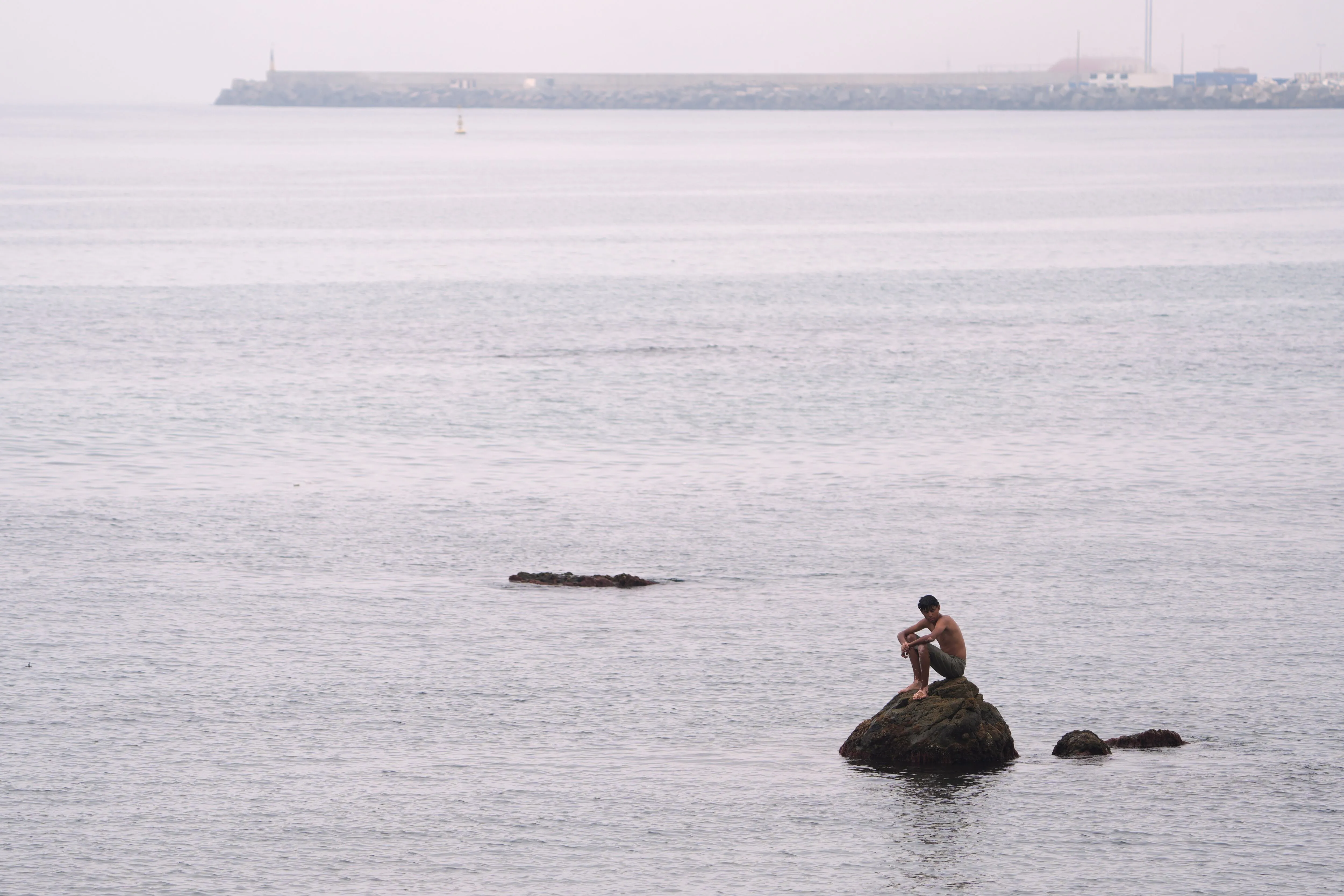
Crisis Escalates in Ceuta as Deaths Climb to 88
The ongoing migrant crisis affecting the Spanish enclave of Ceuta, located in North Africa, has reached a new and tragic chapter. Authorities have reported that the death toll has sadly increased to 88, coinciding with Spain's recent deployment of a floating maritime barrier aimed at preventing further irregular crossings from Morocco. This structure, which has been fully operational since its installation near Tarajal beach, was put in place following an unprecedented wave of over 50,000 migrants attempting to cross into Ceuta by land and sea since Thursday, marking the largest influx in the enclave's recent history and one of the most severe border crises Spain has encountered in years.
Spanish officials disclosed that over 48,000 individuals returned to Morocco within just 48 hours, and repatriations continued throughout the weekend. This crisis has not only led to humanitarian concerns but has also sparked political tensions on the other side of the border. While Spain has ramped up its control measures, the Moroccan government has refrained from publicly addressing the tragic events surrounding the deaths of more than 70 individuals, as well as the mass migration into Ceuta. Only a handful of media outlets and leftist parties have called for accountability from Rabat, reigniting discussions about the sovereignty of Ceuta and Melilla, two Spanish enclaves that Morocco has claimed for decades.
Ongoing Humanitarian Impact and Political Ramifications
Despite a reduction in the mass migration flow, normalcy has yet to return to Ceuta. Police and military forces remain deployed throughout the city, working to identify migrants still on the streets and initiating deportation procedures. Miguel Ángel Pérez, the Spanish government's representative in Ceuta, stated that in addition to the deceased, over 1,000 individuals have received medical assistance since the onset of this emergency. Though the situation has improved considerably, he acknowledged that further efforts are needed to fully restore the city’s usual functions.
The tragedy also placed immense pressure on local forensic services, with some bodies in the city morgue belonging to individuals who succumbed during this crisis, while others had died in previous attempts to reach Spanish territory through perilous nighttime swims. The regional government continues to work on the identification of these victims, with some remains surfacing more than two weeks after the surge in migration. The circumstances surrounding the deaths highlight the dangers of these treacherous crossings, where some migrants have drowned while attempting to reach the Spanish coast, while others have been crushed in their attempts to scale the breakwater and border fence. Many of these individuals were driven to emigrate due to economic hardships and were influenced by rumors circulating on social media.
On the Moroccan side, in the city of Castillejos, dozens of families remain anxiously clinging to the border fence, awaiting news of their missing relatives. Many display photographs on their mobile phones, hoping that someone returning from Ceuta might have seen their loved ones. Others are left searching through lists of the deceased and missing individuals. Among the heartbreaking testimonies is that of Karima Abenaz, a French citizen living in Ceuta with relatives in Morocco. She expressed her deep sorrow at the loss of young lives at sea, stating, "It is not fair that in 2026, women with infants as young as two months old must cross the sea only to die." Abdellatif, a 27-year-old agricultural worker, shared his fears of returning without his 17-year-old brother, who went missing during the perilous journey.
In light of the crisis's scale, Spain has intensified its border controls. Alongside the deployment of a 500-meter floating barrier, authorities have bolstered police and military patrols to deter further irregular entries. The situation has also reignited discussions about the protection of the European Union's external borders and managing migration flows effectively. The response to the crisis has extended beyond Spain's borders, with 22 EU member states sending a letter demanding coordinated action to strengthen border controls, while Italy temporarily suspended free movement within the Schengen area with Spain. The Spanish government has rejected claims attributing the massive arrival of migrants to its regularization policies of undocumented individuals, asserting that those entering Ceuta irregularly will not be able to travel to mainland Spain or the rest of the Schengen area.
As reported by lanacion.com.ar.