
Mass Influx of Migrants Triggers Government Response in Ceuta
The Spanish authorities have confirmed reports of a massive influx of migrants into the North African enclave of Ceuta, with over 1,500 individuals arriving within just a few days. This alarming situation has prompted local officials to call for a national state of emergency. Among those arriving are numerous minors and children, as reported by the state broadcaster RTVE. The regional government is urging the central government to declare a national emergency and deploy the Spanish military to the border with Morocco.
Prime Minister Pedro Sánchez indicated that "all measures are being taken to respond promptly to the situation in Ceuta,” though he did not provide specific details on the online platform X. The leader of the opposition, Alberto Nuñez Feijóo from the conservative People’s Party, described the circumstances as a "desperate situation" and criticized Sánchez for failing to acknowledge the impending national security crisis. He stated that the government must not "look the other way."
Government Stance on the Migrant Situation and Historical Context
Despite the rising tensions, the Interior Ministry has ruled out the possibility of declaring a state of emergency. According to existing civil protection regulations, migration movements do not fall under the risks addressed by the national civil protection system. Spain and Morocco have agreed to enhance their cooperation in managing migration flows and aim to swiftly return all individuals who have entered Ceuta illegally, as noted by ministry sources.
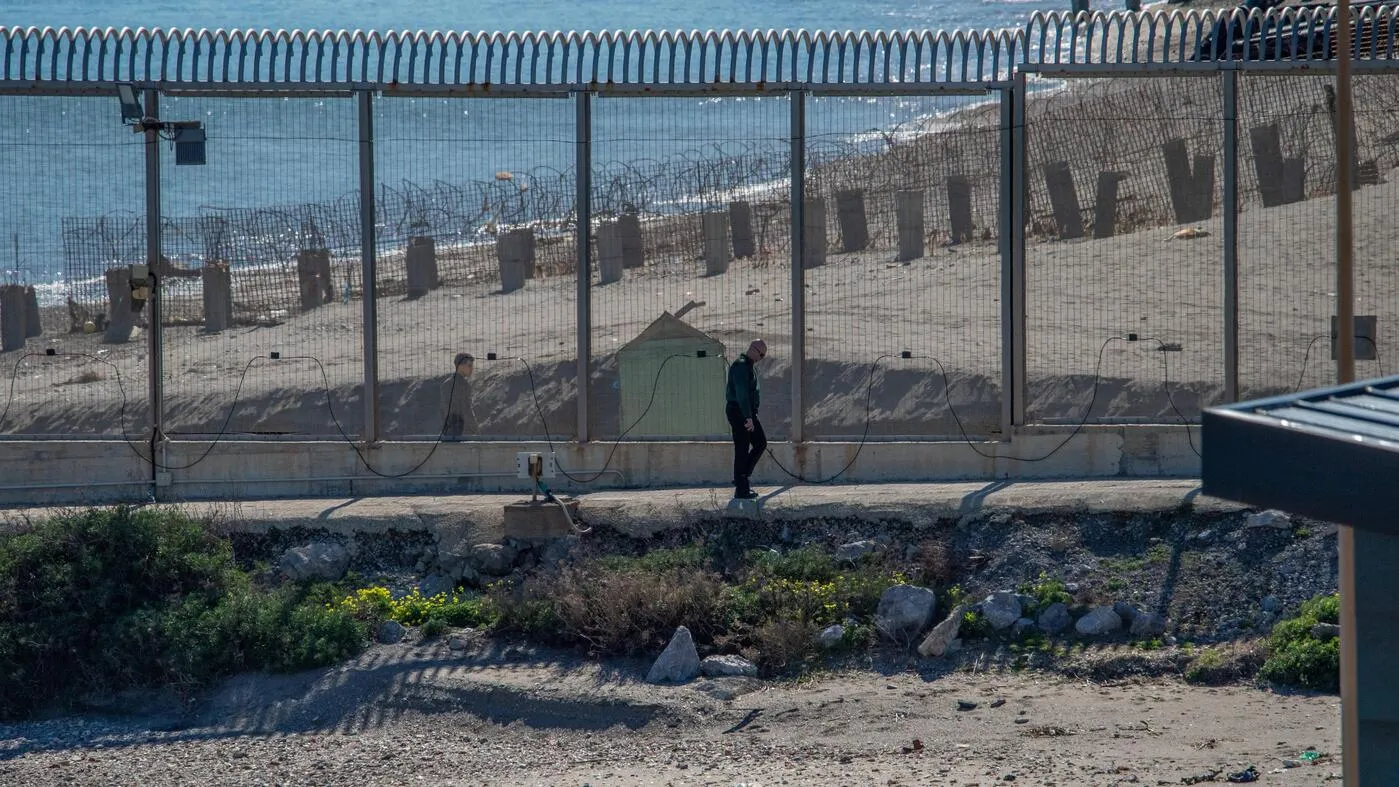
In recent days, many migrants have reportedly arrived in Ceuta predominantly by swimming. Just hours prior to this report, hundreds more reached the enclave, which has a population of only about 85,000. The regional president of Ceuta, Juan Jesús Vivas, stated that reception facilities are completely overwhelmed, forcing many migrants to sleep on the streets. Videos and photographs depict mostly young men, as well as families with women and children, navigating the rock formations that constitute the artificial barrier marking the border between Ceuta and Morocco. Celebratory shouts of "Viva España!" were heard as people ran through the streets, with various items used in their crossing, including swimming rings and wetsuits, littering the beaches.
However, not everyone attempting to reach the EU succeeds. The Spanish police unit, Guardia Civil, reported discovering the bodies of two individuals presumed to have drowned while attempting to swim to Ceuta in a single day. Vivas revealed that in the past twelve months, approximately 60 bodies of presumed migrants have been recovered.
This situation recalls events from five years ago when more than 8,000 people surged into the enclave from Morocco within just 36 hours, leading to accusations from Madrid against Rabat for "blackmail". It was believed that border controls were relaxed or suspended to pressure Madrid amid the ongoing dispute over Western Sahara. The conflict surrounding this former Spanish colony, largely controlled by Morocco and claimed by the Polisario independence movement, intensified after Spain admitted the Polisario leader for humanitarian reasons in 2021, which provoked a strong backlash from Rabat.
Relations only began to ease in 2022 after Sánchez referred to Morocco's autonomy proposal for Western Sahara as "the most serious" foundation for a resolution. Since then, Madrid and Rabat have been working closely again on migration and security issues.
Some media outlets are now speculating about a possible connection with Sánchez's recent trip to Algeria. Morocco and Algeria have been at odds over the Western Sahara issue for years, leading some to believe that Rabat may have relaxed its police controls at the Ceuta border to send a political message to Madrid. However, there is currently no evidence to support this theory.
Despite gaining independence from France and Spain in 1956, Morocco still holds two Spanish enclaves: Ceuta at the Strait of Gibraltar and Melilla, located 250 kilometers to the east. Both territories are claimed by Morocco, and near these areas, thousands of Africans, primarily from sub-Saharan countries, often wait for an opportunity to enter EU territory. It is not uncommon for several hundred individuals to attempt to surprise border officials all at once.
As reported by tagesspiegel.de.