
Ceuta's Humanitarian and Institutional Collapse
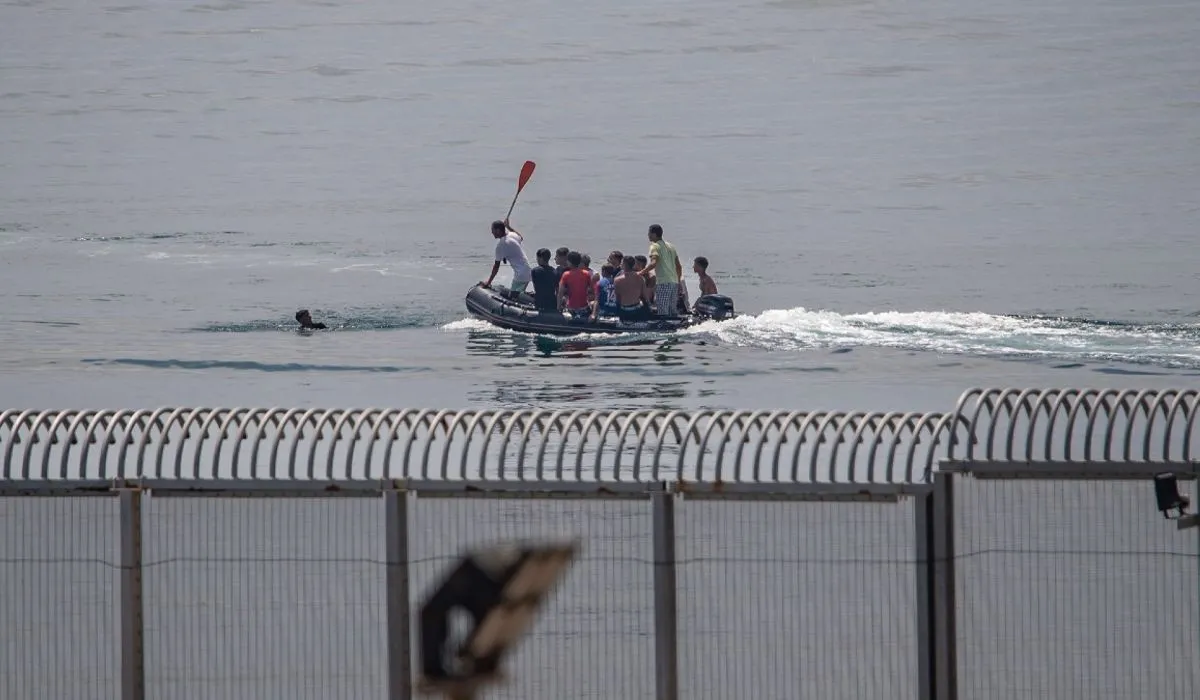
On July 29, 2026, Ceuta finds itself grappling with a profound humanitarian and institutional crisis as an overwhelming influx of migrants has been reported. According to on-site agents at the border, what they have described as a "genuine madness" unfolded during the early hours of the morning, with a continuous and massive arrival of migrants swimming from the Moroccan coast. A thick fog significantly hampered visibility in the Strait's waters, allowing hundreds of individuals to embark on perilous journeys across the sea, ultimately overwhelming the available police and rescue resources in this autonomous city.
The situation appears to be spiraling out of control, with security forces feeling an alarming sense of helplessness in the face of this unprecedented phenomenon. By 10 PM the previous night, approximately two hundred individuals had already been intercepted. However, the true peak of tension was reached in the early morning hours when Moroccan Royal Navy rescued around 300 migrants in its territorial waters, while the Spanish Civil Guard managed to assist another hundred on the other side of the maritime border. It is estimated that over fifty migrants have successfully reached the beaches of Ceuta without being detected by patrol boats or surveillance systems.
Chaos on the Streets and Overwhelmed Police Stations
The impact of these irregular entries is glaringly evident in broad daylight. The streets of Ceuta have turned into a direct reflection of the border pressure, with dozens of disoriented young migrants wandering through neighborhoods such as Recinto, Sarchal, and the foothills of Mount Hacho. Some flee at the sight of police, while others roam aimlessly, unsure of their whereabouts within the city. Many still wear soaked wetsuits or simple swimsuits, clutching diving fins in their hands. This alarming trend has even reached the town's central area, where just before 7 AM, two young women dressed in thermal clothing were seen reaching the well-known roundabout of Poblado Marinero, underscoring a growing phenomenon where more women are taking the enormous risk of this treacherous crossing.
In response to the surge in arrivals, the National Police Headquarters is currently experiencing a total breakdown. The facility is overwhelmed with a massive number of individuals both inside and in the surrounding areas. By 9 AM, police were already processing the identification of over 120 individuals. In a striking turn of events, local citizens have often taken it upon themselves to guide migrants towards police facilities when encountering them on the streets.
In the sea, the night has left behind a ghostly trail of abandoned floats and air chambers, highlighting the immense dangers faced by hundreds of individuals. To respond effectively to this emergency, all available security resources have been activated. The Civil Guard has maintained a permanent deployment involving the Maritime Service, Special Underwater Activities Groups (GEAS), Citizen Security Units (USECIC), and land patrols, all under the continuous supervision of the Operational Services Center (COS) and with vital support from the Atria rescue vessel.
Nevertheless, despite this coordination, resources remain insufficient. Radio communications from the Civil Guard have revealed the stark operational reality: a total lack of patrols available to respond to multiple citizen alerts. Border agents have acknowledged their physical exhaustion and caution that covering the entire coastline is, under these circumstances, materially impossible. The Spanish Civil Guards Association (AEGC) has been unequivocal in analyzing the gravity of the moment, indicating that the current scenario is far more delicate than traditional attempts to scale the perimeter fence. They warn that if this trend continues, the situation could resemble the historic border crisis experienced in May 2021 within a matter of days.
Both law enforcement and local authorities agree on a clear diagnosis: this is not an ordinary summer episode. Unlike previous summers, where arrivals followed a cyclic and somewhat predictable pattern, the current flows are constant, unpredictable, and daily. The call effect has prompted hundreds of young individuals from various geographical points in Morocco and Algeria to concentrate in the neighboring town of Castillejos (Fnideq), waiting for the opportune moment to venture into the sea.
As reported by vozpopuli.com.