
The autonomous city of Ceuta is currently experiencing one of the most critical junctures in its recent history. Following an unprecedented episode of migratory pressure, where it is estimated that between 70,000 and 80,000 individuals crossed the border from Morocco within just 48 hours, this Spanish enclave is now tasked with the complex process of restoring its normalcy. Although the initial massive influx has subsided, and the majority of migrants have returned to Moroccan territory, the humanitarian, social, and health repercussions continue to keep the city on edge.
Understanding the Migratory Crisis: Factors and Consequences
To grasp the scale of this unparalleled crisis, several key factors must be considered. Social media played a pivotal role in spreading viral calls based on false promises of open passage, while the stability of the border remains directly tied to the vigilance exercised by Rabat. Additionally, Ceuta's geographical isolation acts as a bottleneck, wherein newcomers cannot travel freely to the mainland, creating a profound sense of confinement. With a population of only approximately 83,000 inhabitants, the sudden influx of individuals has completely overwhelmed the city’s capacity to absorb and assist them.
At present, the atmosphere in the Tarajal and Benzú breakwaters is described as one of 'fragile calm.' The State Security Forces have significantly reinforced their presence, currently deploying 880 national police and 714 civil guards, supported preventively by elements of the Army, totaling nearly 1,600 personnel. This reinforcement also includes 45 officers from the Prevention and Reaction Unit and 20 officials from the Central Brigade of Foreigners and Borders, all aimed at enhancing public safety and expediting immigration and international protection procedures.
The Interior Ministry has not set a specific date for the withdrawal of these reinforcements. On August 13, Minister Fernando Grande-Marlaska assured that the government would continue to deploy the necessary personnel to ensure Ceuta’s swift return to normalcy and prevent new episodes of mass entry. Thus, the reinforcements' duration hinges on the evolution of the border situation and operational needs.
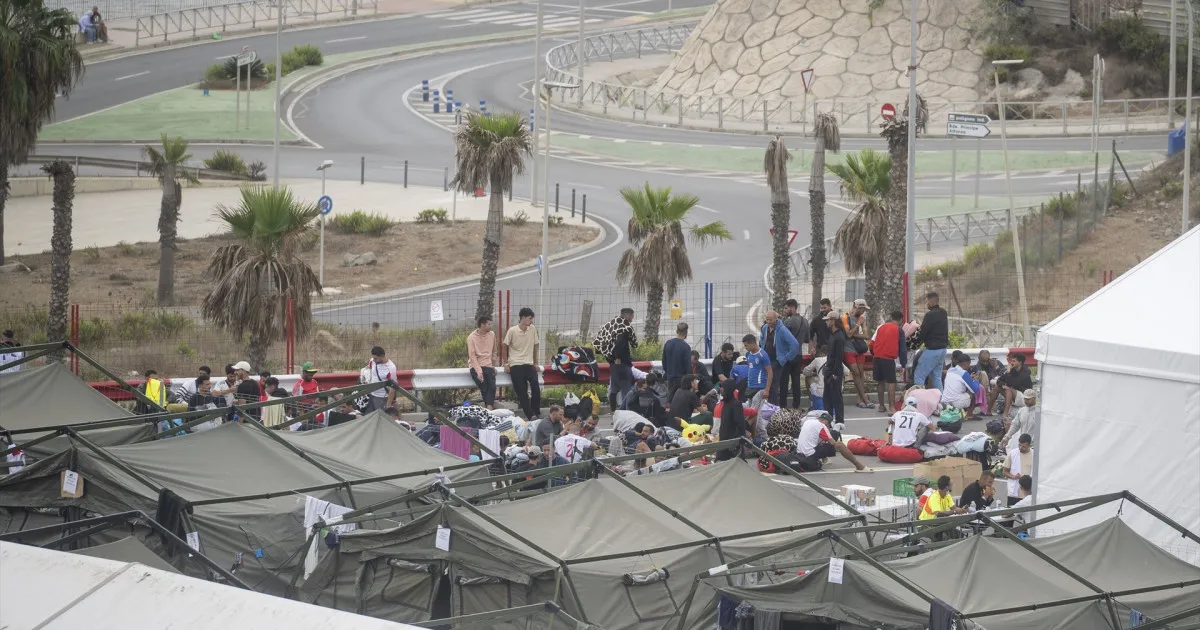
To alleviate the saturation, the central government has begun to establish 1,500 new temporary accommodation spots in locations such as the Loma Colmenar parking lot, the equestrian center, and the El Guano area. Meanwhile, the Moroccan Royal Gendarmerie has maintained a robust security presence at access points from Castillejos (Fnideq), attempting to disperse groups still lingering in the area, hoping to swim across.
The Human Side of the Migration Crisis
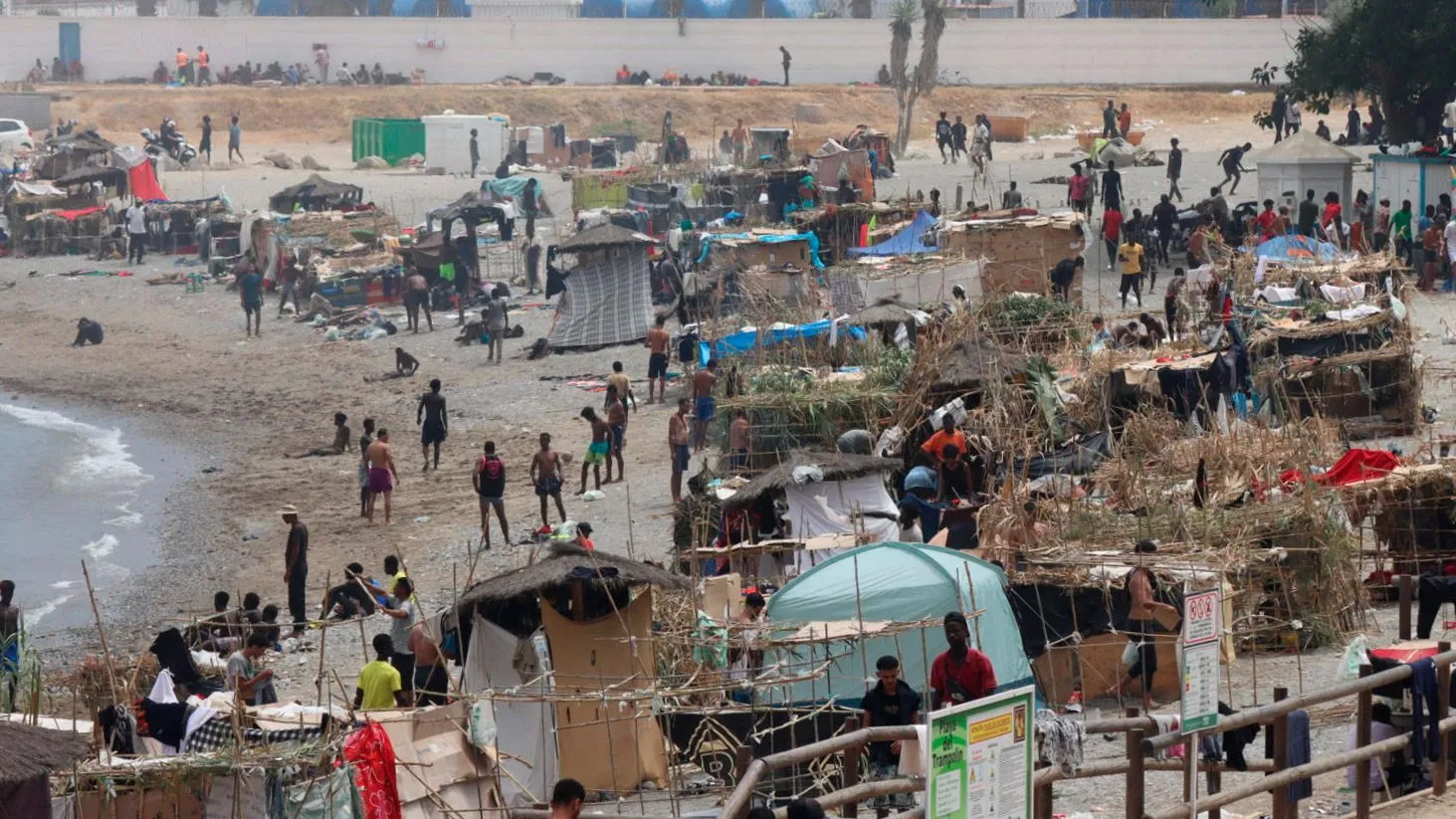
Behind the statistics lies a heart-wrenching human drama. Hundreds of individuals, including young Moroccans and sub-Saharan migrants, are sleeping outdoors on breakwaters, public squares, or in port warehouses due to the total collapse of the Temporary Immigrant Stay Center (CETI). Many crossed driven by false news promising an 'open border,' only to find themselves in a state of disorientation and physical exhaustion, with some suffering from injuries incurred during their swim across the water.
The organization Caminando Fronteras estimates that 141 individuals have lost their lives due to drowning or crushing during attempts to enter since late July, a figure that underscores the perilous nature of the route. The Ombudsman has initiated actions in response to complaints regarding the lack of potable water, clean clothing, and minimum hygiene conditions for those still trapped in the city.
Spanish authorities have implemented floating barriers and pneumatic nets at the breakwaters to hinder maritime passage. However, the rapid spread of calls for action online necessitates extraordinary preventive measures by both countries. As long as economic expulsion factors persist in Morocco, the pressure on the border will remain a constant threat.
The healthcare impact of this crisis is a subject of intense controversy. The Medical Union has reported a collapse in emergency services at the University Hospital due to over a thousand cases of hypothermia and trauma. However, the Ministry of Health disputes this claim, asserting that the system has coped thanks to reinforcements from the Red Cross and the Military Emergency Unit (UME). Official data indicates that approximately 5,800 medical interventions have been carried out over the past two weeks. Currently, the most significant risk is not hospital-related but rather epidemiological, stemming from the overcrowding of individuals lacking adequate accommodation and living in extreme conditions. Both the Medical Union and the Ministry of Health agree on the urgency of the epidemiological risk presented by the current situation.
The fate of unaccompanied minors is another critical aspect of the crisis. Approximately 1,900 minors remain in custody in Ceuta, with some institutional figures varying between 1,300 and 1,898, indicating a staggering 2,000% overcapacity in the protection system. The law prohibits their immediate return without a process that guarantees the child's best interests and safe family reunification. The proposed solution is to transfer them to the mainland, but the process is stalled due to political tensions over the distribution of quotas and budgets among autonomous communities. While regions like Navarra and Catalonia have shown willingness to collaborate, others such as Madrid and Galicia express reservations due to their lack of capacity. In light of this deadlock, the Attorney General has warned that intervention will be necessary to ensure that these children's protection is not hampered by institutional conflicts.
The crisis in Ceuta is far from resolved. The immediate challenge is threefold: to manage the vulnerability of those still in the city, to ensure that respect for human rights guides every step of the state response, and to provide security to the residents of Ceuta as they work towards a return to normality.
As reported by rtve.es.