
Political Reactions to the Migration Crisis
The political landscape surrounding the migration crisis in Ceuta has been tense, with various parties calling for increased measures to address the situation. Jaime de los Santos, the Deputy Secretary for Education and Equality of the People's Party (PP), has expressed concerns regarding the current deployment of resources in light of potential new mass entry attempts from Morocco. He emphasized the need for a unified command to streamline the response, questioning the information available to the government prior to the crisis that unfolded in late July. Meanwhile, Antonio Maíllo from United Left (IU) has accused the Moroccan government of instigating the border crisis, suggesting that such a large-scale mobilization could not occur without prior knowledge from Moroccan intelligence services. Despite his criticisms of Rabat, Maíllo has insisted on the importance of respecting human rights and conducting individual return procedures for migrants.
Current Situation and Humanitarian Response
As the situation evolves, various government agencies are actively addressing the needs of migrants in Ceuta. The Minister of Equality, Ana Redondo, has assured the public that migrant minors are being cared for in safe environments, denying reports of young girls wandering the streets. The government has activated specific resources for their protection, including a 24-hour crisis center in Ceuta, and is coordinating efforts with local authorities to ensure their safety. In terms of health care, data from Ingesa indicates a slight decrease in medical assistance provided to migrants, falling from 275 to 268 cases over a recent 24-hour period. The hospital in Ceuta has expanded its capacity from 175 to 212 beds to accommodate the influx, while still catering to the ordinary health needs of the local population.
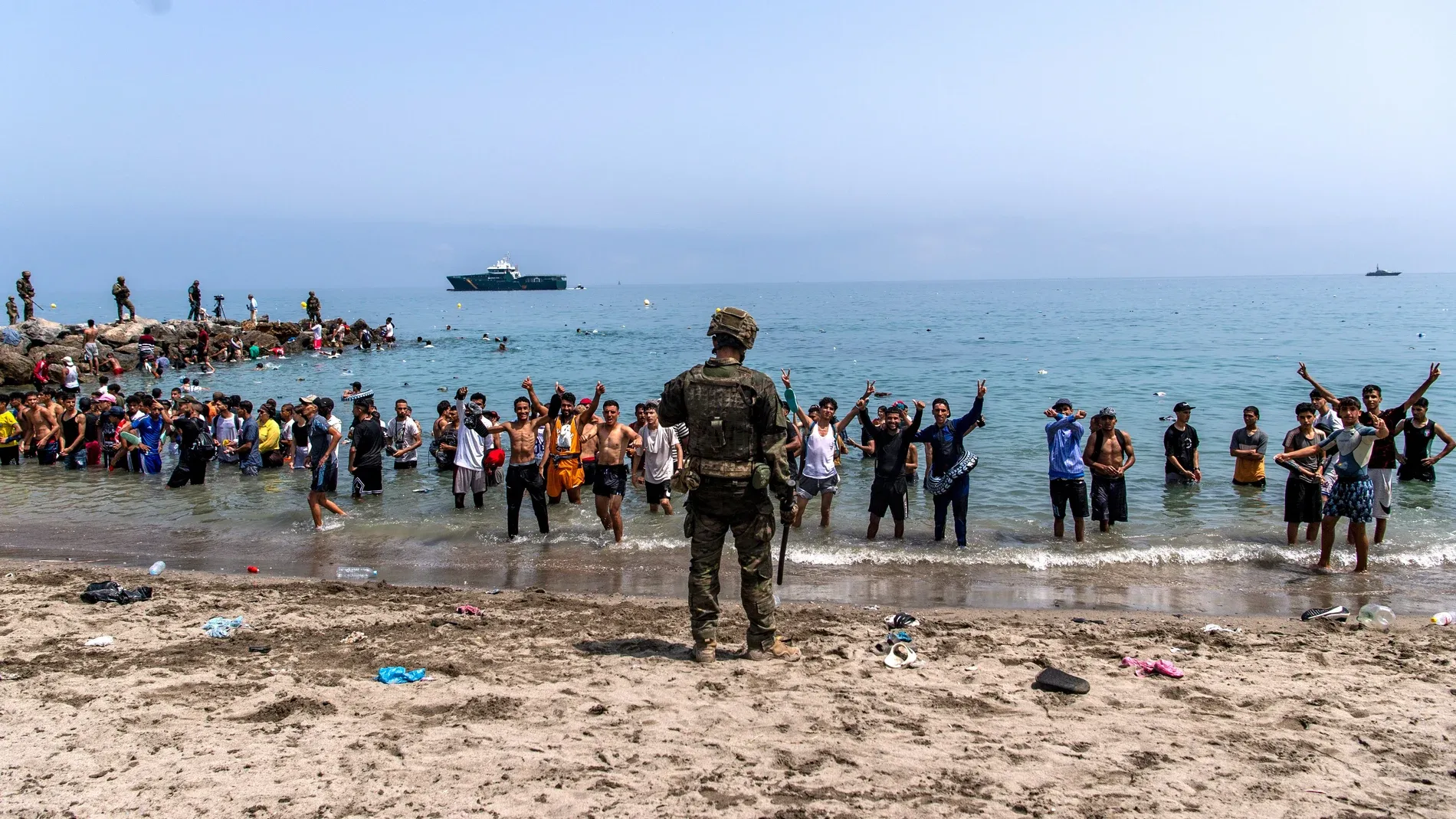
Amidst these developments, Ceuta's President, Juan Jesús Vivas, has called for a legal framework to enable quicker responses to irregular mass entries, highlighting the inadequacy of existing mechanisms. He estimates that approximately 9,000 migrants currently remain in the autonomous city, expressing frustration over the ongoing crisis. On the ground, grassroots initiatives have emerged, with around 150 Sudanese migrants organizing efforts to clean the beach at Trampolín, where about 1,500 migrants are currently residing. The improvised settlement continues to grow, with makeshift shelters constructed from various materials to provide some semblance of refuge.
In addition to local efforts, organizations like the Red Cross are maintaining support in the Trampolín settlement, providing basic needs such as food and health care while police patrol the area to ensure safety. The Moroccan authorities have ramped up security measures, establishing checkpoints along roads leading to the border and deploying additional resources along the coastline to prevent further attempts at crossing. The situation remains fluid, with ongoing concerns regarding the humanitarian implications of the crisis as both governments navigate this complex and challenging landscape.
As reported by larazon.es.