
Spain Enhances Security in Ceuta Amid Rising Migration Threats
In a decisive response to escalating concerns over potential mass migration, Spain has significantly strengthened its police and military presence in the North African exclave of Ceuta. This move comes in the wake of social media calls for renewed attempts to breach the border from Morocco. As of Friday evening, Spanish soldiers donning combat uniforms were stationed in front of supermarkets and public buildings, while police vehicles intensified their patrols along the main thoroughfares of the territory.
The situation in Ceuta has reached a critical point; at the end of July, over 70,000 individuals attempted to cross the border from Morocco into the Spanish enclave, tragically resulting in nearly 100 fatalities. In light of these events, the Spanish government has implemented various measures to fortify the border, including the construction of a maritime barrier and the deployment of more than 500 additional police officers from the mainland. The Minister of the Interior, Fernando Grande-Marlaska, assured reporters that these forces would remain in place as long as necessary to restore normalcy and prevent a repeat of the chaotic events experienced in late July.
Combating Misinformation and Enhanced Border Security
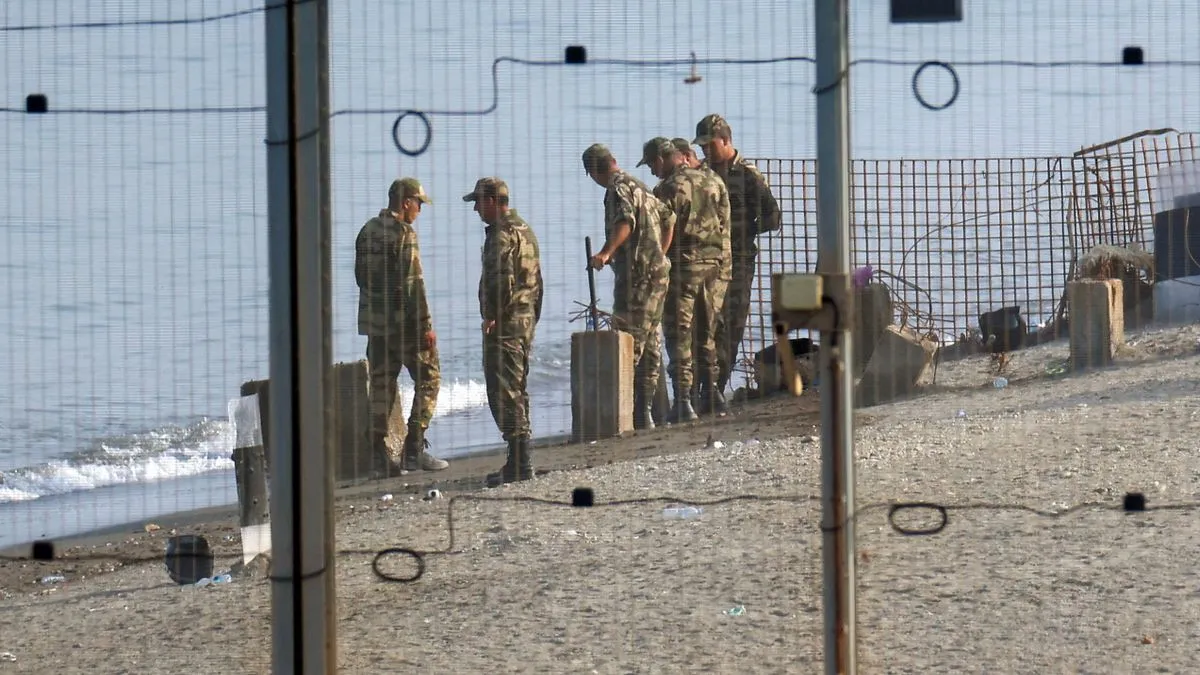
As the situation develops, authorities have reported that approximately 5,000 migrants currently remain in Ceuta, with efforts underway to assess their legal status. Those without the right to stay will be repatriated to Morocco, while many migrants have already returned voluntarily following the earlier mass influx. Meanwhile, on the Moroccan side of the border, an increased presence of heavily armed security forces is evident, particularly at the beach in Fnideq, which has been identified as a launching point for those attempting to reach Ceuta.
The Moroccan government has issued a warning regarding the dissemination of misleading information on social media, which it believes may have incited the recent surge in migration attempts. They have vowed to take legal action against those responsible for organizing or participating in such events. Furthermore, the crisis has sparked tension within the European Union, with calls for more stringent measures against smuggling networks and a more coherent repatriation policy being discussed among EU interior ministers during a recent video conference.
The EU has also pledged financial assistance to Spain to bolster the protection of its external borders in Ceuta. As the situation continues to evolve, with platforms like Meta and TikTok committing to fact-checking content related to border crossings, it is clear that misinformation and human trafficking remain significant challenges in addressing the ongoing migration crisis.
As reported by spiegel.de.