Protests and Humanitarian Challenges in Ceuta
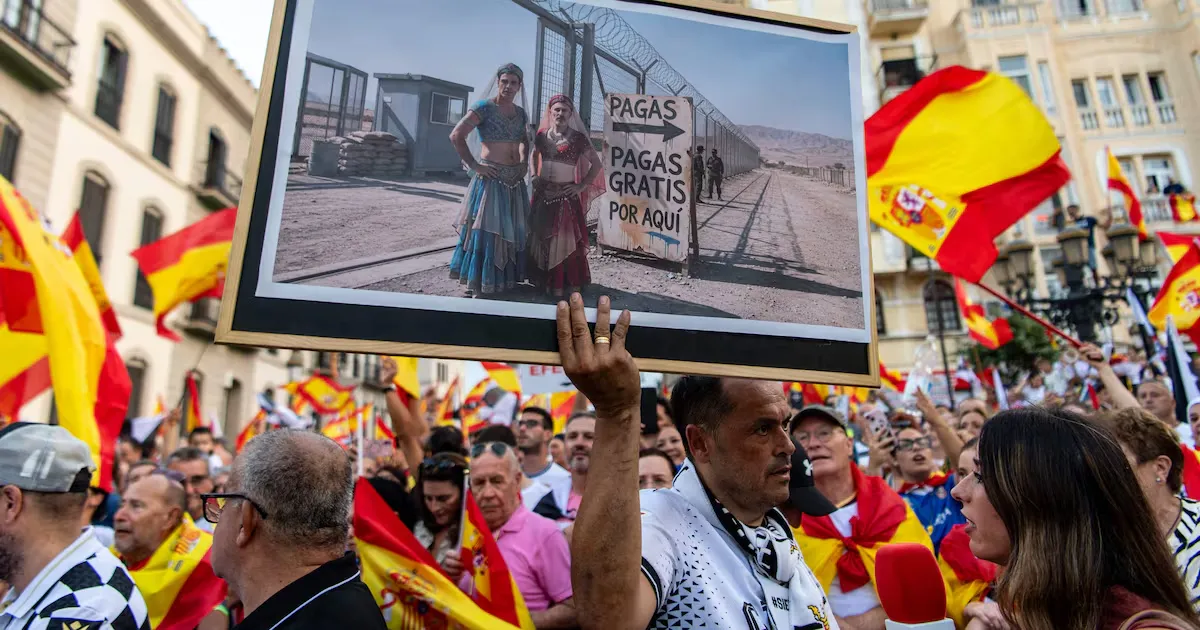
In Ceuta, tensions have flared as protestors have taken drastic actions by setting fire to makeshift shelters utilized by individuals who have remained in the Spanish enclave following a mass crossing event that occurred at the end of July. Reports indicate that on August 27, two shacks were tragically burned on Trampolín beach while the Spanish Red Cross, a member of the European Council on Refugees and Exiles (ECRE), was engaged in distributing food to those temporarily residing in these shelters. The protestors, expressing their discontent, blocked access roads to impede the humanitarian organization's vehicles from delivering much-needed aid, all while chanting derogatory slogans such as "The Red Cross is a mafia!". In response to these alarming developments, Red Acoge, another ECRE member organization, released a statement on August 29 urging the public to recognize that violence is never an acceptable solution. They emphasized the necessity for institutional responses to mitigate violence and to uphold the rights of migrants.
Government Initiatives and EU Support
In light of these turbulent events, the Spanish government has reached out to the European Commission, seeking assistance to effectively manage the ongoing situation in Ceuta. On August 28, Interior Minister Fernando Grande-Marlaska formally requested that various EU agencies, including the European Border and Coast Guard Agency (Frontex), the EU Agency for Law Enforcement Cooperation (Europol), and the EU Agency for Asylum (EUAA), enhance their support mechanisms to address the challenges faced by migrants in Ceuta. This initiative includes a request for the extension of Operation Minerva and the deployment of additional agents specifically for triage operations. Grande-Marlaska highlighted the critical need for cooperation between Europol and Spanish Security Forces to investigate migrant smuggling networks and improve operational synergies. This request was a direct response to an earlier letter from Beate Gminder, head of the EC’s Directorate-General for Migration and Home Affairs, who had offered assistance from various EU agencies.
Moreover, the Spanish government has also announced plans to introduce a draft law aimed at amending the country's immigration and asylum regulations. As articulated in a press release on August 25, the proposed reforms are intended to align Spain's legal framework with the European Pact on Migration and Asylum. Minister Grande-Marlaska asserted that the objective of this reform is to create a more dynamic, effective, and rights-oriented protection system that adequately addresses the contemporary realities of migration while ensuring that the rights of applicants and beneficiaries remain protected. The government has notably emphasized its commitment to safeguarding vulnerable populations, including minors and the preservation of family unity.
On another front, the EU is reportedly preparing to bolster its support to Morocco concerning border control measures. According to Euronews, a strategic partnership agreement with Morocco is expected to be finalized by the end of the year, marking a significant advancement in ongoing negotiations that had previously stalled. Although EU officials have clarified that the recent crisis in Ceuta did not directly accelerate the agreement's progress, it has prompted an increase in resources allocated for security and migration management. Additionally, in correspondence with Prime Minister Pedro Sánchez, EC President Ursula Von der Leyen suggested enhancing technical and financial support for Morocco to improve border management and early-warning systems.
Compounding these issues, a leaked report from Spain's national police has alleged that Moroccan authorities played a role in facilitating the recent mass crossing into Ceuta. This report, which was disclosed by the Español newspaper, indicated that Moroccan agents were involved in both the planning and execution of the crossing. Notably, Prime Minister Sánchez previously stated that there was no corroborative evidence from security forces regarding Moroccan involvement, although he has since faced scrutiny for comments linking the incident to international influences.
As reported by ecre.org.