
Tragic Toll of the Ceuta Crisis
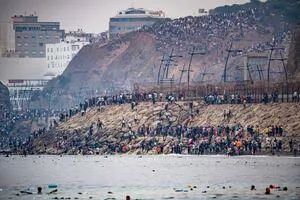
Ceuta has increasingly become a dark focal point in the ongoing border crisis, with human rights organizations from both Morocco and Europe estimating that at least 141 individuals have lost their lives during the recent mass surge towards the Spanish exclave. This figure significantly surpasses the numbers acknowledged by authorities in Madrid, Rabat, or local officials, highlighting a disturbing gap between official statements, media reports, and independent investigations that continue to unfold. According to government sources, tens of thousands have reached Ceuta, yet reports indicate that between 1,000 and 2,000 individuals remain stranded there, most of whom are minors, without reliable access to water, food, or safe sleeping arrangements. This situation has escalated into a humanitarian emergency that starkly contrasts with the political narratives being presented.
In parallel, Morocco is adopting a stringent law-and-order approach to handle the influx of migrants. Recently, seven taxi drivers were sentenced to prison terms and substantial fines for allegedly transporting individuals to the border, an action that their union has condemned as an absurd punishment for providing a basic service. Furthermore, 111 individuals are currently in investigative custody facing charges including mass rebellion and assaults on officials, signaling a shift in the narrative surrounding migration toward a broader discourse on isolation, diffused responsibility, and the bitter irony of European border policies.
Discrepancies in Casualty Figures
According to human rights organizations, the death toll among those attempting to reach Ceuta is far greater than the official figures suggest. The Moroccan organization AMDH, along with a coalition of Moroccan groups based in Europe, reported at least 141 fatalities. Achraf Mimoun, a representative from AMDH, mentioned during a press conference in Rabat that this number is likely to rise, emphasizing that definitive figures cannot yet be confirmed. The Spanish government claims that approximately 72,000 individuals reached Ceuta last week, either by land or swimming, with their accounts citing around 80 deaths. In contrast, Moroccan authorities reported 11 fatalities within their territory, while the exclave's government leader, Juan Jesús Vivas, mentioned around 100 deaths. This discrepancy extends to the number of people currently in Ceuta, with estimates ranging between 1,000 and 2,000, predominantly consisting of children and youths, who face severe shortages of essential resources.
In Morocco, the legal repercussions for those aiding migrants have been severe. The taxi drivers received sentences of up to six months in prison and fines amounting to approximately 930 euros, as outlined in the verdict released by the Justice Ministry. One vehicle was also confiscated. The local taxi drivers' union has described these sentences as shocking and harsh, especially since there were no official restrictions on passenger transport at the time. Union secretary Ali Younes expressed to the AP that the drivers should not be held accountable for the events that transpired, stating that they were merely providing a public service.
The Moroccan human rights organization reported on Friday that following the events in Ceuta, 111 individuals are currently detained, facing charges that include mass rebellion, assault on public officials, and disruption of public order.
As reported by zeit.de.