
Ceuta's Leadership Accuses Morocco of Orchestrating Border Crisis
The ongoing crisis in Ceuta, a small Spanish enclave located in North Africa, has garnered significant attention, leading to accusations against Morocco for allegedly facilitating the recent mass border crossings. Juan Jesús Vivas, the long-serving leader of Ceuta, characterized the surge of migrants last week as a direct assault on Spain's territorial integrity, suggesting that the events were not merely coincidental but were, if not orchestrated, at least encouraged or permitted by Moroccan authorities. The Spanish interior ministry reported that approximately 48,300 out of the nearly 50,000 individuals who arrived at the border were swiftly returned to Morocco, overwhelming the city's limited resources and triggering a political crisis across the European Union, as member states debated the implications of this influx.
Vivas expressed deep concern over the situation, referring to it as an "atrocity" and highlighting the tragic loss of life with 88 bodies currently in the morgue. This sense of despair was palpable among the local population as they witnessed what they perceived to be an attack on their homeland. Vivas articulated the sentiment of the residents, stating that many viewed this incident not merely as a migration crisis but as a violation of Spain's sovereignty. He drew parallels to a similar incident in May 2021, when Morocco relaxed border controls, allowing a significant number of migrants to enter Ceuta during a diplomatic dispute with Spain over the treatment of a Western Sahara independence leader.
The allegations of Moroccan involvement have been echoed by preliminary assessments from Spanish intelligence, which suggested that, while the influx may not have been directly coordinated by Moroccan officials, there was a failure to control the border effectively. Reports indicated that misinformation circulating on social media, particularly following a Spanish Supreme Court ruling regarding deportations, may have incited the sudden rush of migrants. This misinformation led to a significant reduction in border enforcement by Moroccan authorities, enabling thousands to cross over into Ceuta.
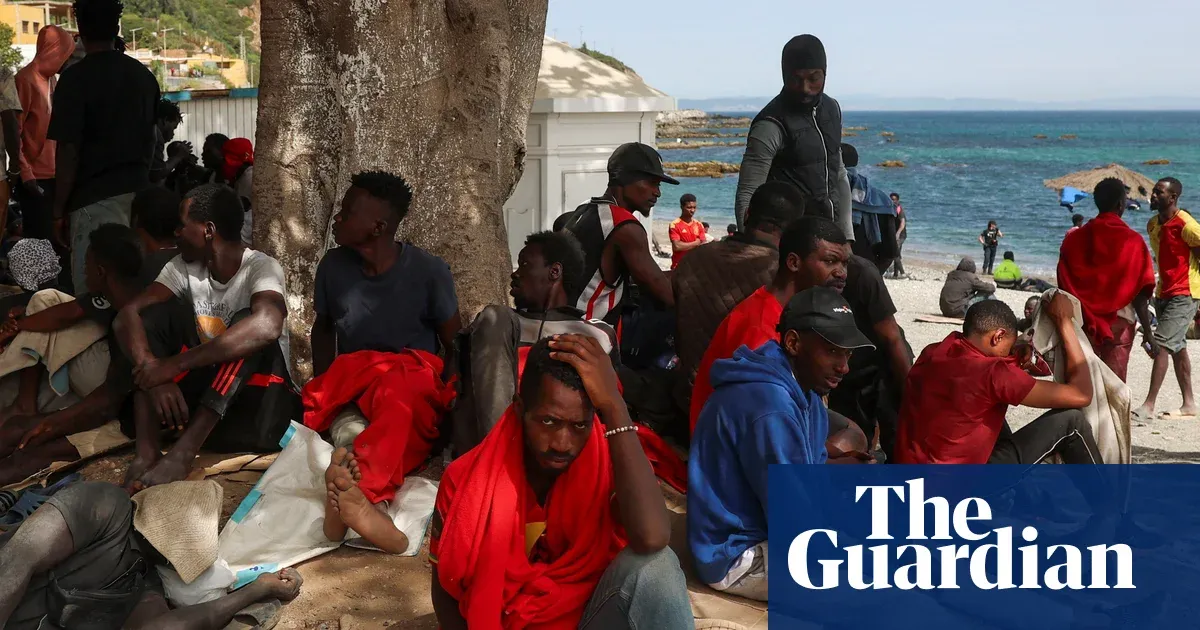
As the crisis continues, many individuals who crossed into Ceuta are now facing dire conditions, with reports of people sleeping rough near beaches and mosques. One Moroccan national, Ashraf, shared his harrowing experience of crossing the border, stating that he ignored his mother's warnings after seeing online posts claiming that the border was open. Despite reaching Ceuta, he found himself in a desperate situation, struggling to secure food and shelter while grappling with the traumatic memories of his journey.
As reported by theguardian.com.