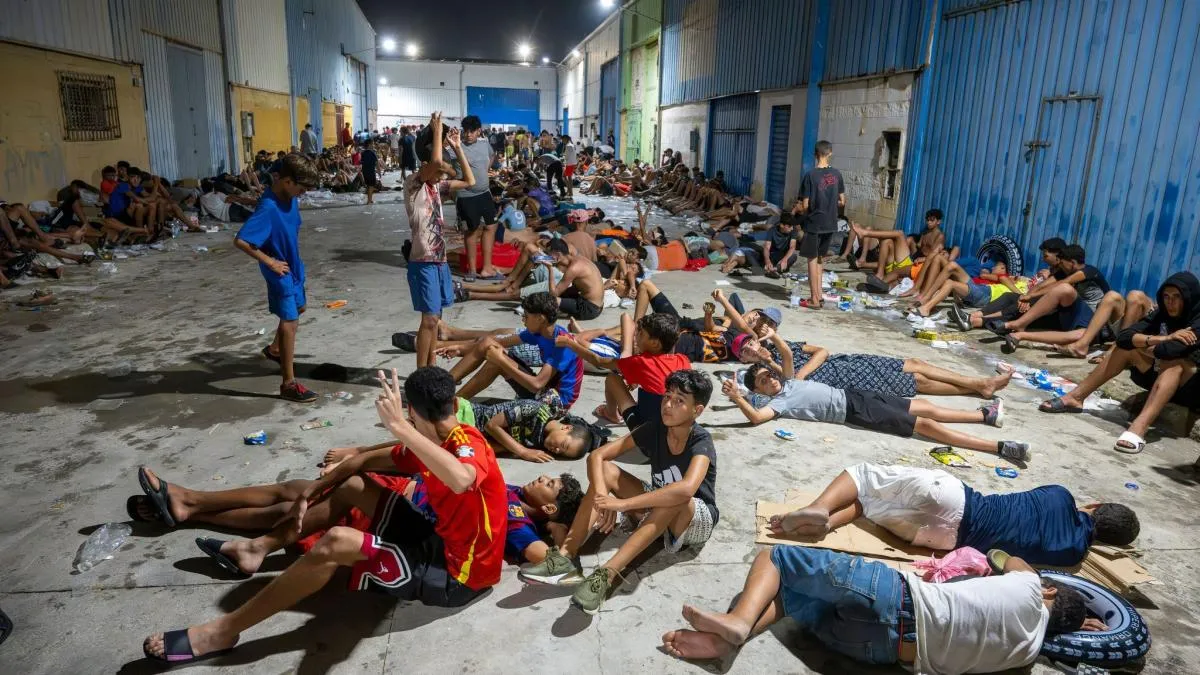

The picturesque beach of El Trampolín, located in the Spanish exclave of Ceuta in North Africa, has become an unexpected temporary settlement for many migrants. Tents are pitched between the rocks while others have constructed makeshift shelters using tarps and wooden planks. Nearly two weeks after a significant surge of migrants overwhelmed the borders, thousands are still living in Ceuta without stable housing—either on the beaches, in the streets, or in improvised camps. Current estimates suggest that between 8,000 and 11,000 migrants are residing in a city of just 84,000 inhabitants, highlighting the scale of the crisis.
Mayor of Ceuta Advocates for a Dedicated Detention Center
Juan Jesús Vivas, the conservative mayor of Ceuta, has expressed his discontent with the ongoing situation. Following discussions with Spain's Minister for Territorial Policy, Ángel Víctor Torres, Vivas has urged the Madrid government to establish a large, closed detention and deportation center for irregular migrants as soon as possible. This facility would serve to house migrants who would not be allowed to leave until their repatriation decisions are made. According to Vivas, the current conditions are "absolutely intolerable and unacceptable," noting that while around 70,000 migrants who arrived in Ceuta by the end of July have since returned to Morocco, thousands still find themselves without a roof over their heads. He contends that such a detention center would facilitate better management of the situation and ensure that migrants receive basic necessities like shelter and food.
Although Ceuta already has a state-run reception center for migrants, it is currently overwhelmed, housing approximately 800 individuals in a facility designed for just over 500. Importantly, this center is not a prison; residents are free to leave the premises. Vivas advocates for a different model: a closed detention facility specifically for those facing deportation. Such centers already exist on the Spanish mainland and the Canary Islands, where detainees can be held under judicial orders. Additionally, Vivas has called for more police and immigration officials to expedite asylum and deportation processes, and he insists that the military personnel stationed in the city since the onset of the crisis remain in place.
In response to the mayor's demand for a detention center, the Madrid government has taken a cautious stance, focusing initially on addressing the circumstances of unaccompanied minors, of which around 1,300 are now officially registered. Authorities are assessing whether these minors can be safely returned to their families in Morocco. Meanwhile, Spain's Foreign Minister, José Manuel Albares, has announced a firm approach, stating, "Every individual who has entered Spain illegally will be returned to Morocco." This declaration underscores Spain's commitment to handling the migrant influx decisively.
The EU's Stricter Asylum Regulations and Future Concerns
Ceuta's situation aligns with a broader European trend towards stricter policies regarding deportations. In early June, EU member states and the European Parliament reached a preliminary agreement on a new return regulation aimed at accelerating deportations and permitting extended detention under specific circumstances. Notably, this regulation paves the way for the establishment of so-called "Return Hubs"—deportation centers located outside the European Union.
As Ceuta grapples with the repercussions of the border surge from late July, concerns are mounting regarding a potential new wave of migrants anticipated on August 15. Social media platforms in Morocco are buzzing with calls for another mass attempt to breach the border on that date. In response, Spain has begun enhancing the technical security of its border installations, and soldiers and border police in Ceuta have been prohibited from taking leave.
As reported by augsburger-allgemeine.de.