
Unpacking the Causes Behind Ceuta's Migrant Influx
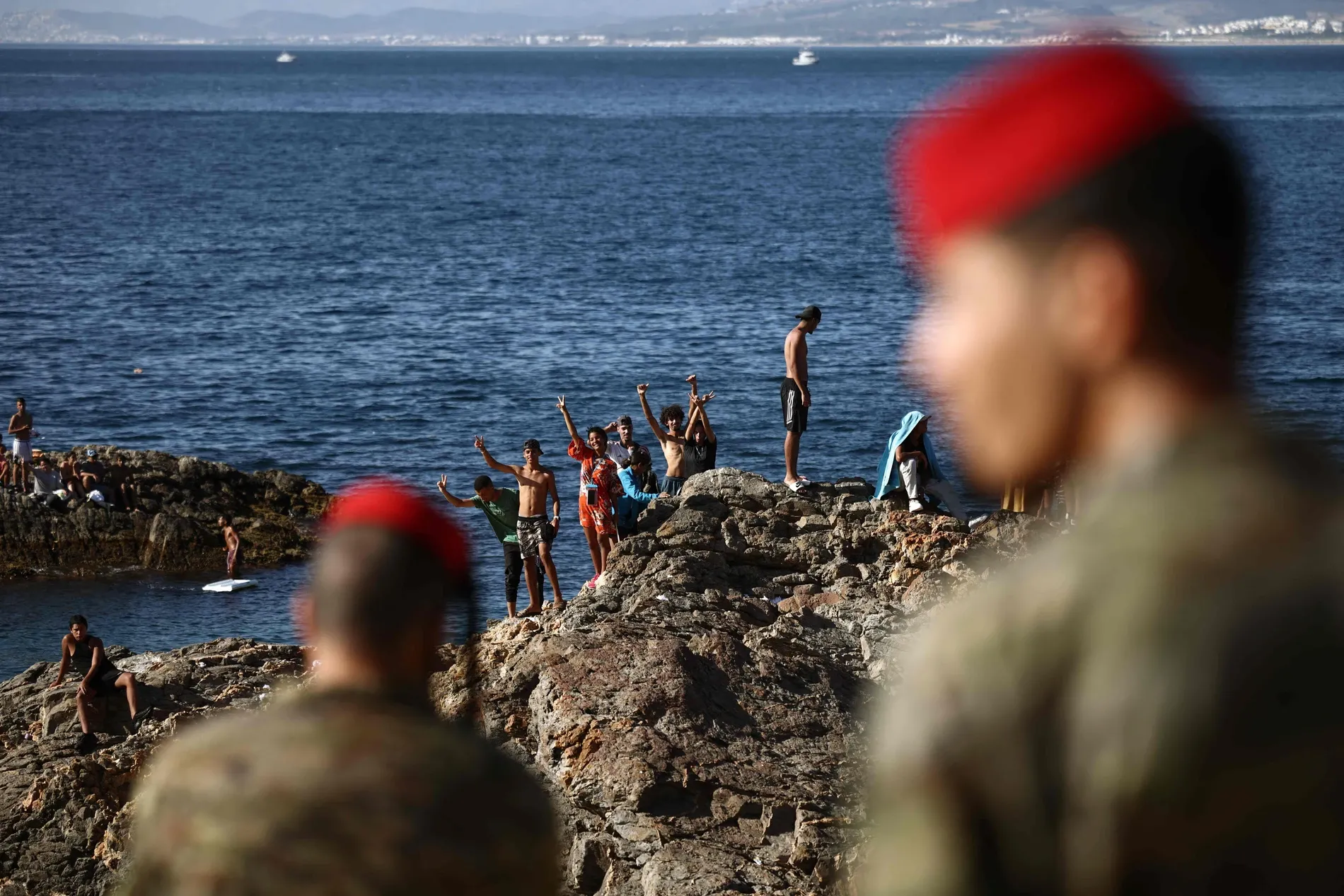
The recent surge of migrants into Ceuta has been a subject of intense discussion and speculation, particularly among its Spanish residents. Many locals attribute the responsibility for this influx primarily to Morocco, the United States, and Israel, while a closer examination reveals that social media rumors may have played a pivotal role. Despite the passage of over a week since the surge began, speculation continues unabated. When residents of Ceuta are asked who is to blame for the unprecedented arrival of migrants, the answer almost invariably points to Morocco. A video that circulated widely in Spain purportedly shows a Moroccan police officer assisting dozens of men from the back of a large truck, though the timing and location of the footage remain unclear.
However, the blame does not stop at Morocco. Some locals assert that the North African country is acting in alignment with the wishes of the United States. This narrative is echoed by the leftist party Izquierda Unida, which is part of the Sumar coalition that supports Prime Minister Pedro Sánchez. They contend that Morocco is not only complicit but also a loyal ally of the U.S. and Israel. The conspiracy theorists suggest that the deaths and distressing images emerging from Ceuta serve as a means for Donald Trump and Benjamin Netanyahu to 'punish' Sánchez for his refusal to meet NATO's military spending target of five percent and for rejecting the conflicts in Gaza and Iran.
The Role of Social Media in the Migrant Crisis
In the days leading up to and following the migrant surge, misinformation on social media platforms played a crucial role in shaping public perception and triggering action. Reports of a wave of refugees began to circulate, and as this wave became unstoppable, Moroccan security forces initially adopted a passive stance. Young Moroccans predominantly rely on social media for information, where news spreads like wildfire. Last autumn, for instance, an anonymous protest collective on the gaming platform Discord orchestrated the largest demonstrations since the Arab Spring. This time, the media coverage of a significant ruling by Spain's Supreme Court—stating that migrants who swim to Ceuta cannot be immediately deported—ignited further interest.
On platforms like Facebook, Instagram, and various WhatsApp groups, this news quickly morphed into claims of asylum eligibility in Spain, complete with practical tips for making the journey. Criminal smugglers played a minimal role in this situation; the focus was instead on providing plastic bags for mobile phones and flotation devices. Following the failures of the migrants attempting to swim to safety, the same networks that initially encouraged flight began to feature photos of the missing, desperate pleas for help, and tributes for those who perished. Since Moroccan networks announced a new wave of attempts to cross into Ceuta on August 15, these platforms have been under close scrutiny by the EU.
A spokesperson for the European Commission emphasized the heightened state of alert, stating, "We remain on high alert before, during, and after August 15." They also alluded to another foreign player in this situation: Russia, which is reportedly disseminating disinformation about Ceuta. The ongoing migration crisis has been labeled a new testament to the EU's vulnerabilities. Amidst the turmoil, residents of Ceuta are still grappling with a state of emergency, referring to the situation as an 'invasion' while simultaneously criticizing right-wing populists who exploit their plight. According to the Spanish government, around 50,000 individuals have entered the enclave since Thursday morning, many of whom arrived by swimming, possibly triggered by the Supreme Court's ruling.
False rumors on platforms like TikTok and others have catalyzed the surge into Ceuta, revealing the extent to which Europe's migration and asylum system has become dependent on neighboring countries like Morocco.
As reported by faz.net.