
At the end of July 2023, Ceuta experienced its most severe migration crisis since 2021. In a span of just 48 hours, from July 30 to 31, over 70,000 individuals crossed the waters or navigated the breakwater of Tarajal, overwhelming a city with a population of just over 80,000 residents. The tragic aftermath revealed a staggering toll: at least 141 lives were lost, marking the highest death count since the Tarajal tragedy in 2014. In response, the Spanish government deployed military personnel to support the Civil Guard while thousands of migrants were swiftly returned to Morocco. Ceuta's president, Juan Jesús Vivas, urgently called on the Spanish government to declare a national emergency, a request that was denied by the Ministry of the Interior despite Prime Minister Pedro Sánchez's assertion that this situation constituted an "attack on the territorial integrity of Spain.
This crisis has ignited both internal and external tensions within Spain. The opposition parties, PP and PSOE, have intensified their conflicts, with various regions refusing to accept unaccompanied minors. The Spanish government absolved Morocco of any responsibility, which contrasts sharply with public opinion. Meanwhile, Italy has imposed border controls with Spain, and European nations have expressed their fears and criticisms towards the Spanish government, following the precedent set by Prime Minister Giorgia Meloni.
However, the most alarming aspect is not merely the sheer volume of migrants but the strategic pattern underlying this influx. Sources from the Civil Guard have described Morocco's cooperation as "superficial," with police unions denouncing that Rabat "is doing absolutely nothing" to prevent these entries. This is not an isolated incident; back in 2021, following the hospitalization of Brahim Ghali, it was documented that Morocco sought to demonstrate the consequences of Spain's lack of cooperation on migration issues, as stated by CIDOB. Over 10,000 migrants entered Ceuta during that period, with Moroccan gendarmerie remaining passive.
The renewed migration flow coincides with Spain's warming relations with Algeria and a Supreme Court ruling that restricts the immediate expulsion of migrants arriving by sea. This has reopened a valve of migration, transforming it into a tool of foreign policy. It is hard to believe that Morocco was unaware of the unfolding situation or lacked the capacity to control it. Once again, Morocco appears to be utilizing individuals as political pawns, reminiscent of its historical tactics such as the Green March concerning Western Sahara, coupled with the implicit threat of easily replicating such actions.
As I write this, in light of a massive social media mobilization calling for individuals to reach Ceuta on Saturday, August 15, Morocco's stance has shifted. It is now firmly exhibiting control over both its maritime and terrestrial borders, proving it holds the key to instigating such crises. Morocco can open or close the floodgates at will and is seemingly indifferent to the fatalities that may ensue, showcasing its political and police power. As of this Sunday afternoon, Ceuta remains in a tense calm, with its services overwhelmed. It is no coincidence that Moroccan Justice Minister Abdellatif Ouahbi recently asserted Morocco's sovereignty claims over Ceuta and Melilla on August 11.
The age-old adage rings true: "When you see your neighbor's beard being shaved, wet your own." Today, it is Ceuta; tomorrow, if we do not act, it could be the Canary Islands. I am not merely referring to migration pressure; I am highlighting a growing concern I have been warning about for months: the emboldenment of Morocco and its direct implications for the sovereignty and strategic interests of our archipelago.
In December 2025, I penned an article entitled "Dakhla, an Expansion that Compromises the Canary Islands," following a commercial mission by PROEXCA and FEDEPORT aimed at encouraging Canarian entrepreneurs to invest in the port of Dakhla in Western Sahara. I condemned, and continue to condemn, the fundamental illegality of that endeavor: investing in an occupied territory pending decolonization as per the United Nations, to construct a €1.3 billion infrastructure designed to compete with the Port of La Luz and Las Palmas. A month later, in "Algeciras today, Las Palmas tomorrow," I articulated why this risk is not hypothetical: the development of Tanger Med, strongly backed by the state, has displaced Algeciras from its Mediterranean leadership. This same pattern is now being replicated with Dakhla competing against our port.
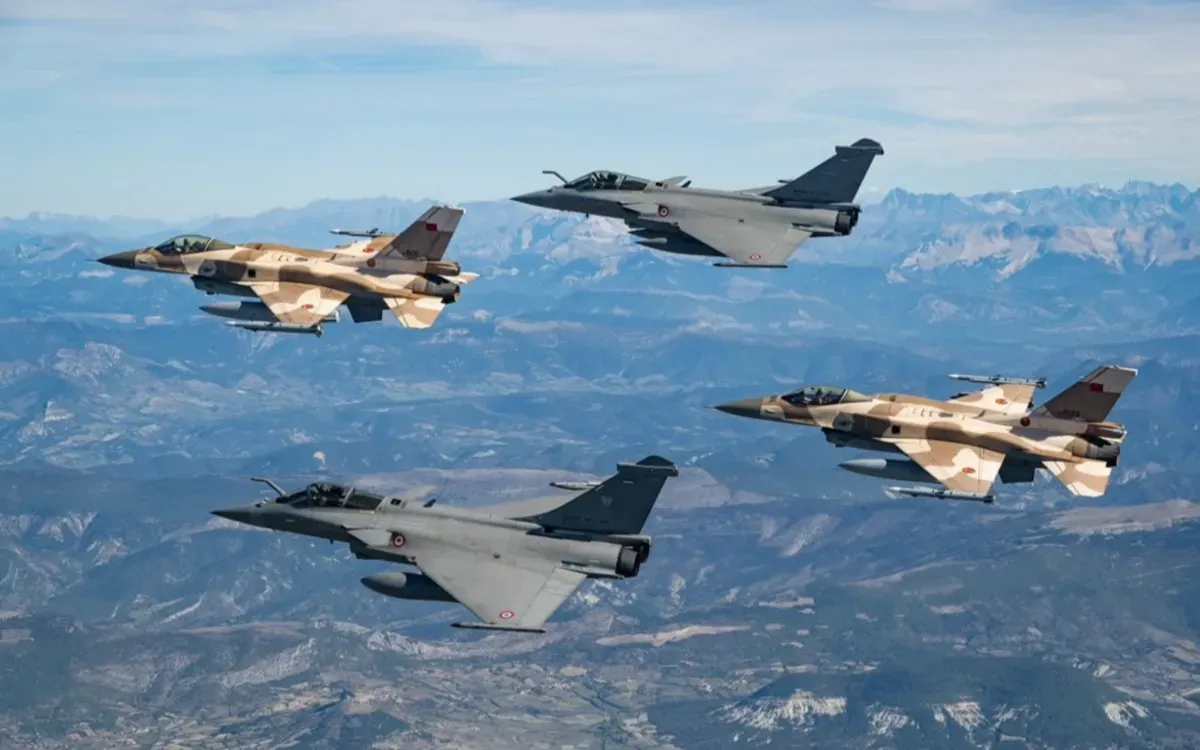
The urgency of this warning is amplified by Morocco's international assertiveness. On August 1, coinciding with the anniversary of King Mohammed VI's coronation, Donald Trump reaffirmed the U.S. recognition of Moroccan sovereignty over Western Sahara, labeling any alternative to Rabat's autonomy plan as "unacceptable," while announcing increased cooperation in the Sahel. Just days prior, he expressed gratitude that Morocco named a highway after him along the occupied Sahrawi coast. There is more than mere symbolism at play here: Washington and Rabat signed a memorandum in February concerning critical minerals encompassing Western Sahara, while negotiations advance to sell Morocco over thirty F-35 fighter jets and Apache helicopters, following contracts already established worth €333 million.
This backing is complemented by a sustained military rearmament supported by an alliance with Israel. Morocco and Israel signed their third joint military plan since the Abraham Accords in January 2026, involving Barak MX missile defense systems, artillery from Elbit Systems, Ofek-13 satellites, and the licensed manufacturing of Israeli drones. Morocco's defense budget for 2026 is projected to be around $19 billion—approximately 13% of its GDP—heavily reliant on Israeli technology, which also limits Rabat's operational sovereignty.
It is not insignificant that the new African Center for Multidomain Training and Experimentation (AMTEC), resulting from this agreement, is located in Tan-Tan, just 200 kilometers from Lanzarote. This center has already conducted a live demonstration with long-range, low-cost cruise missiles. I do not believe anyone would consider these interlinked events as mere coincidences. Clear and forceful messages are being sent to Spain and the European Union regarding the geostrategic shifts in the region and the power that Morocco has acquired.
In addition to this military and migratory pressure, there exists a third, less visible but equally serious challenge: the battle for our own waters. Since 2019, when Morocco unilaterally approved laws 37-17 and 38-17, Rabat has asserted that the maritime border with Spain should be determined by the "principle of equity" rather than by the median line that currently governs the waters between Fuerteventura and Tarfaya. This claim extends to waters near Lanzarote, Fuerteventura, and parts of Gran Canaria, with negotiations reportedly already in their "final phase," emboldened by UN Security Council Resolution 2797 (2025). At the heart of this dispute lies Mount Tropic, an underwater volcano located 260 miles southwest of El Hierro, which is home to the largest known reserves of tellurium—2,670 tons, sufficient for over 200 million electric vehicles—as well as cobalt, nickel, and rare earth elements critical for the EU. Spain requested an extension of its continental shelf from the UN in 2014 to secure this resource; eleven years later, there remains no resolution, while media aligned with Rabat are already proposing "joint exploitation" in exchange for tacit acceptance of its sovereignty over the Sahara. They have even suggested recognizing Spanish sovereignty over the Canary Islands while renouncing claims like those over Ceuta and Melilla if all this is granted.
The same pattern is evident in the airspace over Western Sahara. Since 1976, under ICAO mandate, Spain has managed this airspace (the FIR/UIR Canarias) through Enaire from Gran Canaria, as the administering power, not as a sovereign entity over the territory. However, Morocco already controls the airports of El Aaiún and Villa Cisneros, and sector sources estimate that between 15% and 20% of Sahrawi airspace is effectively under its administration, through declared no-fly zones for military exercises. Total relinquishment has been on the table since the joint declaration of 2022, conditioned, according to various sources, on the reopening of customs in Ceuta and Melilla; only the resistance from the government, compelled by a proposition approved in Congress in 2025, has so far prevented this transfer. Aeronautical information for the area is already appearing in Moroccan official publications, posing a real operational risk to the safety of air traffic that traverses our archipelago. Ceding this control would mean relinquishing the same strategic position in the skies that we defend in the seas and our ports.
This assertiveness also has immediate business implications. Weeks after my first article on Dakhla, it was announced that Marsa Maroc, a semi-public Moroccan company, acquired 45% of Boluda—a port and shipping operator with a presence in the Canary Islands. I doubt this operation does not affect the Canary Islands or national security; I know it is being reviewed by the Foreign Investments Board and must go through the Council of Ministers, and I continue to insist that it be rigorously evaluated.
Almost concurrently, the Canary Islands government continues to promote missions to strengthen cooperation with Morocco in tourism and ports, sectors that directly compete with our own. I find this irresponsible and am concerned that so few institutional voices are raised against these established facts.
Migration as a tool of diplomatic pressure, port expansion in an occupied territory competing with our own ports, maritime claims over the waters near Lanzarote, Fuerteventura, and Gran Canaria—with Mount Tropic as the prize—ever-increasing effective control over the airspace of Western Sahara we manage from the Canary Islands, and unprecedented rearmament supported by Washington and Tel Aviv. These are not isolated fronts; they are part of a singular underlying strategy from a Morocco that has learned that de facto actions—whether at the border, at sea, underground, in the sky, or on the Atlantic chessboard—rarely receive a firm response from its European neighbors. Ceuta has once again demonstrated this. Algeciras has already shown it with Tanger Med. And the Canary Islands risks becoming the next episode, while also, in the cases of Dakhla and Tropic, harboring an illegal occupation under international law. By another route, Morocco has already succeeded in devastating the artisanal fishing and tomato sectors of the Canary Islands. Now they are targeting our ports and tourism.
This scenario becomes even more alarming in light of the Spanish government's official policy of capitulation to Morocco, a highly unreliable partner. In 2022, Pedro Sánchez abandoned Spain's traditional stance of neutrality on the Sahara to support Morocco's proposal. Now, in the face of the Ceuta crisis, the reliance on Moroccan cooperation once again shapes Spain's response, even regarding matters of national sovereignty. With every move they make, they gain crucial pieces on the international chessboard.
Therefore, I emphasize something I have previously raised in articles like this or at the Port Authority Board of Las Palmas: we cannot turn a blind eye. Not to those from Canarian institutions or business groups encouraging investment in sectors that compete with our economy, nor to an international context where Morocco's position of strength is growing month by month. Defending the Port of La Luz and Las Palmas, our strategic position in the Atlantic, and demanding coherence from the state and the European Union between principles and actions is not merely ideological; it is an institutional obligation for those of us entrusted with safeguarding the economic and political future of the Canary Islands.
As reported by teldeactualidad.com.