CEUTA, Spain (AP) — Ceuta, a unique stretch of land in North Africa, represents an anomaly for Spain: a city where Muslims and Christians coexist in nearly equal numbers. However, a prolonged migration crisis in this enclave, which King Felipe VI and Queen Letizia of Spain are set to visit on Tuesday, has exposed deep-seated divisions in a place often touted as a beacon of coexistence. Some argue that these fissures have always existed beneath the surface.
The crisis erupted at the end of July when approximately 80,000 people surged into the Spanish enclave from neighboring Morocco, spurred by online rumors suggesting that Spain had opened its borders. While most of these migrants left within days, around 15,000 remained, placing immense pressure on the city and pitting residents against one another.
Uneven Impact of the Crisis
Many of the migrants who chose to stay in Ceuta have sought refuge in predominantly Muslim neighborhoods, sleeping on the streets, in doorways, and in makeshift camps as well as in centers run by NGOs and local residents. The situation has led to ongoing chaos, with locals expressing their mounting frustration. Mohamed Susi, a resident of El Príncipe—a neighborhood with a majority Muslim population—questioned whether they were expected to feed all of Ceuta.
In a church near his home, hundreds of young migrants gathered before the arrival of a visiting minister. Susi, visibly upset, slammed the door, calling for a solution to the ongoing crisis.
Meanwhile, volunteers and workers from a Muslim charity were seen filling plastic containers with lentils and pasta near one of the city's main mosques during a late September day. Halima Ahmed, a spokesperson for Luna Blanca, noted that they have been distributing between 3,000 and 5,000 meals daily to the migrants still in the city, despite facing threats and insults for their efforts. Ahmed acknowledged the growing tension, stating that people are fed up with the current situation.
Although the central areas of Ceuta, frequented by both Christians and Muslims, regained a semblance of normalcy shortly after the initial influx, signs of discontent remain prevalent. Many storefronts display pro-Ceuta messages, while the flags of Spain and Ceuta hang from balconies. The Spanish police and thousands of soldiers have been deployed to patrol the city center and border areas.
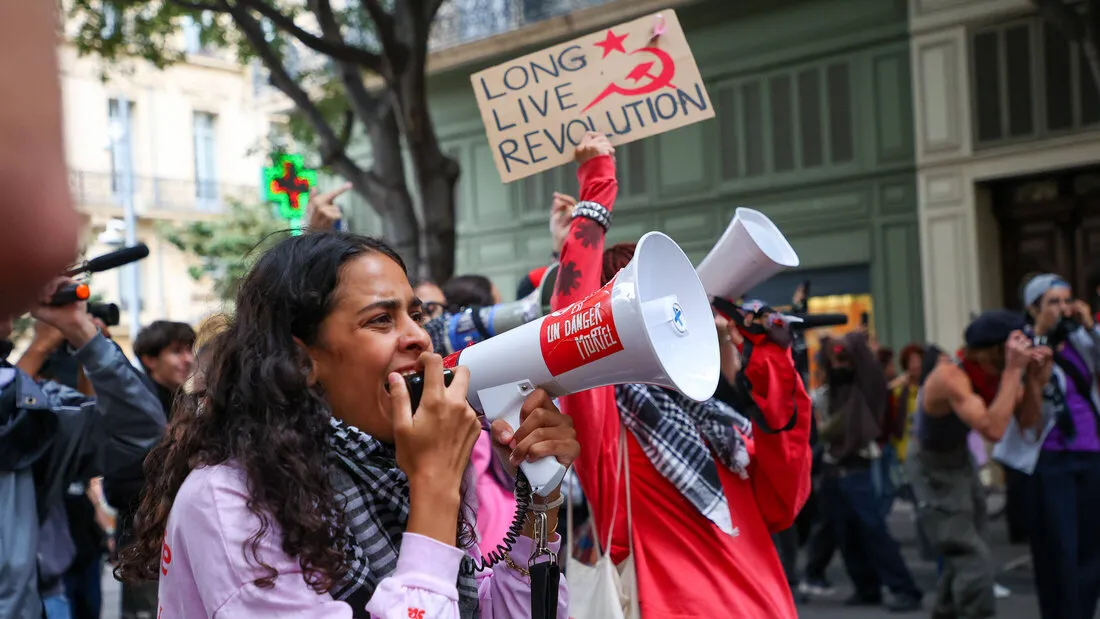
Residents have staged periodic protests as the crisis continues. In early October, around 200 demonstrators rallied outside the city government building, demanding solutions from Spain's left-wing national government. Men and women wrapped in the black-and-white flag of Ceuta banged pots and pans, voicing their dissatisfaction with what they described as the slow governmental response. Notably, very few among the protestors identified as Muslim.
Francisco Luna, a 45-year-old auto repair shop owner, lamented the deterioration of coexistence, describing the atmosphere as 'terrible.' He noted that some Muslims in the city are protecting the migrants, which has caused him to question their loyalty to Ceuta. Historically, Luna stated, locals have coexisted harmoniously, with no issues among Muslims, Christians, Jews, and Hindus, but he now perceives a shift in that dynamic.
Deep-Rooted Historical Divisions
Ceuta has been a part of Spain for centuries, with its 84,000 residents holding Spanish and European Union citizenship. While many are from the Spanish mainland, most Muslims in Ceuta are of Moroccan descent, with familial ties across the border and fluency in Moroccan Arabic. The city also hosts smaller Jewish and Hindu communities.
The territory is notably poorer than much of Spain, and Muslims experience higher poverty rates compared to the rest of the enclave, according to a 2025 report by the Catholic charity Cáritas. The report indicated that 44% of Muslim households are marginalized, compared to 28% of the total population of the city.
Some predominantly Muslim neighborhoods on the city's outskirts, characterized by narrow, steep, and winding streets, grapple with high crime rates. While Muslims and Christians frequently visit shops in the city center and gather in lively squares and broad avenues, there is less interaction in predominantly Muslim districts.
Local politician Mohamed Mustafa described the divisions as predating the recent border crisis but acknowledged that the situation has worsened. Ceuta has witnessed previous migrant surges, but the one this past summer was particularly deadly. Mustafa argued that the image of coexistence portrayed is merely a mirage and a tourist slogan that fails to reflect the underlying reality.
The city has been under tension for months, and members of the Spanish royal family will attend a ceremony at a Muslim cemetery on Tuesday to commemorate the more than 140 migrants who perished attempting to cross in July, where dozens of unidentified migrants are buried.
As the crisis enters its third month, residents of Ceuta share a common sentiment: they are weary of the situation. When migrants established a large makeshift camp on a beach, Emilio Muñoz, a nearby resident, felt compelled to take action. He set up a tent in front of the city government to protest and began sleeping there as well. Soon, around a dozen others joined him, intermittently sleeping there for a month until the camp was entirely dismantled by the Spanish police, who removed thousands of migrants.
Muñoz clarified that his protest was not intended to mock the migrants but rather to highlight that Ceuta is a city where diverse religious and ethnic groups coexist and work together, although he acknowledged that something has been damaged in that coexistence.
As reported by audacy.com.