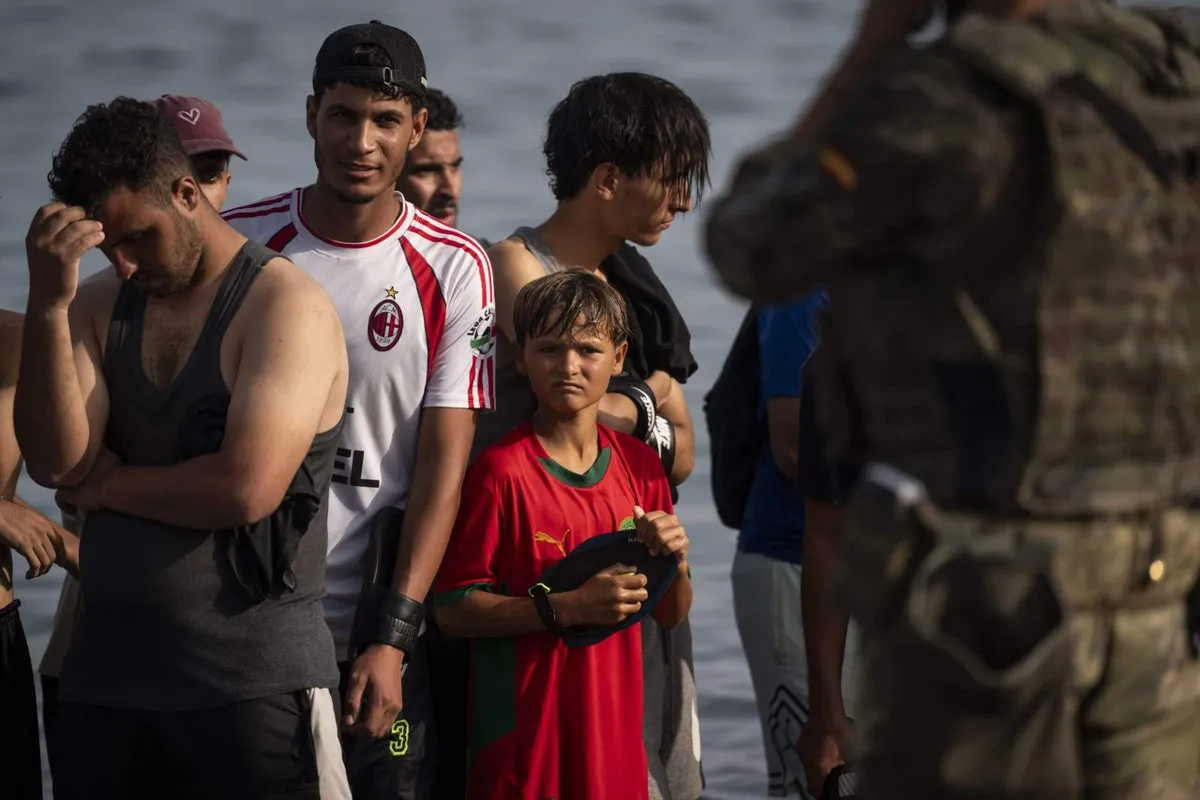

Ceuta Faces Humanitarian Crisis Amidst Migrant Influx
In late July, Ceuta, a Spanish enclave on the North African coast, was thrust into a humanitarian crisis as it witnessed an unprecedented influx of migrants. Over the course of July 30 and 31, approximately 70,000 individuals attempted to cross the border from Morocco, overwhelming local authorities and leading to tragic consequences. According to Spanish Prime Minister Pedro Sanchez, an estimated 141 people lost their lives during these perilous crossings, a somber statistic that highlights the dangers faced by those seeking refuge or better opportunities. Although around 90% of those who crossed the border returned to Morocco within 72 hours, around 5,000 migrants, including approximately 1,200 minors, have remained in Ceuta, a city with a population of just over 83,000. These migrants are now in dire need of basic necessities such as food, shelter, and healthcare, placing immense pressure on local resources and authorities.
Political Tensions and Community Resilience
The situation in Ceuta has sparked a significant political storm within Spain, as different parties assign blame for the crisis. The Spanish and Moroccan governments have attributed the surge in migrants to a viral misinformation campaign propagated by smuggling gangs. Meanwhile, opposition parties, including the centre-right People’s Party and the far-right Vox, have criticized the immigration policies of Sanchez’s Socialist Party, arguing that these policies have incentivized the mass crossing. The local left-wing party, Sumar, has even called for the Spanish Football Association to reconsider co-hosting the 2030 men’s World Cup with Morocco, reflecting the rising tensions surrounding national identity and immigration. The emotional toll on the community is evident, as local residents grapple with feelings of uncertainty and fear regarding future developments, especially after Morocco's Minister of Justice suggested discussions about the future of Ceuta and Melilla, another Spanish city nearby.
As the community continues to navigate this complex crisis, local football clubs and their supporters have shown remarkable solidarity. Events surrounding matches, such as the display of flags representing both Ceuta and Spain, have turned into expressions of unity and national pride. Prominent figures in the football community, including Spain’s national coach, have made efforts to bolster morale by visiting Ceuta and showing support for its residents. Despite the ongoing challenges, local club officials express optimism, emphasizing the strength and resilience of the people of Ceuta. They continue to advocate for their community, seeking to protect its identity and ensure that the voices of its residents are heard amidst the political turmoil. As they face the coming months, the people of Ceuta remain determined to stand strong, united in the face of adversity, and committed to their shared future.
As reported by nytimes.com.