
Ceuta Faces Overwhelming Influx of Migrants
In late July, a dramatic influx of migrants from Morocco descended upon Ceuta, a Spanish exclave located in North Africa. Over the course of just two days, tens of thousands of individuals made the perilous journey, with many opting to swim across the sea or navigate through border barriers. Ceuta, a small city with a population of around 85,000, was ill-equipped to handle such a sudden surge, resulting in a dire lack of shelter and basic necessities. As a consequence, numerous migrants found themselves sleeping on streets, in parks, and on beaches, with many returning to Morocco shortly thereafter. However, several thousand chose to remain, setting the stage for a multifaceted crisis that would soon spiral out of control.
Escalation of Violence and Racial Tensions
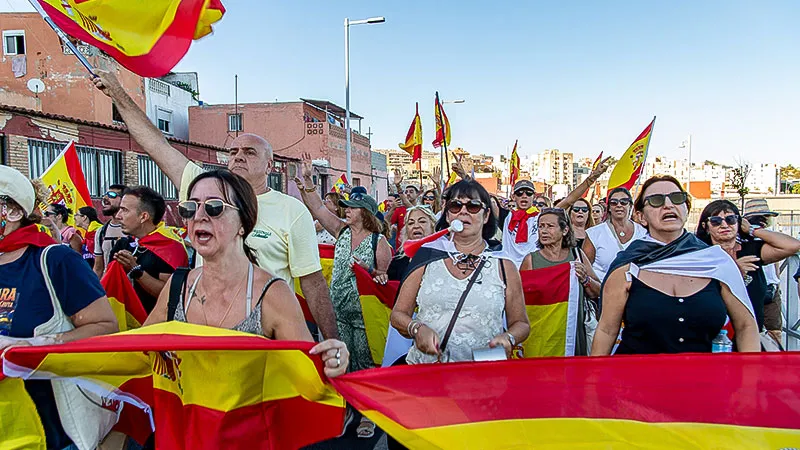
What unfolded in the weeks that followed was not merely an account of overwhelmed local authorities grappling with an immigration crisis, but rather a troubling narrative of rising tensions and violence fueled by misinformation and deep-seated prejudices. Initially, protests erupted, predominantly targeting the Spanish government's handling of the crisis rather than the migrants themselves. Yet, as time progressed, these protests morphed into expressions of racial animosity, with rumors and false information amplifying fears within the community. By the end of August, the situation had escalated into open violence.
While some protests were characterized by a unified call for governmental support, extremist factions began to exploit the situation to further their own agendas. They framed the arrival of migrants as an existential threat to Ceuta and Spain, often employing language that suggested an 'invasion.' Although their efforts initially met resistance from local residents, including members of the Muslim community, the atmosphere remained tense. As the crisis continued, disputes arose over the inadequate accommodations for migrants, with various locations such as gymnasiums and barracks being proposed as temporary shelters.
Social media became a battleground for misinformation, where unverified claims about migrant-related crimes and allegations of preferential treatment circulated widely, often inciting further hostility. Spanish media reported instances where images and videos from unrelated incidents were misrepresented as occurring in Ceuta, further embedding a narrative of danger surrounding newcomers. Concurrently, the Spanish Observatory against Racism and Xenophobia noted a marked increase in online hate speech directed at North Africans, escalating to explicit calls for violence.
By mid-August, the once-discursive debate over how to accommodate the influx of migrants transformed into a confrontation about identity and belonging. The situation became increasingly dire as hostility extended not only to recent arrivals but also to long-standing Muslim residents of Ceuta, many of whom had lived there for generations. This shift highlighted a disturbing trend where the lines between legitimate concerns over immigration and outright racism became increasingly blurred.
As the violence reached a peak on the evening of August 30 at Benítez Beach, where many migrants had been living in makeshift camps, demonstrators set fires and hurled objects into the flames, forcing migrants to retreat. This violent culmination underscored a complex crisis that began with an overwhelmed city and evolved into a societal threat, wherein racial and religious identities became points of contention.
The Spanish government now faces the dual challenge of finding a viable humanitarian solution for the remaining migrants—approximately 5,000 as of late August—while simultaneously preventing the further deterioration of societal harmony. The situation is compounded by legal complexities regarding the repatriation of migrants, particularly vulnerable groups such as unaccompanied minors. As Spain seeks assistance from the EU's border agency Frontex and contemplates temporary relocation solutions, the overarching goal remains to avert a broader societal crisis that could see migrants and local Muslim communities painted as scapegoats.
As reported by migazin.de.