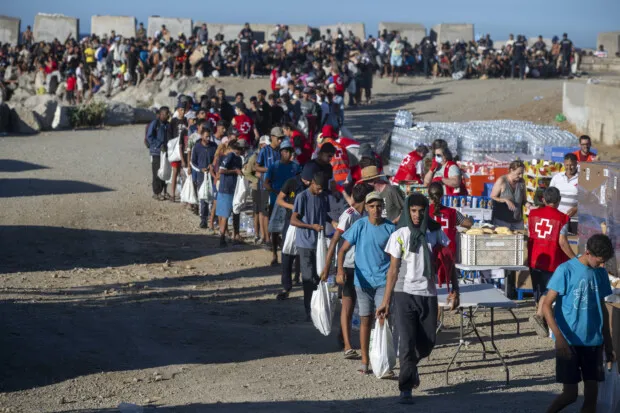

Ceuta's Ongoing Humanitarian Crisis
The situation in Ceuta, a Spanish enclave on the North African coast, has reached alarming levels as it becomes increasingly overwhelmed with thousands of migrants seeking refuge. This crisis was notably exacerbated by a massive influx of over 70,000 migrants who crossed the Tarajal Strait in late July 2026. Despite efforts by Moroccan authorities to reinforce the border and limit further migration, the humanitarian, health, and security crises persist in this beleaguered region. Local media have described the conditions in Ceuta as a "chaotic puzzle," with many migrants forced to live in slums and makeshift shelters while authorities scramble to establish temporary facilities for processing deportations. This precarious situation fosters both a pull effect for new migrants and a push effect for those already present, as many seek to evade detection and potential deportation. Once migrants manage to cross into Europe, they gain access to the European asylum system, complicating the enforcement of borders.
Government Response and Criticism
The Spanish government, led by Prime Minister Pedro Sánchez, has been criticized for its handling of the crisis, with accusations suggesting that his administration's lax policies have inadvertently facilitated illegal crossings. Local reports indicate that even as temporary camps are established, illegal crossings continue unabated, with organized crime networks profiting from the situation. The local newspaper, El Faro de Ceuta, highlights that the government’s strategy is ineffective, as migrants continue to evade authorities while seeking routes into the Schengen Area. Critics, including opposition leader Alberto Núñez Feijóo, assert that Morocco has either tolerated or encouraged this influx, thereby exacerbating the situation. The opposition has called for a lockdown in Ceuta due to growing public health concerns stemming from the uncontrolled situation. Furthermore, there are worries that Ceuta's transformation into a de facto permanent refugee camp mirrors the dire conditions once seen on the Greek islands and Lampedusa, suggesting a failure to manage the influx effectively.
In light of these developments, many residents of Ceuta have begun to leave the city, seeking relief from the ongoing crisis. This exodus raises questions about the future of Spanish governance in the region, as local leaders express the need for decisive action against drug-related violence and the broader implications of the migrant crisis on public safety. Criticism of Sánchez's administration is growing, even within socialist circles, as the government struggles to contain what is seen as one of the most significant challenges in recent history. The situation in Ceuta is a clarion call for reevaluation of immigration policies and border security in Europe, as the region grapples with the consequences of a humanitarian crisis that shows little sign of abating.
As reported by tichyseinblick.de.