
Political Turmoil and Leadership Departures
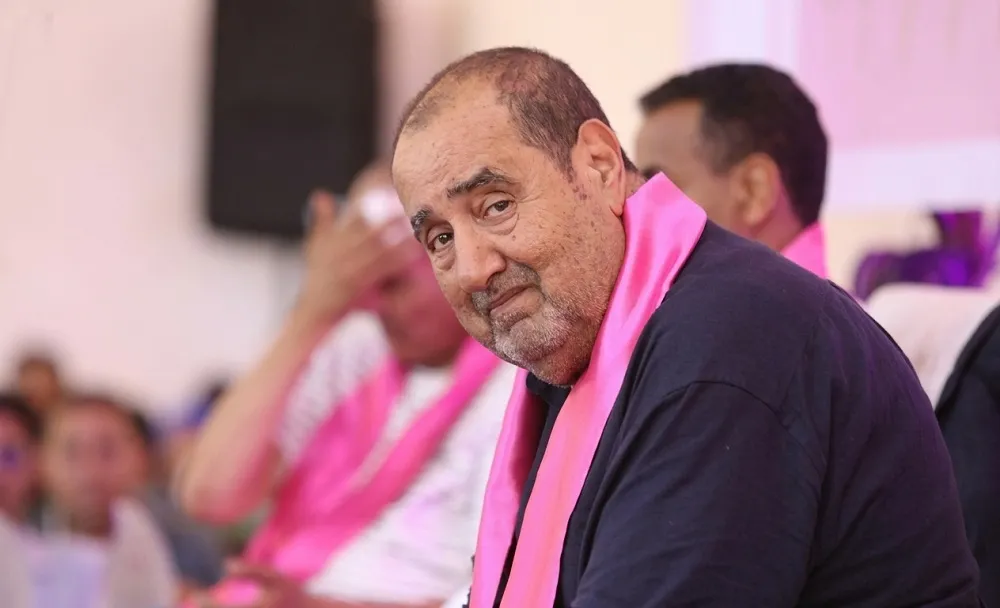
The Socialist Union Party (Union Socialiste des Forces Populaires) finds itself at a critical juncture as it embarks on its election campaign for the legislative elections scheduled for September 23. This moment is not only significant due to the electoral stakes but also due to the outcomes of the preparatory phase leading up to these elections. Prior to this pivotal moment, the party has experienced a wave of resignations and departures among several prominent leaders and figures, with some historically leftist members opting to join other political parties. This shift highlights a notable decline in the Socialist Union's ability to maintain its position as a leader of the Moroccan left and to attract influential figures from its political and historical milieu.
Despite the party leadership presenting its candidate list as a reflection of renewal and openness to new talents, an examination of the names put forward reveals a more complex picture. The Socialist Union, which has been a cornerstone of Moroccan leftist politics for decades, now appears less capable of retaining notable members who have accumulated extensive organizational and activist experience within its ranks. A significant portion of leftist figures is searching for new political spaces, whether within the New Left Alliance or in competing parties.
The departure of Abdelhadi Khairat serves as a poignant example of this transformation. The historic union leader, closely associated with the party's legacy and youth movement, chose to join the Progress and Socialism Party in February after a prolonged estrangement from the Socialist Union and a breakdown in relations with the party’s secretary-general, Idriss Lachgar. Khairat stated in an interview with the First Channel that his decision was the result of political discussions and consultations, indicating a deep rupture in his relationship with the party over recent years.
The trend of resignations is not limited to historical symbols; in recent weeks, a series of departures have occurred related to the management of candidacy approvals and electoral lists. The Socialist Union’s political bureau accepted the resignation of Rjaâa Bkali Tahiri and announced that Mariam Jamal El Idrissi would also be leaving the party, amidst controversies surrounding the regional list approval process. While the party insists that the selection process was conducted according to its statutes and internal regulations, the individuals involved have expressed differing interpretations regarding the application of these standards.
The situation intensified further with the resignation of Selwa Dmanati, a former political bureau member and current parliamentarian, who announced her departure from the party and its organizational structures on August 31, citing criticisms of the management methodology and organizational choices. Additionally, the exit of Ammar Hamza, former regional secretary of the Socialist Union in Wazan, to the Authenticity and Modernity Party, along with several other members, was officially announced at the end of August, marking a significant organizational shift amidst the parties' preparations for the elections.
The Future of the Left in Morocco
The issues facing the Socialist Union go beyond merely losing a few key figures; they delve into a more profound question about the party's position within the broader context of the Moroccan left. The striking paradox in the upcoming 2026 elections is that discussions surrounding the future of the left are no longer centered on the Socialist Union's capacity to lead this movement, but rather on the emergence of new centers that could rival it for attracting leftist talents and figures. In this vein, the establishment of the "Left Alliance" between the Unified Socialist Party and the Democratic Left Federation on June 3 provided a new political framework, expressly aiming to unify parts of the leftist diaspora and contest the legislative elections with a joint political project. Both parties emphasized that this initiative is not just a temporary electoral coordination but a political alliance seeking to build a democratic and progressive alternative, moving beyond the fragmentation that has characterized the left in recent years.
Conversely, the Socialist Union has struggled to realize its proposed alliance with the Progress and Socialism Party, announced in 2023, as the process stalled despite the shared historical foundation between the two parties. Together, they secured a total of 56 seats in the 2021 elections, with 34 for the Socialist Union and 22 for the Progress and Socialism affiliates. Now, the list presented by the Socialist Union appears markedly different. Despite its extensive geographical reach and a considerable number of constituencies, the names that attract national attention seem relatively limited, notably including Abdel Karim Benatiq, a former minister and recognized party figure, and Hassan Lachkar, the party’s candidate for the Rabat Shalla constituency, who stands out primarily as the son of the party’s secretary-general.
The discussion surrounding the nature of this list has intensified, especially since the Socialist Union has, in several regions, relied on attracting politically experienced figures from outside the party. For instance, in the Marrakech-Safi region, several individuals presented had previously been affiliated with other parties before joining the Socialist Union, a strategy that indicates an effort to recruit "political nomads." Among the notable names in this context are Ahmed Toumi, Hamid Akroud, Abdul Samad Akdash, and Abdel Ghani Kamel. This raises a significant political question: has the Socialist Union, historically a training ground for activists and leaders, increasingly relied on attracting seasoned figures from outside its organizational structure while simultaneously experiencing departures of its own members to other parties?
While Idriss Lachgar asserts that 77% of local list candidates represent new faces, and the party is betting on youth, women, and competence, this rhetoric faces scrutiny regarding the meaning of renewal, which seems to stem less from within the Socialist Union and more as a compensatory measure for organizational deficiencies. Lachgar is facing severe criticism for allegedly sidelining genuine "Socialists" in favor of electoral figures in pursuit of parliamentary seats, which detracts from the focus on rebuilding the party. This dynamic echoes past tensions, such as those experienced in 2021 when a former regional secretary of the Socialist Union in Tangier-Asilah, Ahmed Yahya, opposed Lachgar’s bypassing of local organizations in candidate selection, leading to the dissolution of the regional office and subsequent legal battles between the two.
This point is crucial for understanding the transformation within the Socialist Union. The party no longer possesses the same extensive reservoir of leaders and activists that once constituted its organizational, union, and intellectual extension. Furthermore, many figures historically linked to the Socialist line have either exited the party or distanced themselves from decision-making centers, making membership in the Socialist Union no longer an obvious choice for many new leftist figures, particularly as alternative frameworks emerge that present themselves as spaces for reconstructing the left on more unified foundations.
As reported by assahifa.com.