
The geopolitics of artificial intelligence (AI) has entered a critical phase, marked by significant shifts in the global landscape. As the United States seeks to protect its proprietary technologies under the doctrine of 'Pax Silica,' Chinese President Xi Jinping has launched an audacious counteroffensive in Shanghai aimed at establishing a new world order in AI, one that is grounded in open-source principles and tailored for developing nations. This strategic pivot highlights the essential role of emerging economies, with Morocco standing out as a key player. The nation has recently solidified its position as one of the top 25 countries worldwide ready to integrate AI into its offshoring services sector. This timely alignment not only underscores Morocco's capabilities but also symbolizes a natural bridge of collaboration between Beijing's global ambitions and Rabat's digital acceleration.
During the inauguration of the World AI Conference (WAIC), Xi Jinping positioned Beijing not merely as a technical contender against Washington but as a champion for nations at risk of technological marginalization. He warned of the "new historical injustices" that would arise from unequal access to technology and promoted Chinese open-source models, such as the colossal Kimi K3 from Moonshot AI, as global public goods. China's strategy is both political and economic, aiming to forge a coalition of the excluded through the establishment of the World AI Cooperation Organization (WAICO), which has already attracted 29 member countries eager to engage in technological governance without U.S. oversight. Additionally, China is committed to funding training initiatives and creating cooperation centers in key regions, including the African Union and the Arab world.
As Beijing seeks partners to deploy its infrastructure, Morocco is demonstrating its readiness to host such initiatives. According to the Global AI Readiness Index for Outsourcing 2026 compiled by Ataraxis, Morocco ranks 19th globally and emerges as the second-best prepared country in the MENA region, following Egypt, and the fifth in all of Africa. Morocco surpasses traditional offshoring giants like Pakistan and Bangladesh. While the report indicates that the country's weak point lies in the adoption of AI by its local business fabric (scoring 39 out of 100), this figure is still higher than its direct competitors, such as Kenya and Nigeria. The Moroccan talent pool, combined with the country's stability and connectivity, makes it a prime attraction for investment.
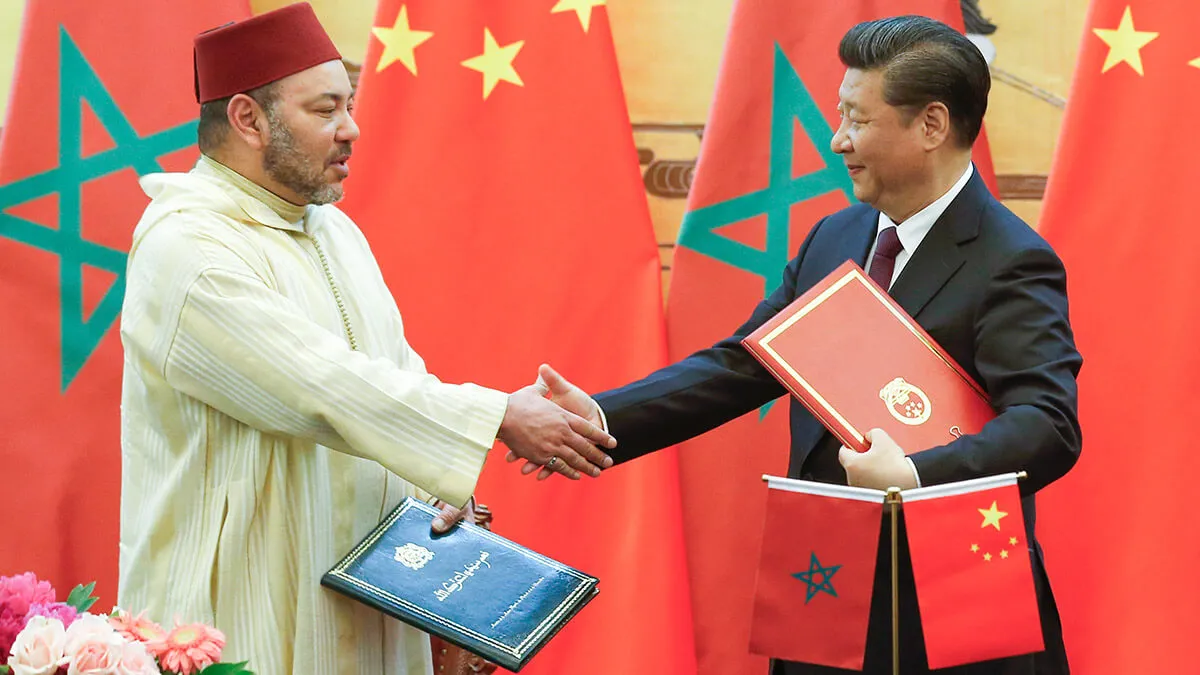
The intersection between Xi Jinping's strategy and Morocco's reality is unmistakable. For Morocco to make a definitive leap and surpass the 50-point threshold in the readiness index, it requires access to cutting-edge technology that does not rely on the expensive licenses of American tech giants like OpenAI or Anthropic. The Chinese proposal for low-cost open-source models and knowledge transfer aligns perfectly with the needs of the Moroccan state. By aligning itself with Beijing's initiative, Morocco could not only digitalize its enterprises at a much faster pace but also solidify its role as the undisputed technological hub of North Africa. For China, having a partner of Morocco's influence—acting as a gateway to Europe and a leading economic force in West Africa—within its WAICO coalition would lend legitimacy to its narrative that the new AI order rightfully belongs to the Global South.
As reported by atalayar.com.