
China's Military Aviation Innovations Unveiled
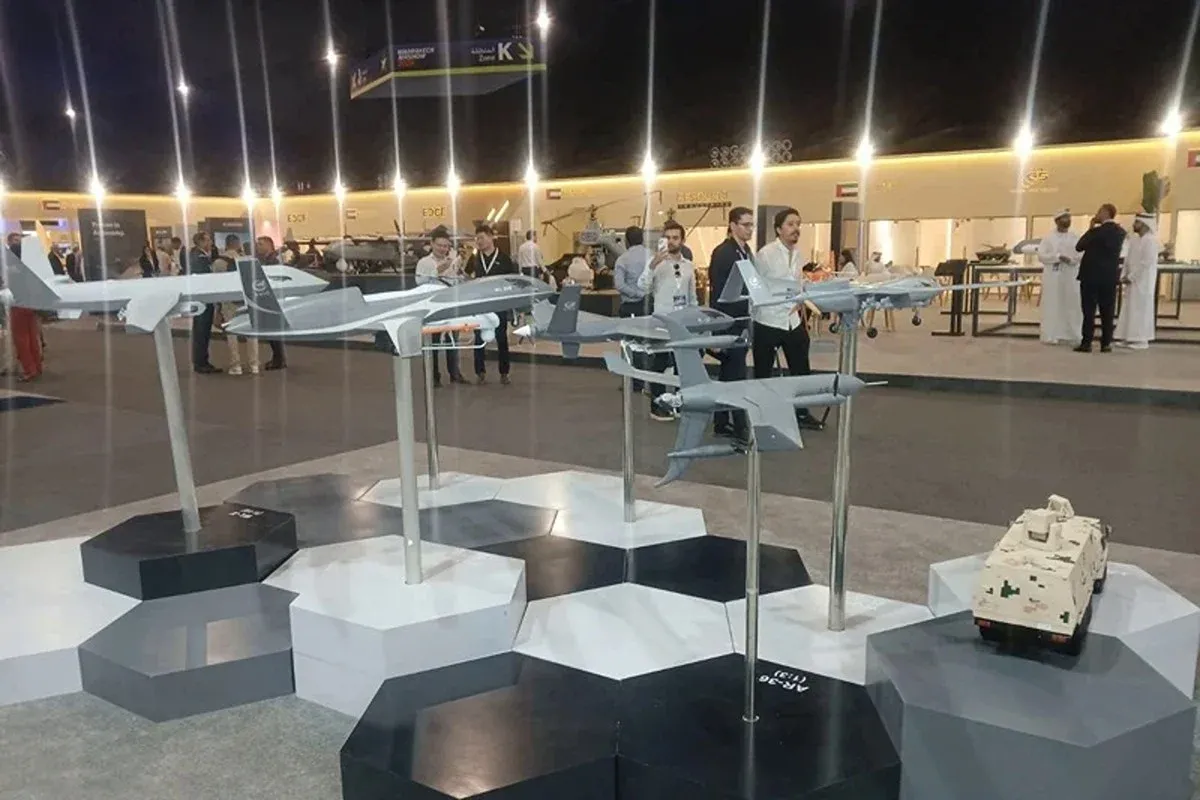
During the eighth edition of the Marrakech International Aerospace Show, China capitalized on the opportunity to showcase the latest advancements from its military-industrial complex. Through an extensive array of weapon systems, military aircraft, and drones, Beijing aims to solidify its status as a leading global exporter of next-generation military technologies. Central to this showcase is the pavilion of the China National Aero-Technology Import & Export Corporation (CATIC), a state-owned enterprise responsible for promoting defense equipment developed by China's defense industry on the international stage. The exhibit has drawn attention from experts and military delegations, featuring a series of models and visual presentations dedicated to the key aerial platforms crafted by China.
Among the prominent aircraft on display is the J-10CE multirole single-seat fighter. Designed for offensive operations in complex environments, this aircraft boasts beyond-visual-range (BVR) combat capabilities and can engage multiple targets simultaneously, even in conditions of significant electromagnetic interference. Furthermore, it maintains exceptional close-combat performance at low and medium altitudes while benefiting from a substantial flight range.
The J-10CE employs a delta wing configuration that enhances its stability during high-speed maneuvers. It is equipped with an advanced radar resistant to electronic countermeasures, an infrared search and track (IRST) system, as well as cameras integrated into the cockpit that allow the pilot to detect and thermally track enemy aircraft without relying on radar. One of its standout features is its ability to exchange real-time data with other aircraft, naval vessels, and ground radar systems. This connectivity enables it to engage targets detected by other platforms without revealing its own position. The fighter can carry next-generation missiles with a range of approximately 150 kilometers and laser-guided bombs, making it, according to its promoters, a highly effective and economically competitive solution for numerous air forces. The aircraft has gained increased visibility following a recent aerial confrontation between India and Pakistan, with the latter already integrating it into its fleet.
The Chinese pavilion also features the L-15, a twin-engine light fighter designed for the advanced training of pilots who are set to operate fourth and fifth-generation aircraft. Equipped with modern radar, it is capable of executing air-to-air missions, detecting land and maritime targets, and carrying short- and medium-range missiles.
In the support aircraft category, China also displays the Y-20, designed for strategic transport and aerial refueling, alongside the Y-9E, a medium-sized tactical transport aircraft. Additionally, a model of the Z-10ME attack helicopter is showcased, with capabilities touted as comparable to those of American Apaches. This aircraft is equipped with CM-502 missiles, TY-90 missiles, 70mm cannons, and an advanced protection and jamming system designed to enhance its survivability in demanding operational environments.
Drones also play a significant role in China's presentation. Notably, the new Wing Loong-X is introduced as the world's first drone capable of detecting and locating submarines. The device can remain airborne for over forty hours and is equipped with acoustic buoy launchers, lightweight torpedoes, and a suite of sensors dedicated to maritime surveillance, detection, and targeting. The Wing Loong 6 is another system on display, distinguished by its long endurance and operational versatility. It can be deployed for reconnaissance missions, close air support, target designation, or precision strikes. Measuring over seven meters in length, it can achieve speeds of approximately 280 kilometers per hour and is characterized by simplified maintenance and rapid field deployment.
Through its notable presence at the Marrakech Aerospace Show, China showcases the breadth of its military aviation offerings, ranging from fighters to attack helicopters, transport aircraft, and next-generation drones, all within a context of increasing competition in the global arms market.
As reported by fr.hespress.com.