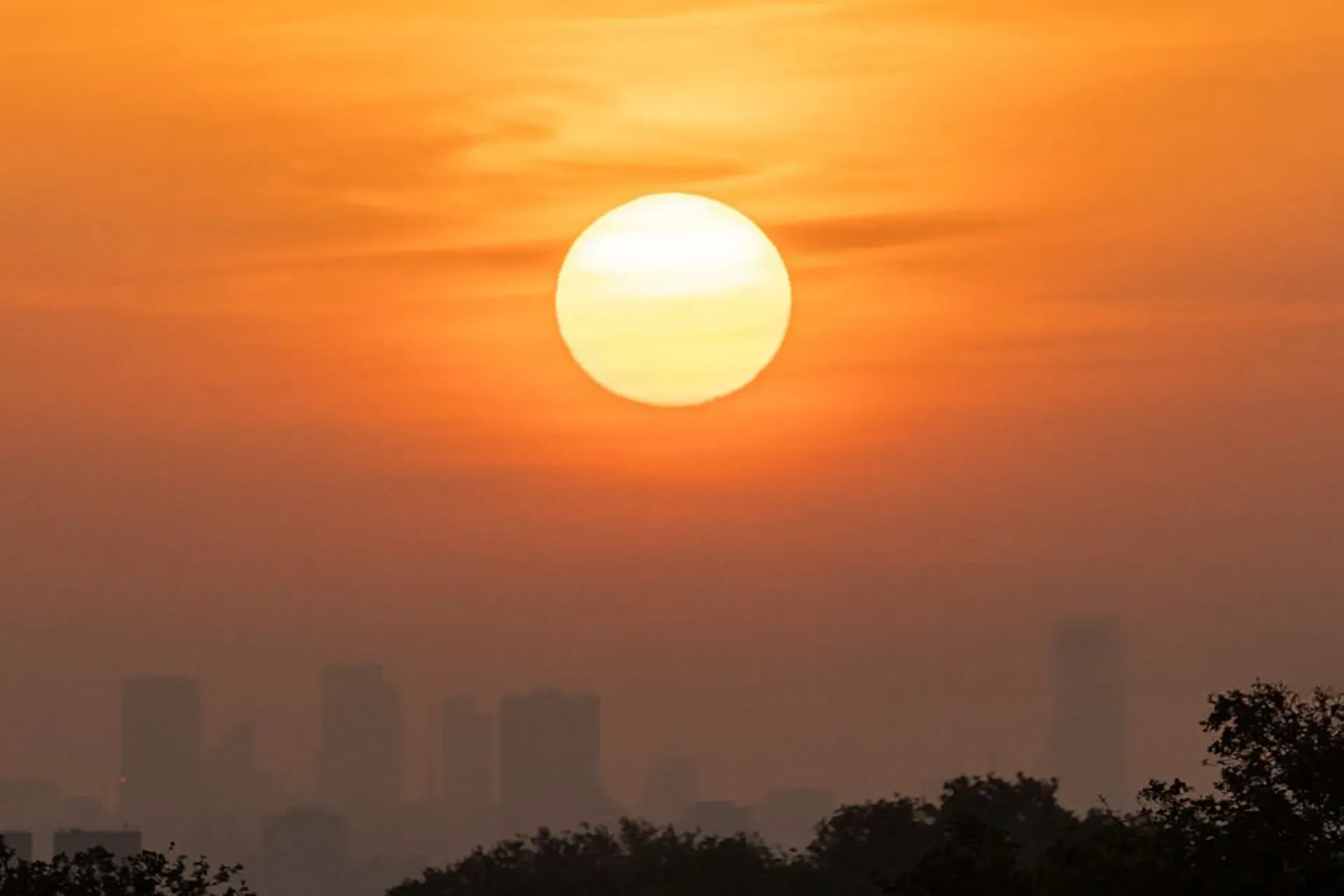

In recent years, heatwaves in the Greater Maghreb region have evolved from a seasonal occurrence to a rapid climatic transformation, reshaping daily life and presenting unprecedented challenges for urban areas. From Casablanca to Algiers, and from Tunis to Tripoli, empty streets during peak hours, increasing stress on water and electricity networks, and rising concerns about extreme heat levels have become common sights.
Scientific reports emphasize that the Mediterranean region is one of the areas most affected by climate change, raising a pressing question: Are the cities of the Maghreb, many of which were built under different climatic conditions, capable of adapting to this new reality? Dr. Adel Salmi, a senior researcher and international expert in environmental policies, agricultural security, and energy transition, as well as the director of the Mediterranean Institute for Geopolitical Studies on Energy, Food, and Climate in France, believes that understanding the current situation in the region goes beyond interpreting rising temperatures as an isolated climatic phenomenon. It is a gateway to deeper transformations affecting development patterns, public policies, and the relationship between humans, cities, and the environment.
During an interview with Al Jazeera, Salmi elaborated on the reasons behind the intensified heatwaves in the Maghreb countries, assessed the preparedness of cities to confront this new climate reality, and offered insights on the priorities that governments should adopt to create more resilient and sustainable urban environments.

The Mediterranean region is heavily affected by climate change (Shutterstock)
Interaction Between Global Warming and Local Vulnerability
Salmi explains that the record heatwaves experienced in the Maghreb countries are the result of an interaction between two key factors: the continuous rise in greenhouse gas concentrations, which has led to a global thermal imbalance, and local and regional factors that exacerbate the phenomenon within the area. He points out that the concentration of hot, dry air masses over North Africa, alongside the reduction of vegetation cover, unsustainable urban expansion, and the growing phenomenon of urban heat islands, all contribute to making the effects of heatwaves more severe compared to other regions.
Moreover, the Maghreb countries fall under the category of "compound climate vulnerability," where exposure to risks intertwines with limited adaptive capacity. This combination means that any rise in global temperatures is felt more acutely at the local level. Salmi emphasizes that the notion of exceptional heatwaves is no longer accurate; the region has indeed entered a different climatic phase where extreme phenomena are now part of the climate reality.
Urban Planning in Response to Rising Heat
Salmi also notes that the issue extends beyond weak infrastructure to the very way cities are planned. Many modern neighborhoods have been developed without integrating climatic considerations into their urban designs. Rapid urban expansion, the dominance of concrete and asphalt, decreasing vegetation, and the absence of natural ventilation corridors all contribute to exacerbating the urban heat island effect. He argues that Maghreb cities need to revise building and construction laws, adopt materials that absorb less heat, improve thermal insulation, and increase green spaces.
Preparing for this new climate requires a shift in public intervention philosophy, integrating climate risks into all government policies rather than treating them as a separate issue confined to the environmental sector. Integrated planning that connects urban development with energy, water, health, and transportation is essential, alongside developing multi-hazard early warning systems and investing in infrastructure that can withstand extreme climatic phenomena.
Despite the daunting challenges posed by climate change, Salmi believes that these circumstances present an opportunity to rebuild cities that are more sustainable. He views climate adaptation as a strategic investment that can foster the development of a green economy, expand renewable energy use, enhance energy efficiency, support sustainable urban transport, and create new job opportunities. Ultimately, he concludes that the real challenge lies not in proving the existence of climate change, but in managing a structural transformation in the relationship between the state, society, heat, water, and environmental risks, ensuring the construction of cities that are more resilient to a climate that no longer resembles the past.
As reported by aljazeera.net.