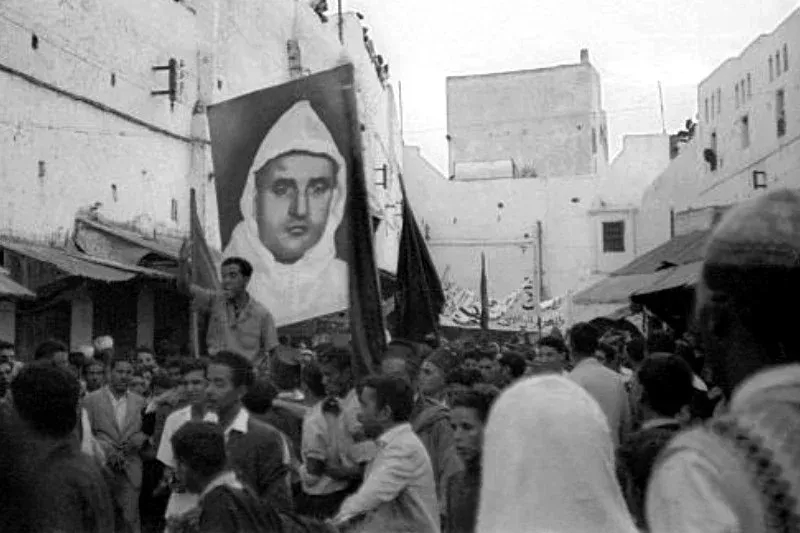

On Friday, the Moroccan people, alongside the families of the National Movement, the Resistance, and the Liberation Army, will commemorate the 72nd anniversary of the popular uprising that took place in the city of Kenitra on August 7, 8, and 9, 1954. This pivotal moment is recognized as a significant historical event in the struggle of the throne and the people for freedom and independence, as well as for the achievement of national and territorial unity.
A statement from the High Commission for Former Resistance Fighters and Members of the Liberation Army noted that the origins of the national movement in the Kenitra region and the surrounding areas date back to the period when protests erupted against what was known as the "Berber Dahir" on May 16, 1930, affecting most Moroccan cities, including Kenitra.
According to the same source, the leaders of the national movement in cities like Fez, Rabat, and Sale were quick to recognize the French protectorate's plan to make Kenitra a base for their operations. They swiftly mobilized to oppose this, devising strategies to attract the city's populace to their cause through various means, with education playing a crucial role in shaping the youth, spreading the principles of the national movement, and cultivating a generation of intellectuals prepared to confront colonialism.
The statement highlighted one of the region's historical milestones, which was its significant contribution to the presentation of the petition for independence on January 11, 1944. The western regions, particularly Kenitra, were at the forefront of organizing this historic demonstration, with careful planning and consultation with the revered figures of national pride, including the late King Mohammed V, may his soul rest in peace.
Furthermore, it was noted that prior to the exile of the late King Mohammed V, there existed a strong bond between him and the people of Kenitra, which was further solidified after his exile on August 20, 1953. A study of modern Moroccan history reveals Kenitra's prominent presence in almost all key moments of the struggle for freedom and independence, culminating in the return of the legal monarch to his throne on November 16, 1955, marking the end of the protectorate and the dawn of freedom and independence. This transition signified a shift from lesser jihad to greater jihad aimed at building a new, free, and independent Morocco.
Moreover, the children of Kenitra sacrificed their lives and spilled their blood in the battles they fought against colonial forces in the city and its outskirts, undeterred by the large number of martyrs, wounded, exiled, and imprisoned individuals. The residents of Kenitra have consistently appreciated the royal palace's stance in the city, as well as the king's compassion towards the figures of the national movement, trade unions, youth associations, and artisans, along with the involvement of women in the national movement under the leadership of Princess Lalla Aisha.
The same source affirmed that the strong connection with the royal palace and the late King Mohammed V was one of the fundamental factors, if not the primary one, that contributed to the harmony and solidarity among the people of various regions, including Doukkala, Fez, Abda, Chiadma, and others, thus launching a cultural and civil struggle filled with the glories and remarkable achievements of national resistance—a legacy that the youth and new generations have every right to be proud of.
As the family of the national movement, the resistance, and the Liberation Army commemorates this glorious historical milestone, which coincides with the celebration of the 27th anniversary of King Mohammed VI's ascension to the throne, they reaffirm the duty to honor and preserve the national and local historical memory. It is essential to instill its chapters in the hearts of the youth and the new generations to contribute to the processes of building and development under the leadership of the king, who continually emphasizes the importance of drawing inspiration from the achievements of national resistance and celebrating the heroism of the resistors and all segments of society across the nation, fostering a sense of positive and responsible citizenship necessary for building a thriving and advanced society.
The statement also stressed the unwavering stance of the Moroccan people, along with the family of the national movement and the resistance, and all segments of society, in their continuous mobilization and vigilance under the leadership of King Mohammed VI. They commit to safeguarding national accomplishments and defending the territorial integrity that is non-negotiable, remaining steadfast in their support for the Moroccan initiative aimed at granting broad autonomy to the recovered southern regions under national sovereignty.
In celebration of this anniversary, the regional delegation of the High Commission for Former Resistance Fighters and Members of the Liberation Army in Kenitra will host a speech festival and a seminar on the topic: "The Kenitra Uprising of 1954: History and Memory" scheduled for Friday at the Commerce and Industry Hall in Kenitra. This event will include participation from university professors, researchers, local and regional authorities, elected representatives, civil society activists, and members of the resistance and Liberation Army family.
Additionally, a select group of former resistance fighters and members of the Liberation Army will be honored, and social assistance will be distributed to several individuals from this noble family, reflecting the High Commission's commitment to respond to requests and appeals from its constituents.
Moreover, educational, cultural, and communicative activities related to historical memory will be organized across all regional and local delegations, as well as at historical memory spaces for the resistance and liberation throughout the country, in coordination and partnership with government sectors, public institutions, elected bodies, associations, and civil society organizations. These events will be attended by former resistance fighters, members of the Liberation Army, widows, heirs of the deceased, and various citizens from all segments of society.
As reported by hespress.com.