
Honoring a Pivotal Moment in Moroccan History
On August 15, 2026, the Moroccan people, alongside the family of the National Movement, the Resistance, and the Liberation Army, will commemorate the 73rd anniversary of the Mechouar Demonstration. This significant event symbolizes the relentless struggle, sacrifice, and resistance against colonial authorities who sought to exile the emblem of national sovereignty and unity, the late King Mohammed V, alongside the esteemed members of the Royal Family. The colonial occupiers attempted to undermine the deep-rooted connection between the Throne and the people by installing their puppet, 'Ibn Arafa', mistakenly believing that this would extinguish the flames of the national fight for freedom, independence, and territorial integrity.
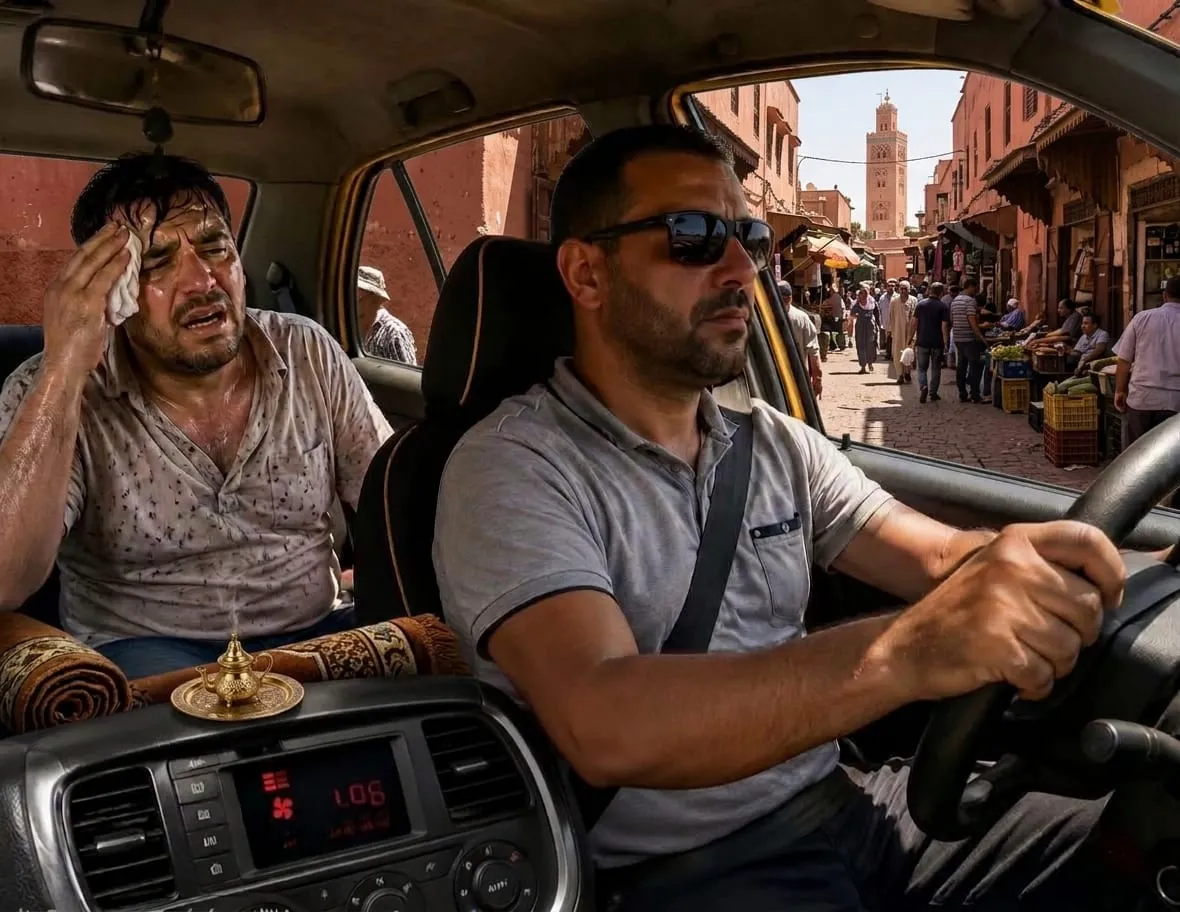
The High Commission for former resistors and members of the Liberation Army issued a statement recalling that a committee of Pachas and Caïds convened in Marrakech to arrange the enthronement of the puppet Sultan 'Ibn Arafa' on August 14, 1953, at the Al Koutoubia Mosque. Upon learning of this colonial conspiracy, the people took to the streets of Marrakech, participating in large demonstrations to express their unwavering loyalty to the legitimate Sultan. Communications were established among various resistance committees, particularly in Bab Hailana and the Benhid hall, where instructions were issued to prevent the mention of 'Ibn Arafa' in Friday sermons within Marrakech. Tribal leaders from Mesfioua and Tassoultante were also informed to mobilize the maximum number of resistors and volunteers against the occupier's schemes.
The Spirit of Resistance
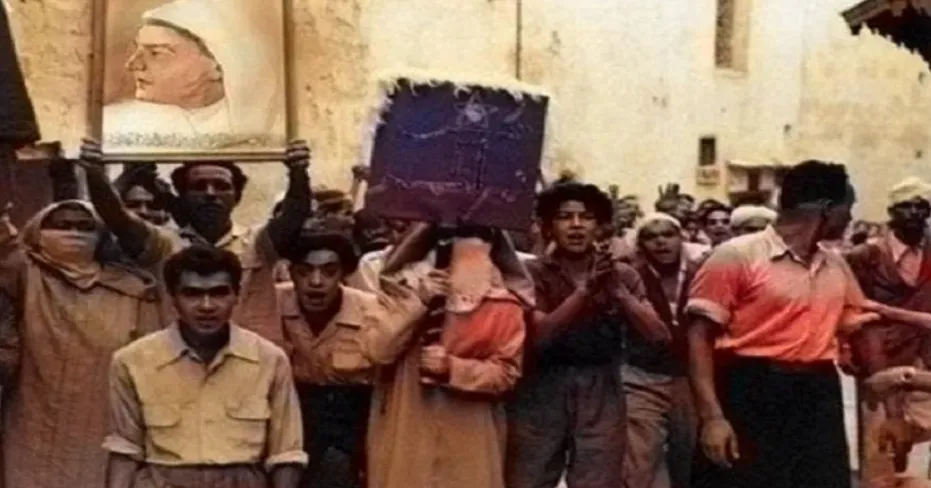
As a result, a significant mobilization and major gatherings of nationalists, activists, and volunteers occurred to confront the colonizer's plan to impose his puppet against the will of the people. In this tense atmosphere, the mosques of Al Mouassine and Koutoubia witnessed bloody incidents that thwarted the enthronement ceremony of 'Ibn Arafa' on August 14, 1953, forcing the colonial authorities to postpone this offensive and provocative ceremony until the following day. On August 15, 1953, the people gathered at the Mechouar square to express their outrage. This demonstration saw participation from all segments of Moroccan society, including women, as the protesters clashed with a patrol attempting to disperse them from the Mechouar gate using tear gas. A wave of arrests also swept through the ranks of resistors, activists, and nationalists.
The Mechouar Demonstration, conducted with selflessness and bravery reminiscent of the events in the ochre city in September 1937, had a profound impact on the colonizer's plans, confirming that the Moroccan people stood united around the Alaouite Throne, determined to resist any attempts to undermine their sovereignty, sacred values, and symbols. Such heroic stances were renewed just days after the infamous act carried out by security and colonial authorities. Martyr Allal Ben Abdellah stood firm on September 11, 1953, in the Mechouar square of the Royal Palace in Rabat, confronting the procession of 'Ibn Arafa', sacrificing his soul and life to defend the sovereignty and dignity for which the entire Moroccan people had risen, employing all forms of struggle, including demonstrations, resistance operations, and heroic battles, until the resounding victory was achieved.
This victory was realized with the triumphant return of the hero of liberation and independence, the late King Mohammed V, who returned from exile, heralding the end of the colonial era and the dawn of freedom, independence, and national unity. On this occasion, the family of the resistance and the Liberation Army reaffirms its ongoing mobilization, constant vigilance, and unwavering commitment alongside all components and sensitivities of Moroccan society to preserve our territorial integrity and consolidate our national achievements. They commend the remarks made by King Mohammed VI in his speech on October 31, 2025, following the adoption of United Nations Security Council Resolution 2797, which enshrines the autonomy initiative under Moroccan sovereignty.
The High Commission emphasized that the historical commemoration of the Mechouar Demonstration on August 14 and 15, 1953, constitutes a duty to preserve and perpetuate national and local memory, considering the wealth of lessons and exemplary national values it conveys. This ensures that present and future generations can absorb this spirit of patriotism and love for the homeland, rooting exemplary civic ideals and behavior in the minds and consciences of the people. This commemoration coincides with the celebration of the 27th anniversary of His Majesty King Mohammed VI's accession to the Throne of His Glorious Ancestors. It also occurs amidst the remembrance of several historical events celebrated in Morocco throughout August, recalling the significant contributions of Moroccan resistors in the service of freedom, independence, and unity.
These events include the anniversary of the retrieval of the Oued Eddahab province on August 14, 1979, and the uprisings on August 16, 1953, in Oujda, the August 17, 1953, protests in Tafoughalt and Oued Zem, and the actions of the Smaâla and Béni Khirane tribes on August 19 and 20, 1955. These moments are precursors to the glorious saga of the Revolution of the King and the People, which the Moroccan people will commemorate on August 20, 2026, marking the 73rd anniversary of an epic that unfolded with tremendous force following the exile of the hero of Liberation and Independence, the late King Mohammed V, on August 20, 1953. To highlight the historical and national significance and the deeply embedded values of struggle and resistance of this historical event, while shedding light on its unique place among the foundational milestones of the grand saga of the Revolution of the King and the People, the High Commission organized a commemorative meeting on August 12, 2026, at the Historical Memory Space of the Resistance and Liberation in Marrakech.
As reported by libe.ma.