
Competition in the Fuel Market: No Evidence of Collusion
According to a recent report from the Competition Council, there has been no observed anti-competitive behavior in Morocco's fuel market, specifically regarding diesel and gasoline prices, during the period from March 16 to April 1, 2026. This finding was part of an ongoing analysis that began with an initial review covering March 1 to March 16, 2026. The report clearly states that the Council did not identify any collusive activities among market participants. Nevertheless, it emphasizes that when market players synchronize their price adjustment dates and implement similar price changes, it tends to restrict the flexibility needed for pricing adjustments.
The report further explains that this scenario could hinder the reflection of international price fluctuations, resulting in relatively uniform price developments among various market players. The Council noted that this practice stems partly from outdated regulatory texts governing price adjustments, which mandated automatic changes on the first and sixteenth of each month. The Council considers that continuing to adhere to this schedule is less suitable in the current deregulated environment.
In this context, the Council underscored the importance of evolving these practices to align with the requirements of a competitive market while ensuring the necessary stability within the market. It pointed out that pricing decisions would benefit from incorporating the specific characteristics of each player, particularly regarding actual supply rates, purchasing contract terms, inventory levels, and adopted commercial strategies.
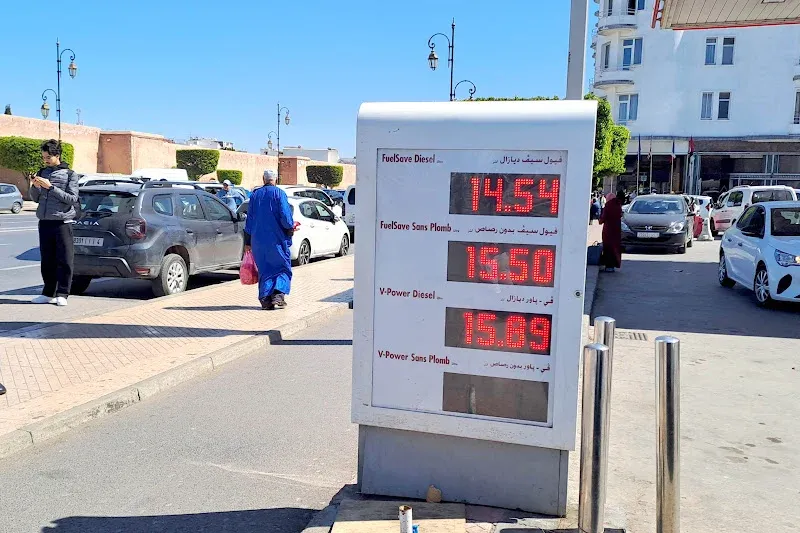
From a numerical perspective, an analysis covering the period from March 1 to April 1, 2026, demonstrated a varied response of local selling prices at gas stations in Morocco to international price fluctuations. For diesel, the price transition remains partial, with an overall difference of minus 1.35 MAD per liter, although an improvement in the reflection rate was noted during the second period from March 16 to April 1, 2026, indicating a reduction in the adjustment gap between international developments and local prices. In contrast, for gasoline, the price transition during both periods was higher than international price fluctuations, with an overall difference of plus 0.33 MAD per liter. These findings reveal a persistent asymmetry in the price transition mechanisms based on product categories amidst a backdrop of continuous increases in international markets.
As reported by hespress.com.