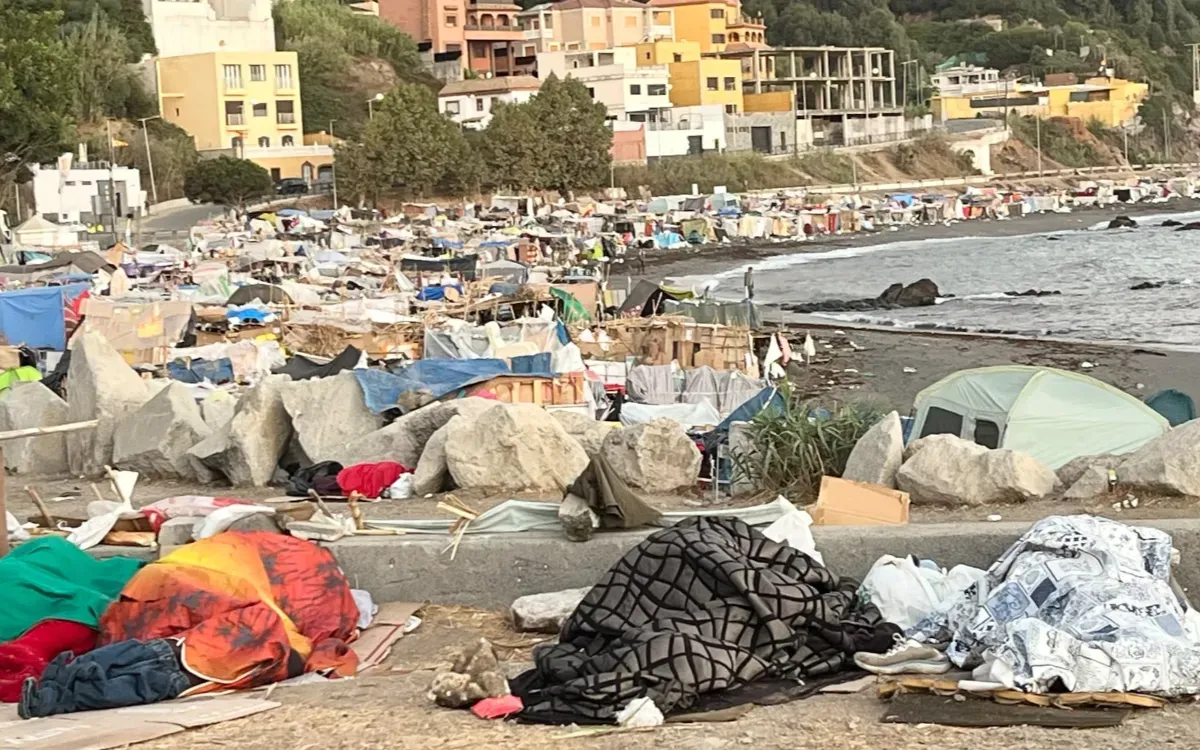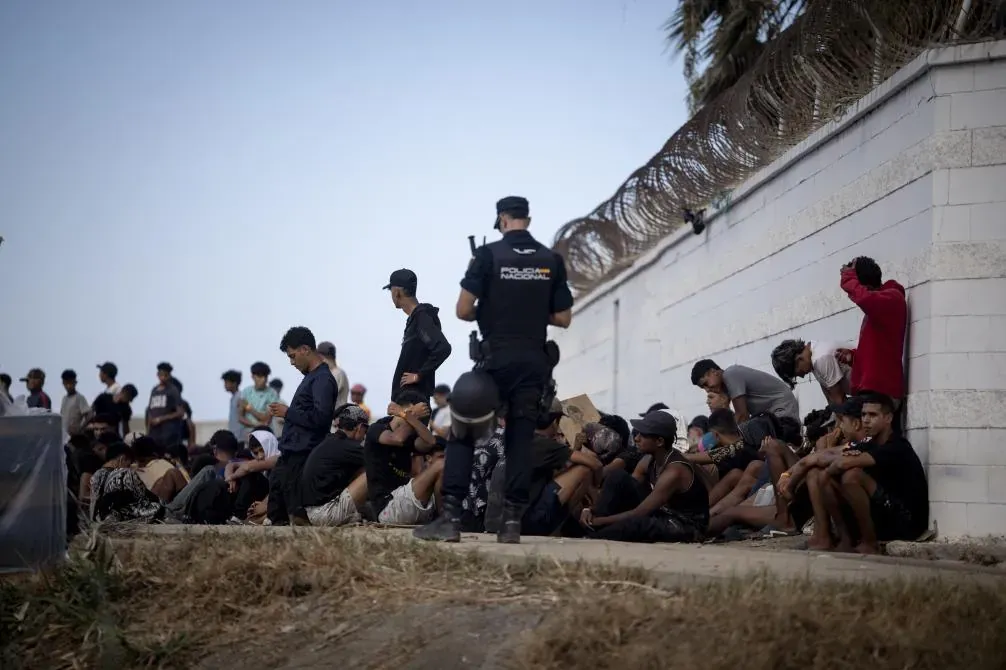

The investigation into the mass immigration crisis in Ceuta has gained significant momentum since its inception on July 31. On September 7, the National Court confirmed its jurisdiction over the matter, and just days ago, the presiding judge, María Tardón, reached out to an unprecedented number of security agencies to clarify the responsibilities of Morocco and the Spanish government regarding the overwhelming influx of migrants into Ceuta.
Judge Tardón's directive has activated a total of 31 national security bodies, including the National Police, the Civil Guard, the Army, and the National Intelligence Center. This extensive engagement underscores the gravity of the investigation, which seeks to ascertain the political implications surrounding the procedural case 46/2026 from Plaza 3 of the National Court. Among the immediate actions taken are summonses for testimony from the president of the autonomous city and the former chief of staff of the government delegate in Ceuta. These individuals have made public statements attributing responsibility to the government, setting the stage for critical testimonies.
Juan Jesús Vivas, the president of Ceuta, has recounted his attempts to communicate with Prime Minister Pedro Sánchez just days prior to the onset of the migrant surge, only to be advised by the government’s presidency to remain calm. He was reassured that there was no cause for alarm, with claims that Morocco was cooperating and that the situation was under control. In contrast, Gonzalo Sanz, who resigned shortly after the crisis, confirmed that he had relayed information from the National Intelligence Center (CNI) to the government delegate on the eve of the assaults, emphasizing the urgency and seriousness of the situation.
The judge has prioritized the interrogations of Vivas and Sanz, diverging from the National Prosecutor's long list of requests, which did not initially include these testimonies. The Prosecutor's Office focused on hearing from police officials who prepared reports concerning the incident. The judge has indicated that these testimonies will occur after the necessary information has been gathered from the various agencies.
Included in these requests are all alerts issued in the days leading up to the mass entry, with the judge having already sought copies of the government’s declassified materials. She reiterated her demand for direct information from all relevant authorities that might possess pertinent data. In her ruling on September 7, she stated that the investigation would encompass the responses of Spanish authorities to any pre-assault intelligence they may have received. The inquiry will scrutinize all actions taken within Spanish territory related to the irregular entry of tens of thousands of migrants, including the adequacy of response measures given the alerts received and the potential implications of any inaction, particularly concerning the tragic deaths of 83 individuals on the Spanish side of the border.
Judge Tardón suspects the commission of four types of offenses, including crimes against state peace or independence, violations of the rights of foreign citizens in connection with involuntary manslaughter, and organized crime. The judge has stated that her investigative actions will encompass all aspects of the situation, analyzing social media activities, identifying key organizers, uncovering any criminal structures, and determining those responsible for planning and directing the events, as well as investigating the fatalities that occurred.
The ruling has prompted requests from multiple national police entities, including the National Center for Immigration and Borders, responsible for the initial report that clearly implicated Morocco. The Spanish government has contested this report, but the judge has reaffirmed her support for the police force's findings. Additional requests for information and reports are directed to various units within the police regarding operational details and strategies employed during the incident.
One critical aspect under investigation is the funding of the mass migration. Judge Tardón has tasked the Economic and Fiscal Crime Unit (Udef) with providing insights on this matter, alongside the Civil Guard's Central Operational Unit (UCO). These agencies are expected to compile a comprehensive financial and asset report concerning the potential financing of the mobilization in question, examining significant economic movements, informal fund transfer systems, transportation contracts, and any logistical operations that could relate to the mass mobilization.
Furthermore, the investigation has reached the Defense Staff, which is required to supply any satellite images that may have been captured by its Operations Command, the Armed Forces Intelligence Center, the Joint Cyber Command, or any other relevant agency. The breadth of the judge's orders is extensive and includes a separate, confidential investigative segment accessible only to the prosecution, which is handling the most sensitive topics.
Additionally, the local police chief in Ceuta is scheduled to provide testimony on the same day as the former chief of staff. The judge has also reached out to private companies for satellite imagery and to major social media platforms such as Meta, WhatsApp, Facebook, Instagram, TikTok, Telegram, Google, and Apple, demanding the immediate preservation of data to identify those responsible for disseminating calls for mobilization, which have unprecedented implications for national security.
As reported by elmundo.es.