
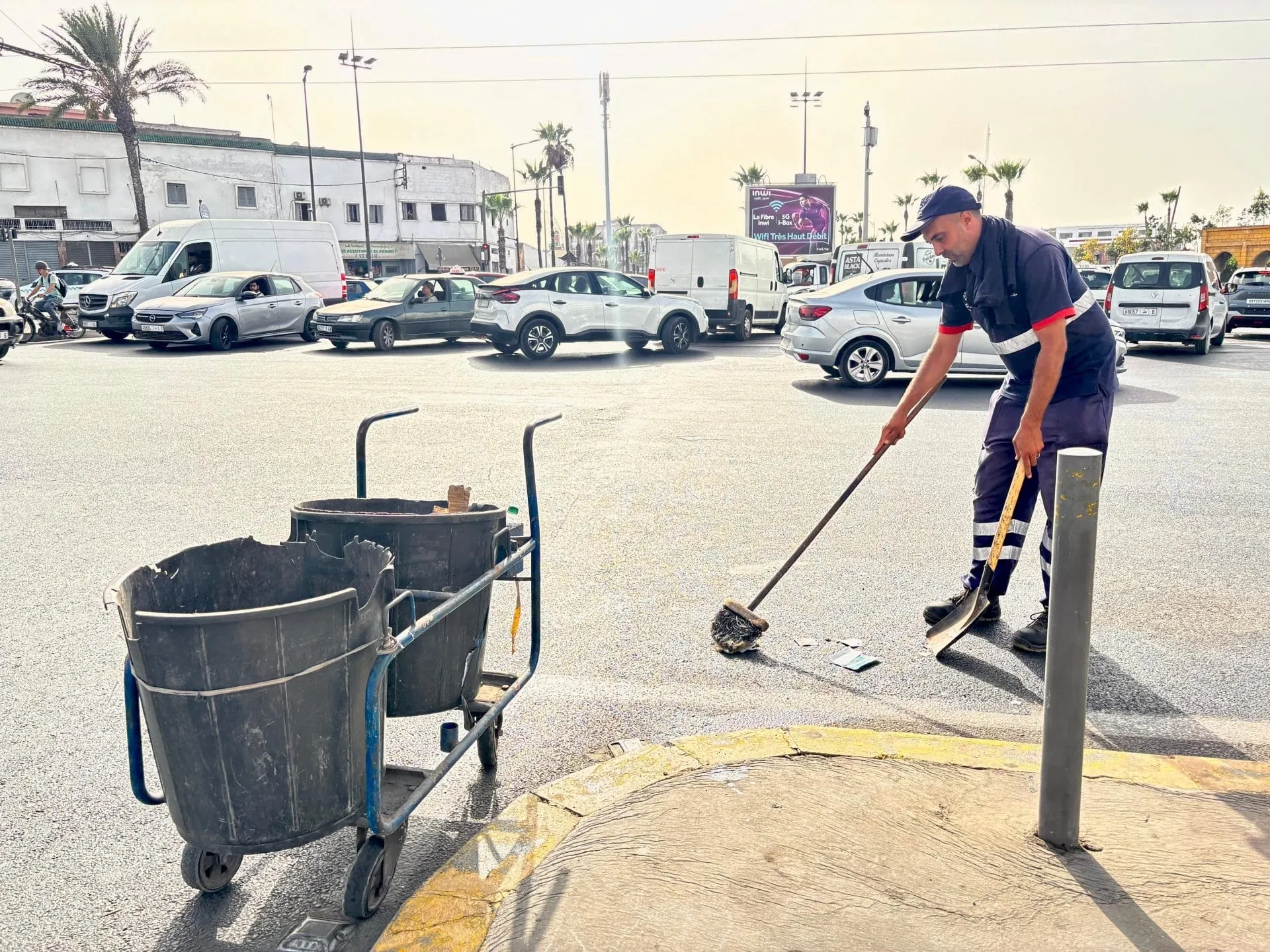

Challenges Faced by Cleanliness Workers During the 2026 Legislative Campaign
As the campaign for the 2026 legislative elections draws to a close in Casablanca, the streets are left littered with political pamphlets and flyers, creating an overwhelming situation for cleanliness workers. These agents, tasked with maintaining the tidiness of public spaces, face the daunting challenge of managing the spike in litter resulting from the distribution of electoral materials. The last day of campaigning, set for September 23, is expected to be particularly chaotic, with a significant increase in waste expected as candidates make their final pushes to reach voters.
Cleanliness agents report that the situation becomes increasingly difficult as the election date approaches. Abdelaziz, a cleanliness worker in Casablanca, describes the last day of the campaign as the worst in terms of cleanliness, stating, "Everything explodes on that day in terms of filth, flyers, and other debris." This heightened activity necessitates repeated cleaning efforts throughout the day, as areas they have just cleaned become cluttered again almost immediately after the distribution of flyers resumes.
Intensifying Workload and Frustration Among Cleanliness Workers
The repetitive nature of their work leads to frustration among cleanliness workers. Hassan, another agent, expresses his discontent, noting that the continuous littering undermines their efforts. "We clean the boulevard in the morning, but after the afternoon prayer, they come out and litter everywhere. It feels like we haven't accomplished anything all day," he laments. This cycle of cleaning and immediate re-soiling not only wears down the workers physically but also takes a toll on their morale, as they struggle to maintain the cleanliness of their designated areas amidst the ongoing chaos.
Additionally, there are concerns regarding the manner in which the campaign materials are distributed. Some workers, like Fatima, have observed that a portion of the distributed documents ends up discarded on the streets rather than being handed to voters. She notes that many of those distributing the materials are young individuals who may not prioritize responsible disposal. While her observations reflect her experience, it’s important to recognize that this does not necessarily represent all distributors during the campaign.
As the election approaches, the reality for cleanliness workers becomes increasingly apparent. The political activities that dominate public discourse are accompanied by tangible consequences in terms of waste, placing an additional burden on those responsible for maintaining clean streets. With the election day nearing, Abdelaziz, Hassan, Fatima, and their colleagues remain at the forefront, working diligently to restore order in an environment that is becoming increasingly challenging.
As reported by lebrief.ma.
