
A Journey to the Summit of North Africa
Waking up to a buzzing alarm at 2:30 AM in a remote mountain refuge is an experience that separates the casual adventurer from those truly committed to the thrill of exploration. Nestled deep in the Moroccan mountains, the temperature hovered around -10°C (14°F), yet I remained cozy within my down sleeping bag, sharing the bunk room with 15 other enthusiastic trekkers. As I lay there, the sounds of tinny phone alarms filled the air, signaling the awakening of my fellow adventurers. Outside, the dark silhouette of the majestic Atlas Mountains loomed, and we were all set to embark on an exhilarating quest to conquer the summit of Mount Toubkal, the highest peak in North Africa, standing proudly at 4,167 meters (13,671 feet).
By 3:30 AM, I found myself outside, securing crampons to my boots beneath a canvas of stars, with the Milky Way painting a breathtaking backdrop overhead. The stark contrast between this moment and my recent escapades in the bustling souks of Marrakech felt surreal. Just days earlier, I had been dodging scooters and savoring the rich aromas of spices and local street food. Our journey began in Imlil, a charming Berber village and the gateway to Toubkal's ascent. The streets were lined with stone shops serving hot coffee and hiking gear, while mules carried supplies into the mountains.
The Ascent: From Refuge to Summit
Gathered downstairs in the refuge, our remarkable guides Mohamed and Ibrahim had prepared a hearty breakfast and steaming coffee to fuel our spirits. It’s mandatory to have a guide when attempting Toubkal, and many climbers opt for two nights in the refuge, allowing for acclimatization before the final ascent. The accommodations were basic, with communal rooms and makeshift toilets, yet the warmth of the place, especially with a crackling fire the night before, was inviting. While I didn’t expect gourmet meals at 3,200 meters (10,498 feet), our support crew consistently delivered generous servings of tagine, stews, and flatbreads. On our early morning adventure, they even presented us with stacks of pancakes to energize us for the cold ahead.
As we set off into the darkness, the mountain loomed large above us, and the faint glow of other hikers’ headlamps snaked up the steep trail like stars in motion. Jebel Toubkal isn’t considered a technically challenging peak, yet the winter conditions transform the climb entirely. Snow and ice blanketed the path, making footing precarious, while the biting wind intensified as we climbed higher. The final stretch required the use of crampons and ice axes as we navigated steep, snowy slopes.
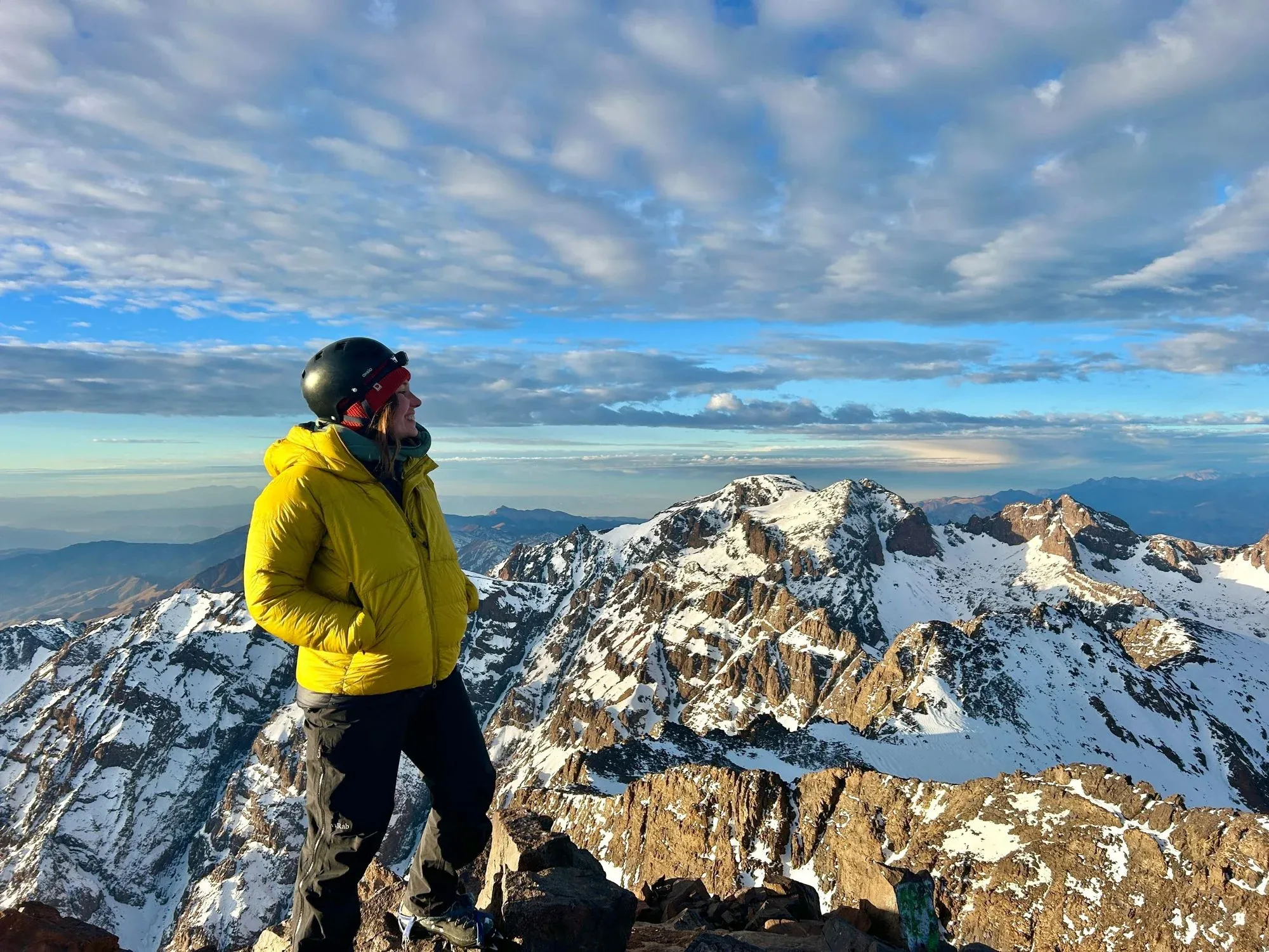
With each step above 3,000 meters (9,842 feet), the exertion mounted, and my calves protested against the demanding ascent. However, there was a certain comfort in moving in unison with my fellow trekkers, our headlamps glimmering and the sound of crampons crunching on snow breaking the silence. As dawn approached, the eastern sky transformed from deep black to shades of charcoal, pink, and gold. The silhouettes of the High Atlas mountains gradually emerged, bathed in the first light of day. Mohamed ensured we stayed hydrated and energized with trail mix as we paused briefly on a narrow ridge. With ice axes in hand, we cautiously made our way over slick rocks before finally stepping onto the soft, snowy slope that marked the summit of Mount Toubkal.
For centuries, the Amazigh people have revered Toubkal, known locally as Adrar n'Dern, which means 'mountain of mountains.' It is believed that indigenous people reached its peak long before any official climbs were recorded. The summit features traditional stone cairns, called _kerkours_, which hold cultural and religious significance. The mountain is also associated with the local saint Sidi Chamharouch, whose shrine lies along the ascent route.
The first official ascent occurred on June 12, 1923, when French mountaineers reached the summit, having previously mistaken another peak for the highest in the region. The dawn light cast shadows from the summit's trigonometrical marker across the landscape, revealing expansive views of the Atlas Mountains cloaked in snow and deep valleys stretching endlessly. The clarity of the morning even allowed us to glimpse the distant Sahara Desert.
Though we reveled in the golden glow, it was essential to remember that reaching the summit was merely half the adventure. The descent proved to be a challenging slog, devoid of the mystery that had characterized our climb. We carefully navigated the icy terrain, finally reaching the refuge for cups of hot tea and bountiful plates of fluffy couscous, fresh salads, and fruit.
After a well-deserved rest, we faced the remaining trail back to Imlil, a four-hour trek winding through the picturesque Toubkal Valley. As we descended, the stark whiteness of the mountain gradually gave way to lush greenery, herds of goats, and the charming rose-pink structures of Amazigh villages nestled in the sunlit valley. Eventually, we boarded the bus back to Marrakech, leaving behind the majestic Atlas Mountains. By nightfall, we found ourselves enjoying the comforts of a riad, a hot shower, and ice-cold Casablanca beers on a terrace overlooking the vibrant city below. In a mere weekend, we had ascended to 4,167 meters (13,671 feet) at dawn and returned to the lively streets of Marrakech, celebrating an epic mountain trek.
As reported by muchbetteradventures.com.