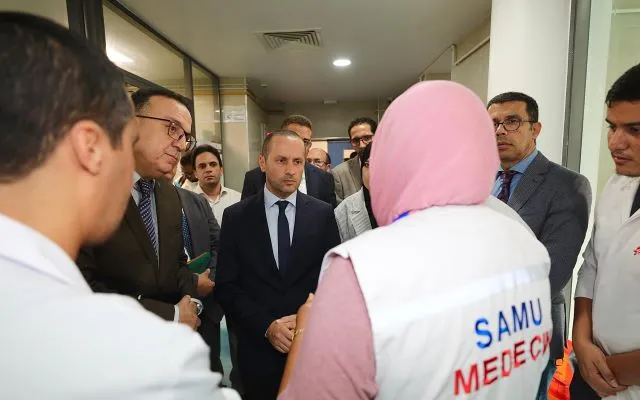

New Employee Transfers Spark Debate in Fes-Meknes Health Sector
The recent transfer of various employees within the healthcare and administrative sectors, coinciding with the launch of the Fes-Meknes territorial health group, has ignited considerable debate among professionals. There are growing concerns regarding the criteria used for these transfers and appointments, as well as the motives behind certain decisions, particularly in relation to the actual needs of the health institutions within the group.
This development comes as the Fes-Meknes territorial health group officially commenced operations on September 1st, with formal assurances that the reform aims to bolster governance, decentralization, and the management of human resources and health services. According to professional data obtained by "Maakom 24", the latest movement affected numerous employees and nurses who were transferred to the Higher Institute of Nursing Professions and Health Techniques (ISPITS) in Meknes.
These transfers raise questions about the alignment of the specializations and professional qualifications of the transferred staff with the pedagogical and training needs of the institute, particularly concerning those holding master’s degrees in areas such as quality and advanced emergency care. Sources are calling for transparency regarding the criteria used to select the individuals benefiting from these transfers, questioning whether the process is based on clearly defined needs or on decisions related to the redistribution of human resources as part of the new structure of the territorial health group.
Circulating professional data indicates a significant increase in the number of employees working at the institute, with estimates suggesting a rise from approximately 32 to around 137 employees, while some sources estimate the figure at about 140. If these numbers are confirmed, they prompt inquiries into the reasons behind such an increase and whether it corresponds to the actual needs of the institute, especially given the ongoing shortage of human resources in several health institutions associated with the group.
Concerns Over Staffing and Resource Allocation
Moreover, there are concerns regarding the specific roles that the transferred staff will undertake and their relationship to training, pedagogical supervision, and practical internships, which are fundamental functions of health professional training institutes. Professional sources warn that the continued transfer of staff from health institutions to other locations, without clarifying the needs justifying these decisions, could exacerbate the shortages faced by certain hospitals and health centers.
These sources argue that any redistribution of human resources should consider the volume of health activities, patient numbers, and the unique characteristics of each institution, to prevent the process of redeployment from weakening some institutions while bolstering others. The sensitivity of this discussion is heightened by the perceived shortages, particularly among nursing staff, who are crucial for maintaining the continuity of health services in hospitals and health centers.
In light of these concerns, professional sources are demanding transparency in managing transfer and appointment movements and are urging clarity on which entities issued or approved these decisions, whether it be the management of the territorial health group, the ministry, or any other body. They also call for the publication of the criteria used for transfers and appointments, linking each transfer to the genuine needs of the receiving institution, along with a clear outline of the tasks and specializations required for each position.
According to these sources, some institutions have yet to receive clear administrative documentation regarding several transfers, further exacerbating the ambiguity surrounding the recent movement.
As reported by maacom.ma.