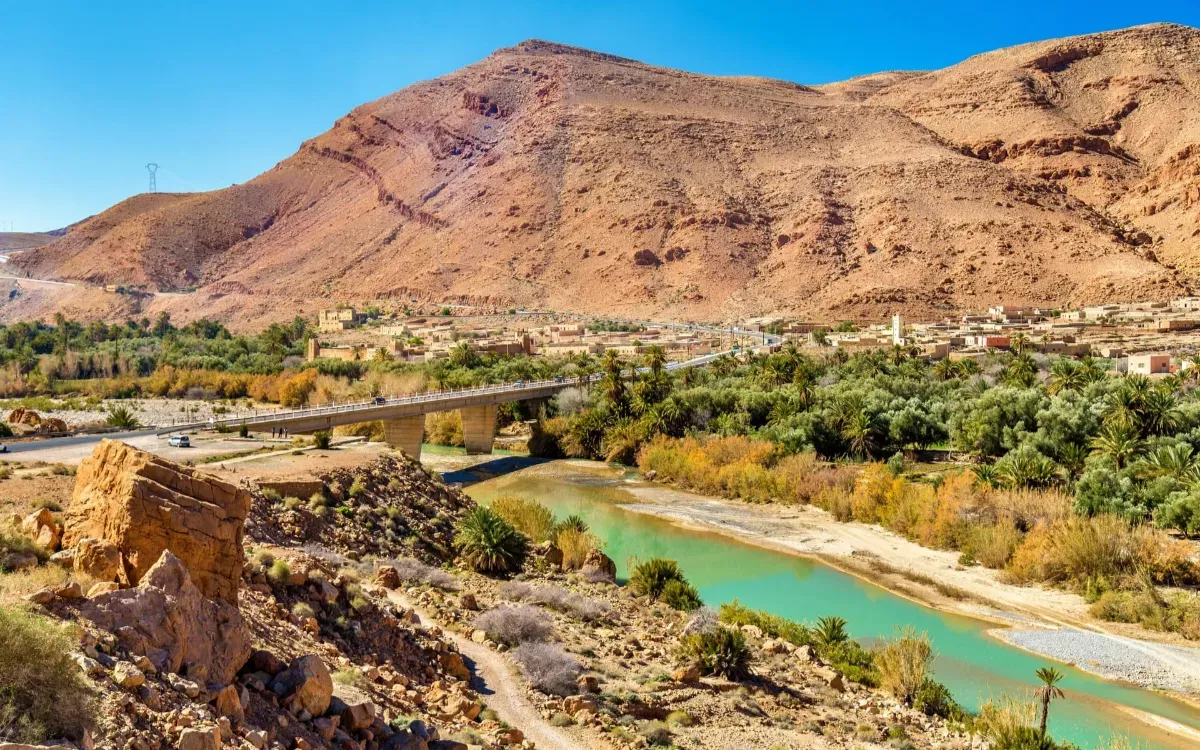

On August 21, 2026, a significant study was published that highlights the cooling effects of vegetation in Errachidia, Morocco, particularly in a region that is frequently subjected to extreme heat. The research, conducted by scientists Rachid Ouachoua and Hamid Benssi, utilizes satellite imagery from Landsat 8 and Sentinel-2 to meticulously analyze surface temperatures and the corresponding vegetation cover in this pre-Saharan city. The findings reveal that the presence of densely vegetated areas can lower surface temperatures by over 5 °C, a notable effect for an area that recently recorded surface temperatures between 33.8 °C and 50.1 °C on July 6, 2023, with an urban average of 45.3 °C.
Specifically, the study illustrates that within a mere 25 meters of a densely vegetated zone, the average surface temperature drops to approximately 40.5 °C, marking a decrease of 5.39 °C compared to areas located between 400 and 500 meters away. However, the cooling effect diminishes rapidly as one moves away from green spaces; the temperature difference reduces to 2.79 °C at distances of 25 to 50 meters and further down to just 1.61 °C when extending the distance to 100 meters. Beyond this range, the temperature differential falls below 1 °C, underscoring the vital importance of proximity to vegetation for effective temperature regulation.
The study also emphasizes that bare soil is particularly vulnerable to heat, with average surface temperatures soaring to 47.2 °C. Much of the urban area assessed falls into high to very high thermal risk categories, as defined by the researchers. Although the reported temperature reduction of 5.39 °C is significant, it is important to note that this effect is not universally applicable; it varies based on factors such as vegetation density, irrigation practices, urban configuration, and prevailing weather conditions. The measurements were taken on a specific summer day, which can influence the overall results.
In conclusion, the research strongly advocates for increasing the proximity of vegetated spaces to heat-exposed sectors in Errachidia, as this could lead to meaningful reductions in surface temperatures. Given the ongoing challenges related to water scarcity, the authors recommend prioritizing drought-resistant plant species such as date palms, tamarisk, and acacia to enhance urban greenery effectively. This strategic approach could significantly mitigate the impacts of extreme temperatures in the region.
As reported by bladi.net.