
Morocco's Stadiums Prepare for the 2030 World Cup
As the world eagerly anticipates the 2030 FIFA World Cup, co-hosted by Morocco, Spain, and Portugal, significant progress is being made across the six Moroccan stadiums designated to host this prestigious event. With less than four years until kickoff, the state of these venues varies widely, showcasing a mix of readiness, ongoing renovations, and ambitious construction projects that promise to transform Morocco's sports infrastructure.
The Grand Stadium Hassan II: A Monumental Project in Benslimane
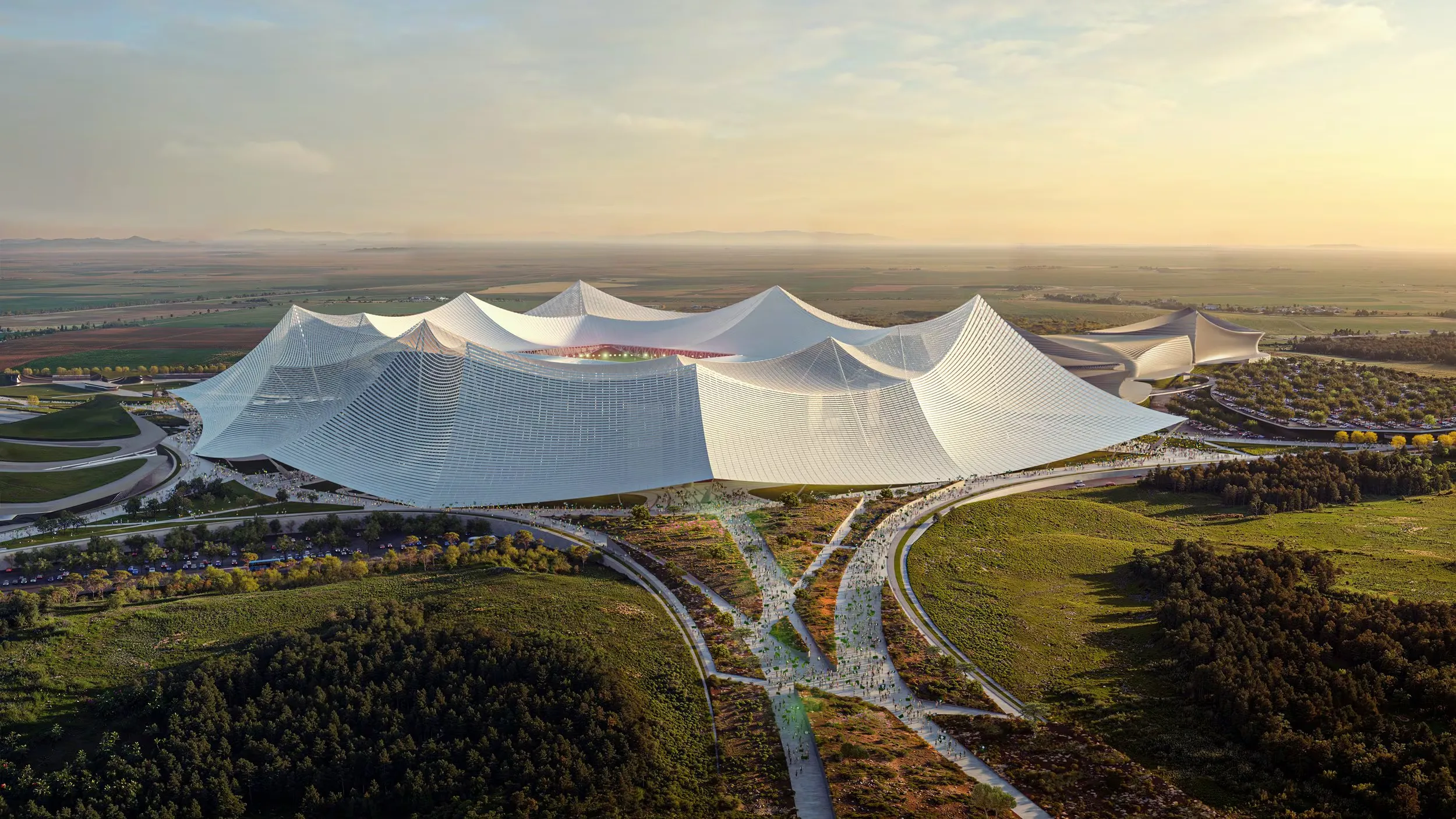
The Grand Stadium Hassan II in Benslimane represents the crown jewel of this initiative. Currently, construction is progressing at a vigorous pace, and the ambitious design is starting to take shape. Once completed, this stadium will accommodate approximately 115,000 spectators, potentially becoming the largest football stadium in the world and a central venue for the World Cup 2030. Following the completion of initial groundwork, focus has shifted to establishing the primary structure, with visible foundations and initial stands already in place. The stadium's design is heavily inspired by traditional Moroccan tents, which will feature a stunning and expansive roof over the seating areas.
By May 2026, construction had reached a commendable 40% completion rate, with project managers aiming for a grand opening by December 2027. The stadium will include a hybrid natural turf pitch and over 114,000 seats, encompassing various categories including VIP and media zones, ensuring it meets FIFA's stringent standards for international competitions.
In addition to Benslimane, cities like Agadir, Marrakech, and Fès are also witnessing substantial upgrades. Following an initial phase of renovations in preparation for the 2025 Africa Cup of Nations (CAN), these stadiums have entered a significant second phase of work aimed at enhancing their facilities to meet FIFA requirements for the upcoming World Cup. For instance, Agadir's Grand Stadium is undergoing extensive modifications, including the demolition of the existing athletics track to facilitate closer seating arrangements and a complete facade overhaul, increasing its capacity to nearly 46,000 seats.
Similar transformations are underway in Marrakech, where the existing track is being removed, and the pitch level is being lowered to allow for new stands. The stadium's design is also shifting towards an octagonal configuration, preserving its iconic four towers while enhancing the seating capacity. In Fès, following a prior investment of nearly 600 million dirhams, a second phase of renovations is set to cost approximately 2.816 billion dirhams, positioning the stadium to meet FIFA's specifications fully.
Meanwhile, the Prince Moulay Abdellah Complex in Rabat, which was completely rebuilt and reopened on September 24, 2025, has already hosted several high-profile matches, including CAN fixtures. This modern stadium, devoid of an athletics track, features 68,700 covered seats, ensuring a closer connection between the fans and the pitch, alongside numerous amenities such as VIP boxes and extensive media facilities.
As reported by sport.le360.ma.