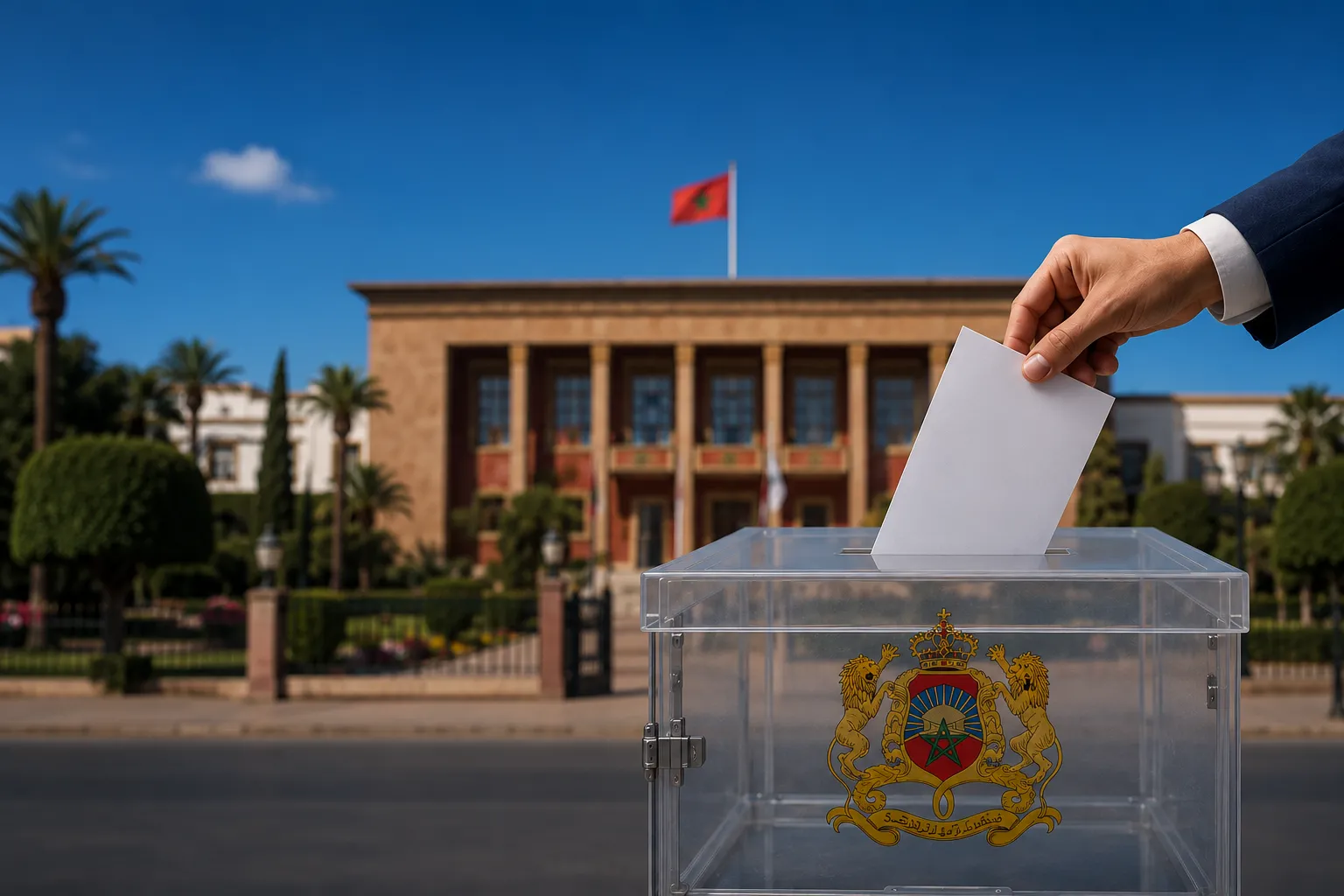

The countdown to the polling stations for the parliamentary elections scheduled for the 23rd of this month has begun in earnest. The political discourse surrounding these elections now extends beyond merely speculating on the outcomes that will dictate the leadership of public policies for the next five years. It has also branched into the positions of those who have chosen to withdraw from the political arena altogether, declaring their intention to boycott the elections and calling for non-participation.
Even though boycotting elections is fundamentally a political stance of protest—a message of rejection aimed at the perceived undemocratic rules or conditions—the implications of this choice raise deeper discussions regarding its efficacy and limitations. It brings into question whether such a decision genuinely represents a political exercise capable of creating impact, or if it has merely become a less burdensome option for political actors reluctant to engage in the electoral competition and face its consequences.
In this context, Mustafa El Yahiaoui, a professor of political geography and public policy assessment at Hassan II University in Mohammedia, articulated that the decision to boycott elections stems from an ideological perspective held by certain political factions regarding the nature of the political system and the overall democratic process. He emphasized that it would be an exaggeration to claim that the boycott has significantly influenced the habitual nature of Moroccan elections.
In a conversation with the newspaper "The Voice of Morocco," El Yahiaoui raised concerns about the mass appeal of organizations linked to what are termed "parties of activists," asserting that a segment of these organizations holds principled stances on the progress made in democratic reform in Morocco. He further elaborated that the boycott is associated with these types of parties, while major parties that typically participate in elections do not express negative sentiments about the electoral process, at least in the past 25 years.
El Yahiaoui noted that the decision to boycott is linked to a "elitist political stance," rather than stemming from extensive public discussions. He pointed out that this decision has not had a significant political impact on the Moroccan experience, cautioning that the only notable instance may be the low participation rate of 37% recorded among registered voters for the first time in the 2007 elections.
Organizational Challenges of Moroccan Parties
When discussing whether the announcement of a boycott is a comfortable position or a means of evading responsibility, the political analyst and academic stated that for some, the stance is principled. He highlighted that some individuals are not even registered on electoral rolls, indicating that they are not fundamentally concerned with the electoral process.
El Yahiaoui further asserted that a scientific analysis of the boycott decision and its popular appeal in the Moroccan political context necessitates starting from a critical question: to what extent is there a party among the activist factions capable of mobilizing the community year-round? He confirmed that most Moroccan parties face organizational challenges at the grassroots level. The majority operate within a limited framework and do not concern themselves with mass mobilization, meaning their political function, as dictated by Article 7 of the 2011 Constitution, is restricted, indicating a stagnation in the organizational capacity of existing political parties.
A Genuine Academic Political Debate
Regarding the failure to capitalize on the developments introduced by the 2011 Constitution, El Yahiaoui warned that Morocco faces a genuine problem characterized by a lack of serious academic debate, both within political parties and possibly at the state level, aimed at evaluating electoral performance over the past 25 years. He discussed the proliferation of certain unfounded and inaccurate assumptions within the Moroccan political scene, citing, for instance, the considerable uproar regarding political migration following a voice recording attributed to Rachid Talbi Alami, which sparked enthusiastic discussions among the populace.
El Yahiaoui explained that while everyone passionately discusses political migration, academic readings must consider the issue in its Moroccan context, questioning whether it has declined or remained constant over time. He urged political actors, including parties and the state, to initiate precise academic discussions concerning the challenges at hand and the prospects for democratic reform.
It is noteworthy that following the announcement of the parliamentary election results, the King appoints the Prime Minister from the political party that secures the most seats. The appointed Prime Minister then engages in consultations with political stakeholders to form the government, after which the proposed members are submitted to the King for appointment, in accordance with Article 47 of the Constitution. Once the King appoints the government members, the Prime Minister, as stipulated by Article 88 of the Constitution, presents the program he intends to implement before both houses of Parliament. This program must outline the key aspects of the government’s planned actions across various national activity domains, particularly in economic, social, environmental, cultural, and foreign policy areas. The aforementioned program is subject to debate in both chambers, followed by a vote in the House of Representatives, and the government is not considered installed until it secures the confidence of the House of Representatives, expressed through a vote by the absolute majority of its members in favor of the government’s program. After gaining the confidence of the representatives in the House of Representatives, which comprises 395 deputies, the government embarks on steering public policies for the next five years, during which it will work to implement its visions and choices.
As reported by thevoice.ma.