Crisis at the Gates of Ceuta
In a dramatic turn of events, thousands of migrants, primarily from Morocco, have illegally crossed into the Spanish enclave of Ceuta. This surge has prompted local authorities to request the Spanish government in Madrid to declare a national state of emergency and deploy military forces to manage the situation. The recent influx raises questions about the underlying causes driving this unprecedented movement of people at this particular time.
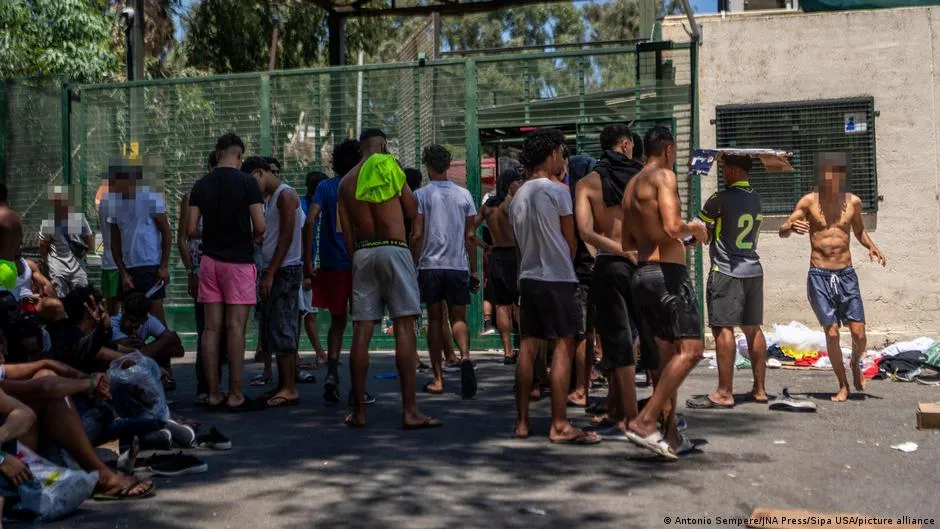
Footage captured on the beach of Tarajal, a disputed area under Spanish sovereignty, shows large crowds of individuals—mostly young men—rushing past wave barriers and through the streets of Ceuta. Among them are families, including women and children, all seemingly in pursuit of a better life. Some migrants were heard chanting "Long live Spain!" in a video taken by an independent journalist working for the Associated Press.
The escalation at the border between Spain and Morocco comes amid a significant rise in the number of migrants attempting to reach this small territory, often through dangerous swimming routes. The regional president, Juan Jesús Vivas, declared on Thursday, July 30, 2026, that they are facing a comprehensive humanitarian and social emergency. Recently, around 1,500 individuals arrived via sea, pushing local reception centers beyond their capacity.
Request for Military Intervention and National Emergency Declaration
Spanish state television reported that between 2,000 and 3,000 young migrants crossed the border, with many scaling the border fence without needing to swim. In response to this crisis, the authorities in Ceuta have urgently requested the Spanish government to declare a national state of emergency and send in the military after the mass crossing.
In a statement, the Spanish Ministry of the Interior announced that the armed forces would reinforce the Civil Guard in carrying out necessary tasks to ensure public safety in Ceuta. Tragically, the Strait of Gibraltar has once again become the backdrop for a migration tragedy as several individuals have drowned during their attempt to reach Spain. On Tuesday night, rescue operations by the Spanish Red Cross and maritime rescue services saved over a hundred people from drowning near Ceuta after many were lost to the treacherous waters.
The majority of those trying to reach Ceuta are young Moroccans, although migrants from Algeria, Sudan, and other regions are also making the perilous journey. Ceuta, located on the Moroccan coast of the Mediterranean Sea, is heavily fortified with maritime barriers and other security measures. Those wishing to reach the city and its beaches, Benzo and Tarajal, must swim for approximately four hours from Moroccan territory, often facing significant challenges. Sadly, recent incidents have seen four young migrants drown, many of whom had minimal swimming skills and relied on flotation devices.
Ceuta and Melilla, another autonomous city in North Africa, represent the only land borders between the European Union and Africa. The recent influx of migrants can be traced back to a ruling by the Spanish Supreme Court two weeks ago, which prohibited the expulsion of migrants attempting to reach land by sea, a decision that has significantly altered the legal landscape regarding migration.
As reported by dw.com.