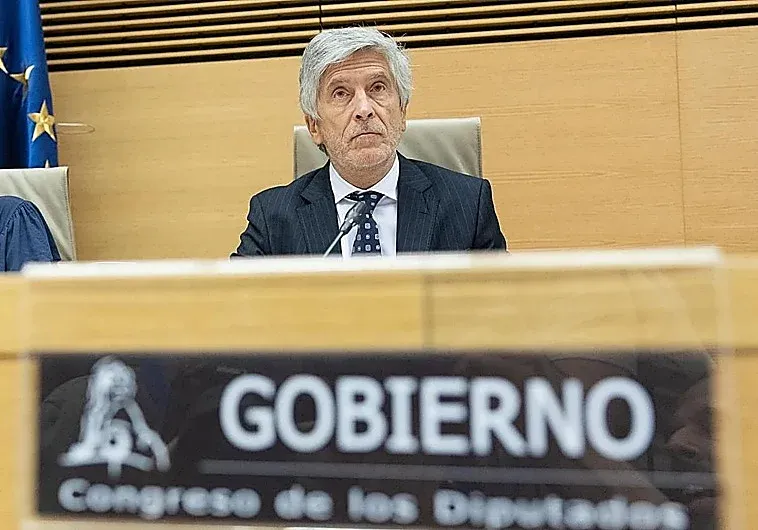

The recent developments regarding the Spanish government's handling of the migration crisis have sparked significant controversy, particularly as the National High Court and public prosecution now possess critical documents that challenge the administration's narrative. At the center of this turmoil is Interior Minister Fernando Grande-Marlaska, who has urgently requested verification from the Director-General of the Police, Francisco Pardo, regarding the timing and dissemination of this crucial information. This inquiry has become especially pressing following the declaration of a national security interest on August 25, which raises questions about the government’s responsiveness and transparency in a time of crisis.
The findings from the investigation dismiss the notion that the migration crisis stemmed from spontaneous actions by criminal organizations or social media mobilizations. Instead, the report from CENIF indicates that the mass migration was orchestrated as a strategic maneuver by Morocco, suggesting a premeditated operation designed and executed with intent. This analysis is bolstered by extensive photographic evidence and a thorough risk assessment conducted prior to the events. It reveals that members of the Moroccan Gendarmerie actively directed thousands of individuals in Castillejos toward key crossing points, such as the El Tarajal breakwater, rather than a chaotic influx.
In his communication with Pardo, Marlaska emphasized the critical nature of the information, labeling it as vital for the government to make informed decisions regarding both domestic and foreign policy, as well as the protection of state interests. The implications of this situation extend beyond mere administrative oversight; it has ignited a political storm in Madrid, highlighting severe communication failures within state security forces. Notably, Minister Marlaska was unaware of the existence of the document until it was sent directly to the National High Court and public prosecutors by the police.
The controversy deepens as it reveals a significant national security oversight. Marlaska has sought clarity on when the police acquired this intelligence and why it was not communicated prior to the national security declaration on August 25. Furthermore, the report’s conclusions stand in stark contrast to the narrative previously presented by Prime Minister Pedro Sánchez's administration, which has consistently lauded the collaborative migration efforts with Morocco.
The Interior Ministry has asserted that such comprehensive reports ought to have been shared immediately with both the Consejo de Seguridad Nacional and the unified command led by Minister of Territorial Policy Ángel Víctor Torres. The ramifications of this lack of internal communication and the report’s findings now pose a significant challenge for the government. They must address the actions of Moroccan security forces while ensuring the integrity of the EU's southern border. Analysts perceive this operation as part of Morocco’s longstanding claims over Ceuta and Melilla, framing it as a strategic counter-intelligence undertaking aimed at undermining the Spanish security forces’ ability to preempt threats and evaluating the efficacy of the national intelligence center (CNI).
The report indicates that Morocco successfully neutralized a subsequent rally on August 15, demonstrating its capacity to control these movements, contrasting sharply with the earlier events of July 30 and 31, where passage was unimpeded. The police have submitted this documentation to the court, which will assess whether there is evidence of an offense against the independence of the state. The findings from CENIF provide a legal foundation for further investigation while casting doubt on the official narrative and the current foreign policy stances of the Spanish government.
As reported by surinenglish.com.