
Cultural Dynamics Across Moroccan Cities
The cultural landscape across Morocco is vibrant and dynamic, reflecting a profound engagement with identity, heritage, and innovation. From Casablanca to Taza, and Salé, various artistic events are emerging, each contributing to a collective understanding of who we are through the lens of what we create and share. This exploration underscores the intertwined relationship between memory and contemporary artistic expression, as numerous exhibitions and festivals spotlight the rich cultural tapestry of the nation.
Exhibition and Events Highlighting Identity and Heritage
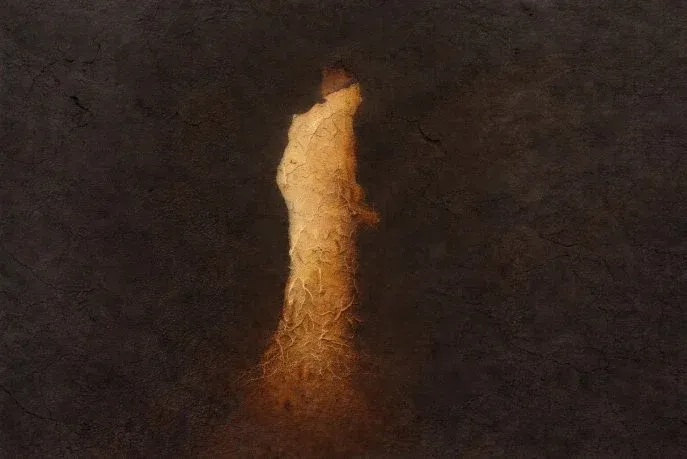
One of the significant highlights in Casablanca is the exhibition "From The Homeland/Oudarnegh" by artist Noureddine Ouarhim, hosted at the American Arts Center. This exhibition presents a thoughtful exploration of identity and belonging through a collection of artworks that incorporate organic materials like earth, lime, roots, and charcoal. Ouarhim, hailing from the Haha region of Essaouira, continues his artistic journey initiated with his previous exhibition "Tighmi," which focused on rural homes. The term "Oudarnegh," which means "from us" in Amazigh, serves as a thematic anchor in this exhibition, prompting a reflective dialogue on the fading roots of cultural identity. The intricate layering of materials not only creates a visual narrative but also acts as a form of memory archaeology, where time, history, and human imprint converge.
In conjunction with this, the 15th edition of the Casablanca Heritage Days, organized by Casamémoire from April 13 to 19, revolves around the theme "Casablanca Atlantique: when the ocean shapes the city." This event offers a renewed perspective on the metropolis through its foundational connection to the Atlantic Ocean. The "Casa Littorale" circuit invites attendees to rediscover iconic sites such as the Corniche, Sidi Abderrahmane mausoleum, and the Anfa neighborhood. Among the highlights is a guided tour of the Hassan II Mosque, an architectural marvel situated on the Atlantic coastline, which facilitates a cross-disciplinary approach intertwining architecture, spirituality, and maritime landscape. Throughout the week, participants can engage in guided tours, urban excursions, conferences, workshops, and artistic performances, all aiming to enhance appreciation for Casablanca's rich heritage.
Meanwhile, the city of Taza is set to host the inaugural International Cultural Heritage Festival – Heritage 4.0 from July 24 to 26. Organized by the Horizon Élite Association for Integrated Development, this festival aims to blend cultural heritage with digital technology. Designed as an exchange platform, it will gather artists, researchers, artisans, and cultural stakeholders for a diverse program that includes meetings, a national congress, and a digital culture fair. The festival's dual objective is to ensure the transmission of both tangible and intangible heritage while fostering innovation and youth engagement, encouraging creative projects through competitions that align with sustainable cultural development.
In Salé, a significant event will feature a book signing of "Quand l’Atlantique raconte l’histoire du Maroc" by Leila Maziane, which convenes the public for an insightful discussion on the maritime identity of Morocco. Organized by the Living History Association of Morocco, the Moroccan Community Council abroad, and the Abou Bakr El Kadiri Foundation, this gathering highlights a historical narrative that transcends the conventional view of a country oriented inward. Through the analysis of 3,400 kilometers of coastline, the book outlines the continuity between ancient trading posts, pirate cities, and contemporary hubs like Tanger Med. The ocean is portrayed not merely as a boundary but as a bridge that has shaped a culture of openness, exchange, and adaptability. By integrating previously unpublished archives and historiographical approaches, the author presents a dynamic interpretation of Morocco, firmly embedded in the broader Atlantic flows, affirming the significance of this space in the formation of its identity.
As reported by quid.ma.