
Exploring Es-Semara's Archaeological Treasures
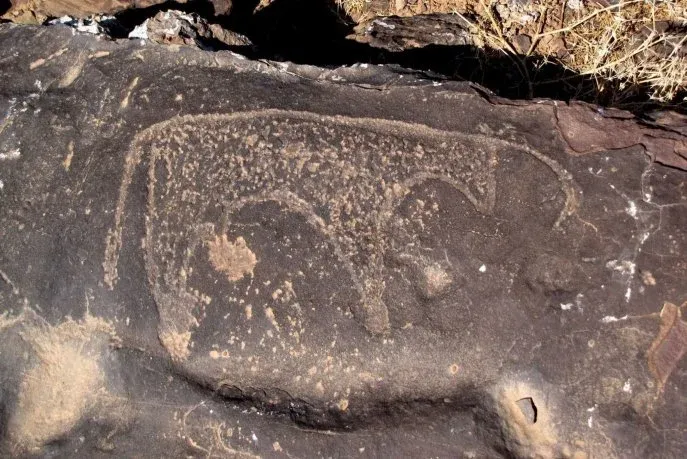
The province of Es-Semara stands out as one of Morocco's key centers for rock art, showcasing an array of engravings, cave paintings, prehistoric tools, and funerary monuments that reflect the ancient human presence in this segment of the Moroccan Sahara, dating back from the Paleolithic to the Neolithic periods. Some of these representations trace back to a remarkable time frame between 8,000 and 4,000 years before our era, offering invaluable insights for researchers intrigued by the lifestyles, beliefs, and economic activities of the prehistoric populations in North Africa.
According to Abdelilah Ouguenane, an inspector of monuments and historical sites at the Regional Directorate of Culture in Laâyoune-Sakia El Hamra, 22 sites featuring rock engravings and cave paintings, along with the historical monument Dar Haouza, are already listed as part of the national heritage, while six more classification files are currently being prepared. Restoration efforts, the establishment of archaeological conservatories, and the organization of educational activities have been initiated to enhance the preservation of this heritage. Despite these advancements, experts believe that the archaeological potential of the region remains significantly underexplored.
Unveiling the Historical Narratives of the Sahara
Currently, the province is home to over 175 sites of rock engravings and 25 locations of cave paintings. As emphasized by Baiba Mohamed Mouloud, a representative of the National Center for Rock Heritage and president of the Mirane Association, these remnants serve as a living connection between the past and the present. The engravings depict the various stages of human occupation in the Sahara, from hunter-gatherer societies to pastoral and nomadic communities, illustrating how ancient populations adapted to a continuously changing environment.
Apart from their artistic value, these works are genuine historical archives that facilitate the study of anthropology, techniques, beliefs, and the economic organization of prehistoric societies. The more fragile cave paintings are particularly susceptible to natural erosion and human degradation; however, they hold significant scientific interest, especially due to the dating possibilities offered by certain organic pigments. The Farsia site is noted as one of the most remarkable collections of this heritage.
In Marrakech, a meeting focusing on the protection of cultural heritage highlighted the need to bolster cooperation between Morocco and Spain in the face of natural risks and crisis situations. Under the theme "Heritage and Prevention: Shared Experiences Between Spain and Morocco," experts and specialists exchanged insights on mechanisms for safeguarding historical and architectural heritage. Spanish State lawyer María López-Frías presented the Spanish risk management model applied to cultural heritage, which is based on three pillars: disaster prevention, emergency response preparation, and coordination among relevant institutions. Participants acknowledged that the resilience of heritage has become a major concern, particularly in a context marked by a rise in earthquakes, floods, fires, and other extreme phenomena. Preserving monuments, historical sites, and cultural assets now necessitates the comprehensive integration of risk management into heritage policies.
Architect and researcher Karim Rouissi underscored the importance of protecting the architectural identity of Moroccan cities amid rapid urban transformations, particularly within medinas and historical ensembles.
Meanwhile, the city of Tangier is hosting the inaugural edition of the International Image Festival "Photo Tanger," running until August 31 under the theme "The Call of the Open Sea." Spread across various cultural spaces and public venues, the event pays tribute to the unique identity of the city of the Strait, a historical crossroads between the Mediterranean and the Atlantic. The festival aims to enhance the photographic heritage of Tangier while providing a platform for contemporary visual practices. It brings together both established and emerging Moroccan and foreign artists in a setting that encourages intercultural exchanges.
According to Tahar Ben Jelloun, a member of the organizing committee, this event stands out for its exceptional duration covering the entire summer season and for the diversity of the spaces involved. The program includes exhibitions, intellectual meetings, and a competition dedicated to young Moroccan photographers. Additionally, the festival's launch coincides with the reopening of the Mohamed Drissi Contemporary Art Gallery following its rehabilitation. For the organizers, this initiative contributes to enhancing the cultural appeal of Tangier and promotes photography as a universal language of creation, dialogue, and transmission.
As reported by quid.ma.