
Upcoming Lunar Eclipse to Dazzle Skywatchers in Morocco
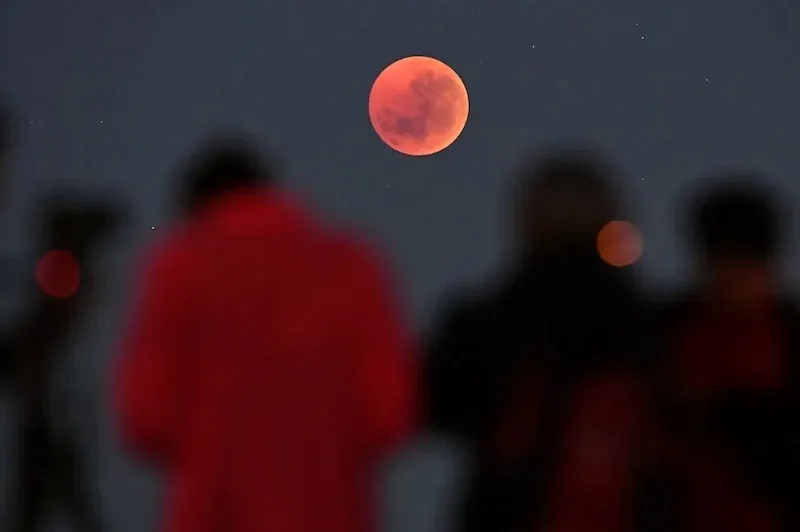
On the early morning of August 28, 2026, Morocco will witness a spectacular astronomical event: a deep partial lunar eclipse. This phenomenon comes shortly after a recent partial solar eclipse observed throughout various regions of the kingdom. Astronomy enthusiasts will have the opportunity to view this celestial display with the naked eye, as the moon gradually slips into the Earth's shadow. As it reaches its peak, a significant portion of the moon will be cloaked in darkness, giving it a striking copper-red hue.
Details of the Eclipse and Viewing Opportunities
The lunar eclipse will be visible across Africa, Europe, the Americas, and parts of Western Asia, including Morocco. Observers will be able to track the stages of the eclipse according to local moonrise and moonset times, as noted by NASA. In Morocco, the event begins shortly after midnight, with the initial phase of penumbral shading, which is difficult to detect. The partial eclipse will commence when the moon starts to enter the Earth's umbra at 3:35 AM local time.
The peak of the eclipse is anticipated around 5:12 AM, when approximately 93% of the moon's surface will be engulfed in shadow, transforming the obscured portion into a dark copper or reddish tone, while a small segment remains illuminated by sunlight. According to Mazen Younes, a member of the British Astronomical Association, unlike a total lunar eclipse, the moon will not completely disappear; a small part will stay lit, while the majority takes on a coppery red hue due to sunlight filtering through the Earth's atmosphere and bending towards the moon. He further explained that the phenomenon may visually resemble a 'blood moon' due to the significant shading expected during this event.
Importantly, lunar eclipses are completely safe to observe with the naked eye, unlike solar eclipses which require special eye protection. The event can be enjoyed without any astronomical equipment, though binoculars or small telescopes can enhance the viewing experience, allowing observers to appreciate the moon's surface details and the reddish tint during the eclipse. Both solar and lunar eclipses are connected through the same geometric alignment of the Earth, moon, and sun but occur in opposite directions: a solar eclipse happens when the moon is positioned between the Earth and the sun, while a lunar eclipse occurs when the Earth is positioned between the sun and the moon.
Younes also highlighted that Morocco will not experience any partial or total lunar eclipses again until 2028. NASA has described the upcoming lunar eclipse as one of the most significant astronomical events of 2026, noting that around 96% of the moon's disk will enter the Earth's shadow, making it visible over a broad area, including Africa, Europe, and the Americas. This celestial spectacle occurs when the Earth, sun, and moon align perfectly, blocking sunlight from reaching the moon either partially or completely, and it requires that the moon be in its full moon phase.
As reported by hespress.com.