The German company Herrenknecht has confirmed the long-term technical viability of the ambitious Spain-Morocco tunnel project. However, it will not be completed in time for the much-anticipated World Cup in 2030. As the tournament kicks off in Mexico, the United States, and Canada, Spain approaches the competition with high hopes of securing its second star on July 19 during the final match to be held in New Jersey.
The Spanish national team focuses on the immediate challenge of the current championship while also looking ahead to the next World Cup in 2030, which will be organized in collaboration with Portugal and Morocco by the Royal Spanish Football Federation (RFEF). This event transcends mere sports; it is a significant moment for international relations and infrastructure development.
Originally, there was an intention to have the megatunnel, which is proposed to connect Spain and Morocco, operational in time for this event. However, recent reports have dashed those hopes. The tunnel, which holds immense geostrategic and defense value, has the potential to significantly alter the relationship between Europe and Africa. Yet, the study conducted by Herrenknecht indicates that while the project is technically feasible, its execution is exceedingly complex, with real impacts not expected until around 2035 to 2040.
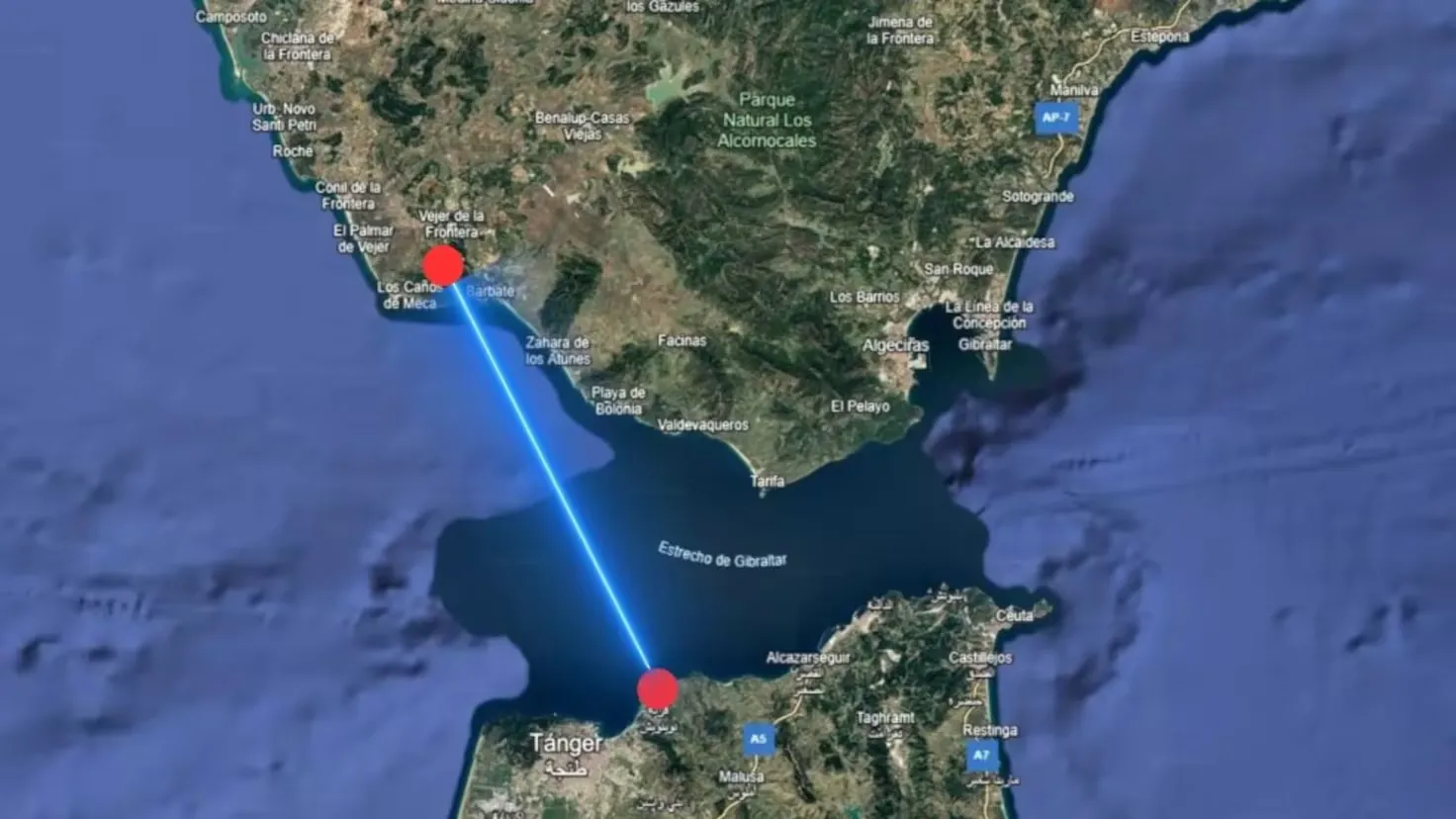
The proposed railway tunnel beneath the Strait of Gibraltar is poised to become the first physical connection between Europe and Africa, yet it continues to face technical realities. A study commissioned by the Spanish Society of Studies for Fixed Communication through the Strait (SECEGSA) and carried out by Herrenknecht, a global leader in tunneling technology, concludes that the infrastructure will not be operational until at least 2035 or 2040. This effectively rules out any possibility of it being ready in time for the 2030 World Cup.
Herrenknecht has confirmed the tunnel’s viability from a technological perspective but warns that the geological complexity of the Strait, particularly at the Camarinal threshold, necessitates longer exploration and drilling phases than initially anticipated. This delay has implications that extend beyond engineering challenges. The tunnel is perceived by Spain, Morocco, and the European Union as having significant geostrategic value, capable of transforming goods flow between continents and reinforcing Europe’s position in a corridor where global powers converge. A fixed connection would enable enhanced trade and security cooperation, including submarine surveillance and critical infrastructure protection.
Unfortunately, the confirmed delay means these advantages will not materialize in the short term, particularly as Morocco accelerates its railway modernization and forges alliances with countries like the United States, France, and Israel. The Strait of Gibraltar is one of the world’s busiest and most sensitive maritime passages, and this infrastructure would have added a vital layer of strategic connectivity.
With the delay now established, Spain and the EU must continue to rely on their existing defense framework, which is based on maritime and aerial transport for military and logistical mobility. Herrenknecht’s report emphasizes that the primary obstacle is geological rather than technological. The flysch formations, which consist of alternating hard and soft sedimentary rock layers, along with the instability of the seabed and the depth of the proposed route, require the construction of a preliminary exploratory tunnel, advanced seismic studies, and tunneling machines specifically adapted to the challenging terrain of the Strait.
Although current engineering capabilities can address these challenges, timelines are inevitably extending. The Spanish side of the project is already exceeding 8.5 billion euros, a figure that may rise as studies progress and definitive technical solutions are defined. Funding will be contingent on European funds, state contributions, and potential revenue from logistical and telecommunications services.
As reported by as.com.