
In a significant diplomatic achievement for Morocco, both Denmark and Greece have officially expressed their support for Morocco's initiative regarding autonomy in Western Sahara. This dual endorsement represents a key victory for Rabat as it seeks to solidify critical alliances throughout Europe. Such backing plays an essential role in fortifying the international momentum behind Morocco's sovereignty framework, positioning it as a viable and peaceful solution under the guidance of the United Nations.
Denmark's Commitment to Morocco's Autonomy Initiative
Denmark's official endorsement of Morocco's autonomy proposal is a noteworthy development in the ongoing discourse surrounding the Western Sahara dispute. According to reports from Atalayar, Danish Foreign Minister Lars Løkke Rasmussen conveyed that the proposal is perceived as a "serious and credible framework," which signifies a fundamental contribution to the current negotiations. During a high-level meeting with Moroccan Foreign Minister Nasser Bourita, Copenhagen emphasized the importance of this plan, noting its potential to guide the international dialogue towards a consensus between Morocco and the Algeria-backed Polisario Front.
The Moroccan autonomy plan outlines that the Sahara region would function as an "autonomous region within the Moroccan state," thereby granting the territory significant decentralized administrative, political, and economic powers. In addition to this diplomatic support, Denmark and Morocco are also looking to strengthen their bilateral relationships through enhanced cooperation in various sectors including green energy, agriculture, water technology, and migration management.
Greece's Support and Diplomatic Initiatives
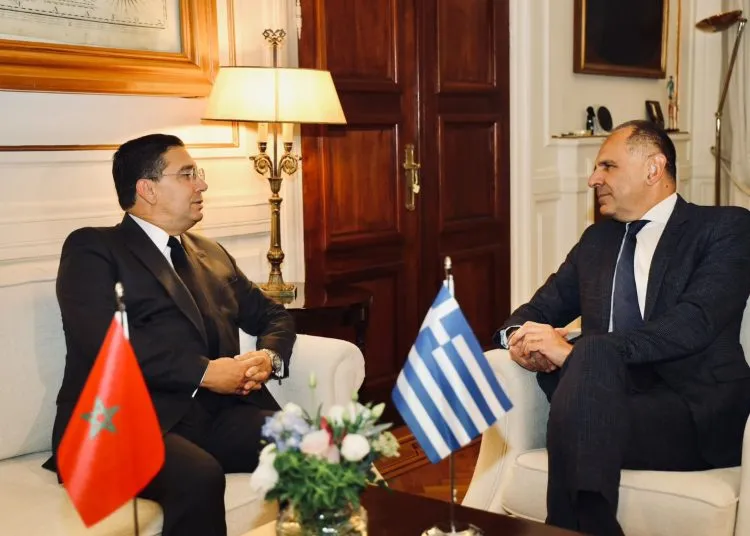
Similarly, Greece has reaffirmed its backing for the Moroccan autonomy initiative, labeling it as the most feasible solution to the ongoing regional dispute. As reported by Morocco World News, following a bilateral meeting in Athens, Greek Foreign Minister George Gerapetritis articulated Greece's alignment with the European Union's position on the conflict. He emphasized that Greece fully supports the efforts of the UN Secretary-General’s Personal Envoy in facilitating negotiations based on Morocco's autonomy proposal, which aims to achieve a fair and lasting resolution.
With Greece holding a non-permanent seat on the UN Security Council for the 2025-2026 term, its endorsement carries significant implications. The country welcomed the adoption of UN Resolution 2797, which advocates for peaceful advancements in the region. Notably, the recent visit of Morocco’s Foreign Minister Nasser Bourita to Greece marked the first such high-level diplomatic engagement in over thirty years, culminating in an agreement to draft a formal roadmap to enhance cooperation in trade, maritime transport, green energy, defense, and tourism.
The Western Sahara dispute dates back to the mid-1970s when the region was a Spanish colony before being partitioned by Morocco and Mauritania, leading to the pro-independence Polisario Front's guerrilla warfare. Morocco's annexation of the territory in 1979, following Mauritania's withdrawal, has left the sovereignty dispute unresolved, with Morocco controlling over three-quarters of the land while the Sahrawi Arab Democratic Republic (SADR) claims sovereignty as well. This conflict has fueled a long-standing rivalry between Morocco and Algeria, which continues to support the Polisario Front, as discussed by the Council on Foreign Relations.
As reported by africa.businessinsider.com.