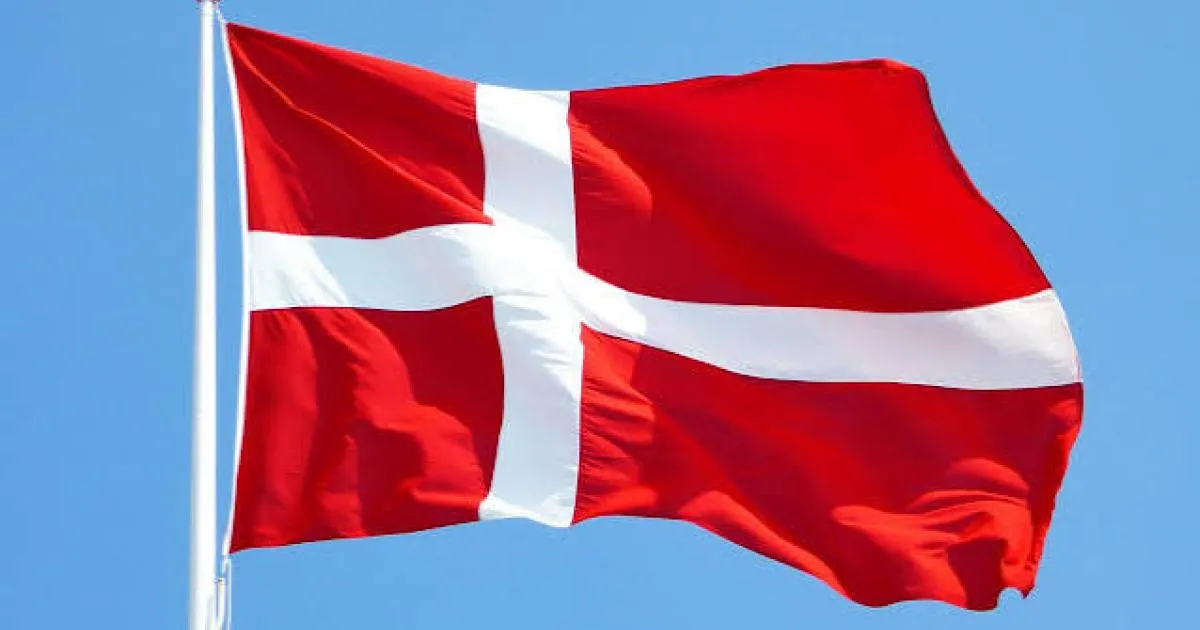

Understanding Denmark's Diplomatic Stance on Western Sahara
The diplomatic efforts of the Kingdom of Morocco have been portrayed as a recognition of sovereignty, yet what has been articulated publicly appears to be merely a political endorsement of a negotiation framework aimed at achieving a mutually accepted solution. Recent analyses, particularly from No Te Olvides del Sáhara Occidental, indicate that in certain Spanish political circles and media outlets, including La Vanguardia, there is a growing belief that Denmark has acknowledged Morocco's sovereignty over Western Sahara. However, a closer examination of the statements made by Danish Foreign Minister Lars Løkke Rasmussen and Denmark's official position recorded with the United Nations Security Council reveals a different narrative altogether.
This controversy originated from the recent visit of Moroccan Foreign Minister Nasser Bourita to Copenhagen, where he engaged in bilateral discussions with Rasmussen amid a period of political rapprochement between the two nations. A statement released by the Moroccan Foreign Ministry indicates that Rasmussen expressed Denmark's satisfaction with the European Union's stance, particularly regarding the approval of United Nations Security Council Resolution 2797. The Danish minister referred to Morocco's autonomy proposal as 'credible,' asserting that it makes a significant and essential contribution to the UN-led process and reiterated that it could serve as a 'good basis for a consensus solution among all parties.'
However, it is crucial to note that Rasmussen's statements did not include any explicit acknowledgment of Moroccan sovereignty over Western Sahara. This aspect emerged later, not from direct quotes attributed to the Danish minister but rather from the interpretation offered by the Moroccan Foreign Ministry itself. The communication concluded that Denmark's position aligns with the international momentum promoted by King Mohammed VI in support of Morocco's sovereignty claims over Western Sahara and its autonomy plan.
Distinguishing Between Support and Sovereignty Recognition
The distinction between these two interpretations is vital. While Denmark may perceive the autonomy plan as a credible basis for reaching an agreed-upon solution, this does not equate to recognizing Morocco's sovereignty over the territory. The former assertion can be directly linked to the Danish minister's comments; the latter is a political interpretation made by Rabat. Furthermore, the Moroccan media outlet 2M, in its audiovisual coverage of the visit, characterized Rasmussen's remarks as support for the autonomy plan 'as a basis for a mutually agreed solution,' refraining from attributing any recognition of sovereignty to Denmark. The phrasing used in that report underscores the existing gap between political backing for a negotiable proposal and legal acknowledgment of Morocco's territorial claims.
To clarify this matter, there is no need for convoluted interpretations. Official Danish documentation presented to the United Nations can be referenced. On October 31, 2025, in explaining its favorable vote on Resolution 2797 before the Security Council, Denmark used language remarkably similar to that currently in question. At that time, Copenhagen regarded Morocco's autonomy proposal as a 'serious and credible' contribution and a good basis for reaching an agreed solution among the parties. However, it explicitly added that its vote 'does not constitute a recognition of Moroccan sovereignty over Western Sahara.'
Denmark further emphasized that any solution must be mutually agreed upon by the parties involved and adhere to the Charter and principles of the United Nations, including the right to self-determination. This voting explanation clearly delineated the difference between politically supporting the autonomy plan as a potential negotiation basis and legally recognizing Morocco's sovereignty over the territory. Until the Copenhagen government issues a statement that explicitly alters its previous position, it is untenable to present reiterations of similar diplomatic formulations as a recognition of sovereignty that Denmark explicitly denied less than a year ago.
This situation also highlights a challenge in how certain diplomatic interpretations ultimately morph into information. Some Spanish media outlets have conveyed the reading formulated by Rabat as if it precisely reflects Denmark's official stance. For instance, La Vanguardia has framed this development as Denmark's acceptance of the Moroccan solution for Western Sahara, a characterization that exceeds the known statements from Rasmussen. As noted by No Te Olvides del Sáhara Occidental, this distinction is not merely semantic. In the case of Western Sahara, it is legally essential to differentiate between endorsing a political proposal for negotiation and recognizing one party's sovereignty over a territory that the United Nations continues to regard as pending decolonization.
Resolution 2797 significantly reinforced the centrality of Morocco's autonomy proposal within the negotiation process, but it did not acknowledge Moroccan sovereignty over Western Sahara nor did it alter the international legal status of the territory. The process remains under the auspices of the United Nations and maintains the self-determination of the Sahrawi people within the framework of a final solution. Based on the available documents, the conclusion is clear: Denmark has bolstered its support for Morocco's autonomy plan and is fostering a closer political relationship with Rabat, yet it has not recognized Moroccan sovereignty over Western Sahara.
What has transpired is that Morocco has framed this support as part of a favorable dynamic for its sovereignty claims, and this interpretation has subsequently been echoed in some media as if it originated directly from Copenhagen. Until Danish diplomacy explicitly states otherwise, incorporating Denmark into the group of countries that recognize Moroccan sovereignty over Western Sahara does not align with the official position recorded by the Danish state at the United Nations. As reported by spsrasd.info.