
Morocco's Recent UN Vote and the Implications for Western Sahara
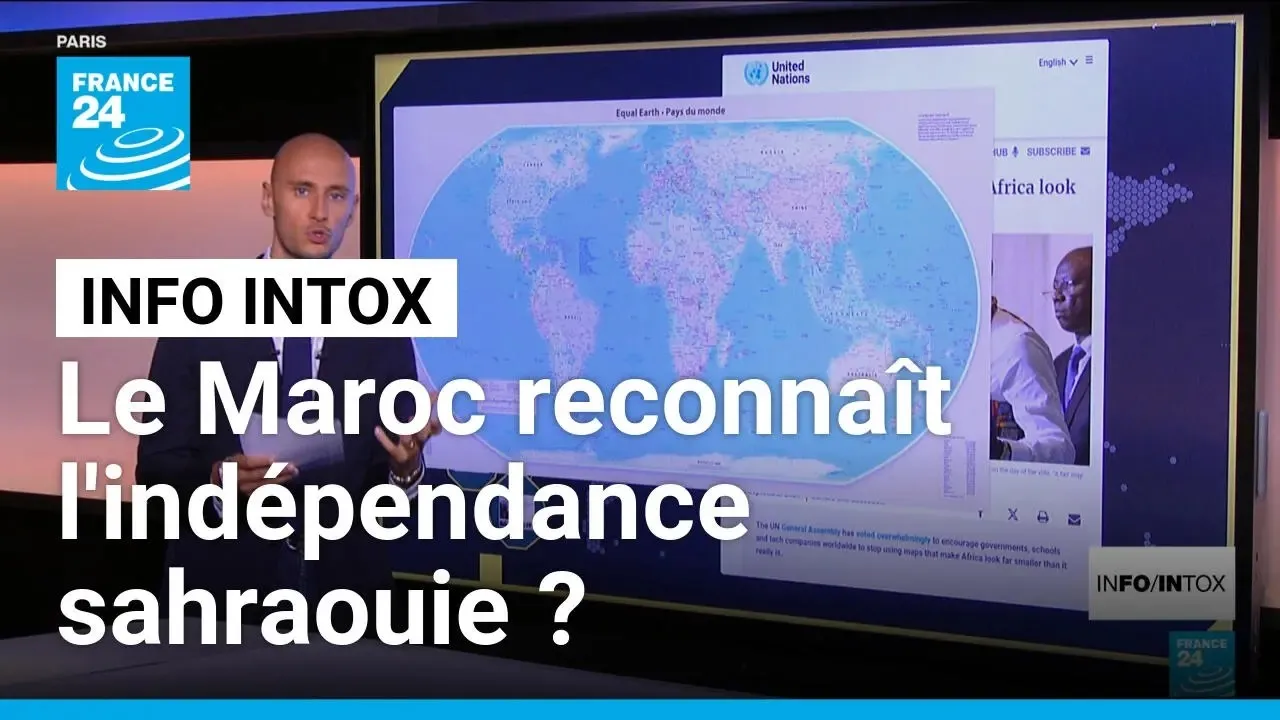
On September 4, 2026, a significant resolution was passed by the United Nations that aimed to modify cartographic representations to more accurately illustrate the sizes of countries, particularly highlighting the actual dimensions of the African continent. Central to this discussion is the new map based on the "Equal Earth" projection, which notably depicts Morocco and Western Sahara as separate entities. Observers have raised questions regarding Morocco's intent in this matter, suggesting that the vote could be interpreted as an inadvertent acknowledgment of Western Sahara's independence. The implications of this are profound, as they not only affect diplomatic relations but also the ongoing territorial disputes in the region.
The vote has sparked a wave of reactions across social media, with various commentators interpreting Morocco's participation in favor of the resolution as a potential shift in its stance regarding Western Sahara. Historically, Morocco has maintained a firm claim over the territory, often referring to it as part of its national integrity. However, the newly adopted UN map, which shows a clear delineation between Morocco and Western Sahara, poses questions about the future of Moroccan sovereignty claims. This situation reflects a complex international dynamic where cartographic representation can influence perceptions of legitimacy and control.
The Broader Context of the Western Sahara Dispute
The Western Sahara conflict has been a point of contention for decades, rooted in colonial histories and national aspirations. As discussions around decolonization continue to evolve, the role of international bodies like the United Nations becomes increasingly critical. The recent resolution could be seen as a step towards acknowledging the need for a fair and just solution for the people of Western Sahara, who have long sought autonomy and recognition. The complexities of this geopolitical issue require careful navigation, as various stakeholders, including Algeria and the Polisario Front, continue to advocate for the rights of the Sahrawi people.
In conclusion, the question of whether Morocco has accidentally recognized the independence of Western Sahara at the UN is not just about a single vote but rather reflects a broader narrative of evolving geopolitical interests and historical injustices. As the international community watches closely, the developments in this region will undoubtedly influence future diplomatic strategies and the quest for resolution in one of Africa's most enduring conflicts.
As reported by youtube.com.