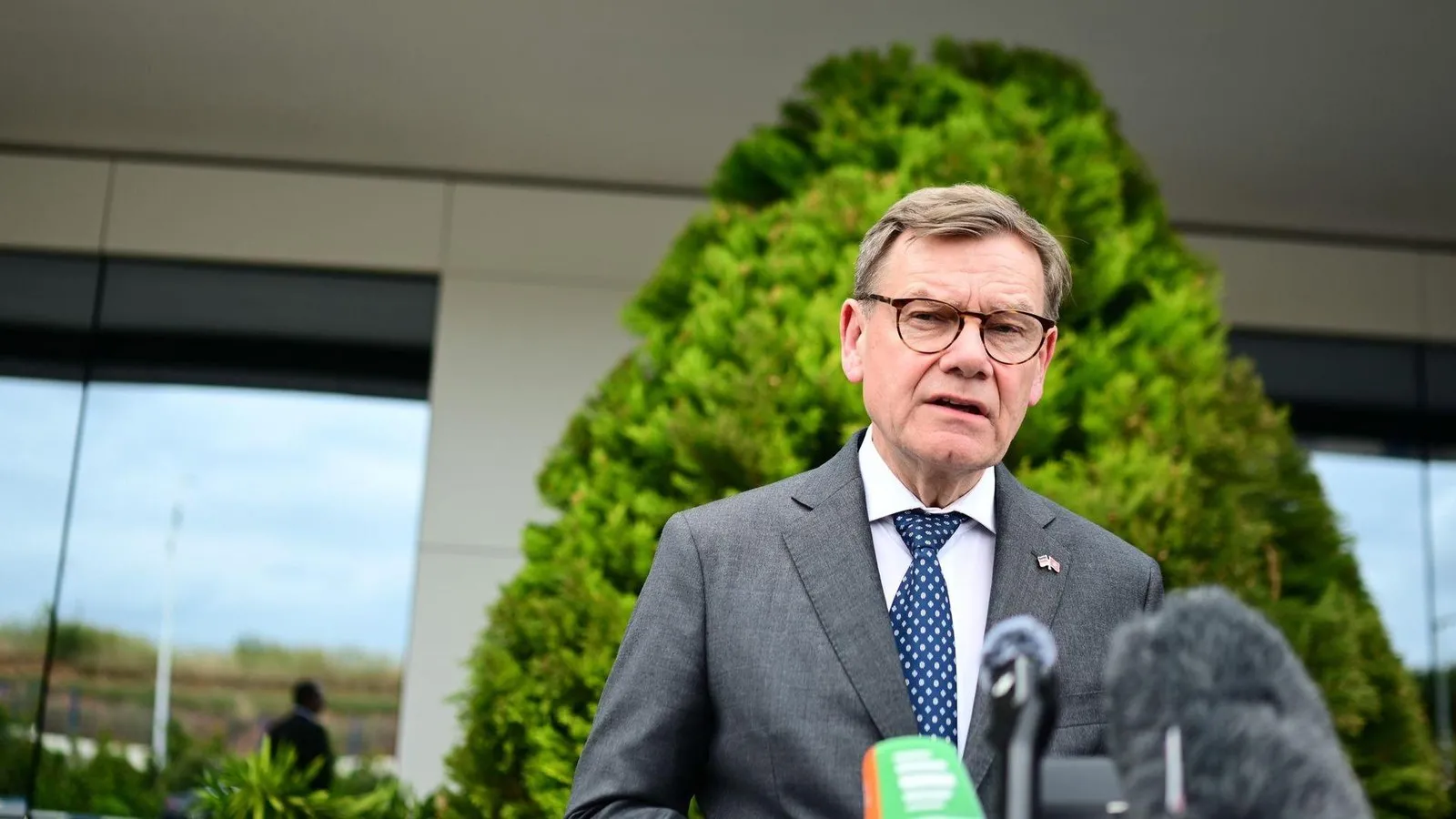

In a remarkable turn of events, German Foreign Minister Johann Wadephul found time to connect with his U.S. counterpart, Marco Rubio, during a busy schedule that included a soccer tournament against a youth women's team near Rabat and a reception celebrating the 70th anniversary of Moroccan-German relations. This phone call signifies a collective commitment from both nations to pursue diplomatic dialogue aimed at resolving the ongoing conflict in Iran. According to sources within the German delegation, both ministers concurred on the necessity of reaching a swift negotiated resolution, with hopes pinned on the unconditional reopening of the Strait of Hormuz.
The German delegation emphasized that long-term stability hinges on Tehran's willingness to permanently abandon its nuclear weapons development. To achieve this goal, it may be essential to increase pressure on Iran, and Germany, alongside the United States, intends to collaborate closely on sanctions and other diplomatic measures. The two foreign ministers have agreed to maintain regular consultations in the coming days to ensure alignment in their strategies.
Despite the apparent harmony between Wadephul and Rubio, tensions loom, particularly as U.S. President Donald Trump and German Chancellor Friedrich Merz have publicly clashed over America's strategy in the conflict. Merz criticized the U.S. approach during a visit to a school in Hesse, stating that the Americans seem to lack a coherent strategy to bring the war to a successful conclusion. He also remarked on the 'humiliation' suffered by the U.S. at the hands of the Iranian Revolutionary Guards. Trump's response was swift and indignant, asserting that the German Chancellor was uninformed about the situation, which raises concerns about the stability of the transatlantic relationship.
Amidst these diplomatic tensions, Trump hinted at the possible reduction of U.S. troop presence in Germany, a threat he has previously made. Such a move would undeniably leave Europe more vulnerable to Russian aggression, a fact that Trump is well aware of. Nevertheless, he appears troubled by longstanding commitments and alliances, such as NATO, suggesting that he may be seeking opportunities to weaken these ties.
Initially, Merz's early engagements in the Oval Office had fostered a sense of optimism among European leaders, who believed his respectful yet assertive demeanor might earn him the President's regard, potentially paving the way for more productive discussions. However, the current state of affairs has shifted, with both sides striving to maintain a working relationship.
One significant question remains regarding whether Rubio's approach to resolving the Iran conflict aligns with Trump's directives. The President has continued to vocally criticize Tehran, asserting that Iran is failing to negotiate a nuclear deal and urging them to educate themselves quickly. This sentiment was echoed on his social media platform, where he declared, 'NO MORE MR. NICE GUY.'
In reaction to Trump's statements, oil prices surged significantly, with Brent crude oil rising by 7.1% to reach $119.19 per barrel, with a brief spike to $119.76. Currently, a ceasefire exists in the Strait of Hormuz, but a stalemate between the warring parties continues to strain the global economy, as Iran has largely blocked the strait, prompting the U.S. to respond with ship blockades targeting Iranian ports.
Trump appears to be avoiding further direct discussions with his chief negotiators, Steve Witkoff and Jared Kushner, opting instead to forgo lengthy personal meetings that may yield unsatisfactory outcomes. While he acknowledged some progress in negotiations, he emphasized that a breakthrough has yet to be achieved and reiterated that a resolution will only be reached if Tehran completely renounces its nuclear ambitions. When questioned about the necessity of additional military pressure, Trump remained noncommittal, indicating that it depends on how far Iran is willing to negotiate.
According to reports from the U.S. news outlet Axios, Trump intends to maintain pressure on Iran and has rejected proposals to ease the maritime blockade in exchange for future negotiations on the nuclear program. Concurrently, the U.S. military is reportedly preparing for potential airstrikes to advance the negotiations, although Trump has not yet authorized such actions.
As reported by morgenpost.de.