
The Allure of Chefchaouen: A Journey Through the Blue City
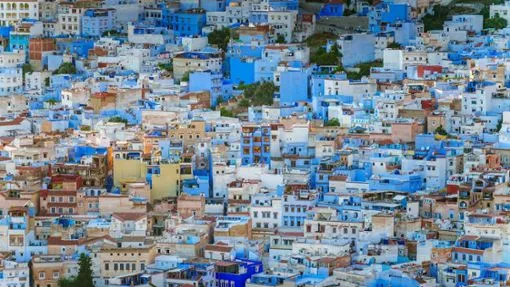
Once considered a forbidden city, Chefchaouen, often referred to as the "Blue Pearl" of the Moroccan Rif Mountains, now attracts nature enthusiasts, photographers, and those seeking an escape into tranquility. This picturesque town, with its unique blue-hued walls, evokes a sense of calm and enchantment, making it a must-visit destination for travelers. The striking blue color blanketing the city is believed to have various origins; some scholars argue that it protects against the evil eye according to Islamic tradition, while others attribute its significance to Jewish culture, where blue symbolizes the sky and a connection to God. More practical explanations suggest that the turquoise color helps to repel insects and keep the streets cool, while some skeptics attribute it to a marketing strategy aimed at boosting tourism.
Regardless of its origins, the captivating blue of Chefchaouen has become synonymous with the city, appearing prominently in travel guides, blogs, and calendars dedicated to Morocco. Nestled between the towering peaks of Djebel Kalaa and Djebel Meggou, the city sits at an elevation of approximately 600 meters. Much of the old town has preserved its original architecture from the late 15th century, featuring blue-painted gable houses adorned with traditional Andalusian tile roofs, a nod to the city's founders. As local guide Mohammed Chakour, born and raised in Chefchaouen, shares, "Chefchaouen was established in 1471 as a refuge for Muslim refugees fleeing from Andalusia."
A Tapestry of History and Culture
Less than a century ago, non-Muslims were strictly prohibited from entering Chefchaouen, a precaution that arose as the city prospered, attracting the attention of various European conquerors eager to stake their claim. Chakour recounts tales of a Christian who allegedly converted to Islam and arrived in Chefchaouen in the 18th century, building a mosque high above the city to provide easier access for residents of nearby mountain villages. However, this man's true intentions were revealed when he was elected as the Imam and began to spy on the townsfolk, disappearing without a trace once his plot was uncovered. Today, the mosque, known as the Spanish Mosque, stands as a cultural monument and a favorite spot for visitors who gather to celebrate the sunset and experience the magical blue hour over the city.
In the late 19th century, Chefchaouen became a center of resistance against European invaders, who had already established a significant presence in Morocco. This era also marks the dramatic tale of Ion Perdicaris, an alleged U.S. citizen kidnapped by the Berber leader Ahmed Ben Mohammed el-Raisuli. In response, President Theodore Roosevelt dispatched a naval force to Morocco in 1904, leading to Perdicaris's release and Roosevelt's re-election. Interestingly, the U.S. government had fulfilled all of Raisuli's demands, and it was later revealed that Perdicaris was actually a Greek national, a fact kept under wraps to provide Hollywood with material for the film "The Wind and the Lion" starring Sean Connery.
The struggle for control over this rebellious stronghold continued, with the Spanish capturing Chefchaouen in 1920. Shortly thereafter, the liberation fighters led by Abd El Krim regained control, but it wasn't until 1926, following a mustard gas bombardment, that Chefchaouen finally succumbed. Abd El Krim was captured and exiled to Reunion Island, eventually residing in Cairo, but he never returned home. Only his remains have since made their way back to Chefchaouen.
Despite its tumultuous history, Chefchaouen has maintained a strong sense of identity and pride. The historic old town is alive with a vibrant atmosphere, where Spanish, Arabic, French, and English fill the air as people from around the world converge. However, some residents are beginning to feel overwhelmed by the tourist influx, with not everyone eager to live their lives against such a picturesque backdrop. Some locals have resorted to charging for photo opportunities in their blue-hued doorways, while others cast disapproving glances at visitors capturing candid moments.
As one ventures out of the city and into the mountains, they are greeted by forests of cedar, cork oak, and pine, home to deer, pheasants, partridges, gazelles, doves, and wild boars, attracting hunters from Spain, France, and Italy. The local craftsmen and hammam operators utilize the abundant wood, while the region's drinking water flows from mountain springs dammed into lakes. Expansive fields of grain and olive groves characterize the landscape, and while cannabis cultivation remains prevalent, the legendary "Rif chocolate" of the hippie era has largely been replaced by medical products. The striking red earth contrasts beautifully with the greenery of figs, pomegranates, and cacti, nourished by the rains of the Rif Mountains. Goats roam freely, men with pack donkeys navigate the terrain, and women, draped in colorful woven fabrics, tend to their sheep.
Winding through the rural landscape, one can see wisps of smoke curling into the sky from scattered homesteads. The mountain ranges bathed in morning light resemble delicate paper cutouts, while a dry river delta gives way to tiny villages adorned with either blue or whitewashed houses, or constructed from natural stone. The road narrows and twists, climbing up into the mountains, where the rugged dolomite rock peeks through the lush greenery. At Akchour, a mountain village on the edge of a national park, the journey reaches its end.
From here, the adventure continues on foot. Hiking guide Bilal Sbaa is well-versed in the narrow gorges, leading the way along steep rock walls, across rushing streams, and over narrow wooden bridges. He can identify the flora of the hiking jungle, naming macchia shrub, juniper, cork oak, wild olive, and strawberry tree. The sound of cascading water can be heard as it finds its way down the mountain through channels and rivulets. During the off-season, the tranquility of this area is delightful, with only a few small cafés nestled in cool rock caves open for business. In contrast, summer brings a bustling atmosphere between the God's Bridge and waterfalls, where locals and tourists alike flock to swim in natural pools and picnic in the shade of trees, often resulting in crowded trails.
For those planning a visit, Ryanair operates flights from Karlsruhe/Baden-Baden and Memmingen to Tangier, while Eurowings offers flights from Stuttgart to Marrakech and Agadir. Within Morocco, travelers can rely on the national railway service, ONCF, or buses from Supratours and CMT. Accommodation options include the Hotel Taj Chefchaouen, perched dramatically on a hillside above the city, offering double rooms with breakfast starting at 130 euros, and the family-run Hotel Dar Sabada located in the heart of Chefchaouen's medina, with rooms starting at 48 euros.
Culinary experiences abound, with Moroccan specialties served at Restaurant Morisco in the center of Chefchaouen, and a delightful fusion of Andalusian and Moroccan cuisine at Restaurant Triana Chefchaouen. For more general information about visiting Morocco, the Moroccan National Tourist Office provides resources at their website.
As reported by stuttgarter-zeitung.de.