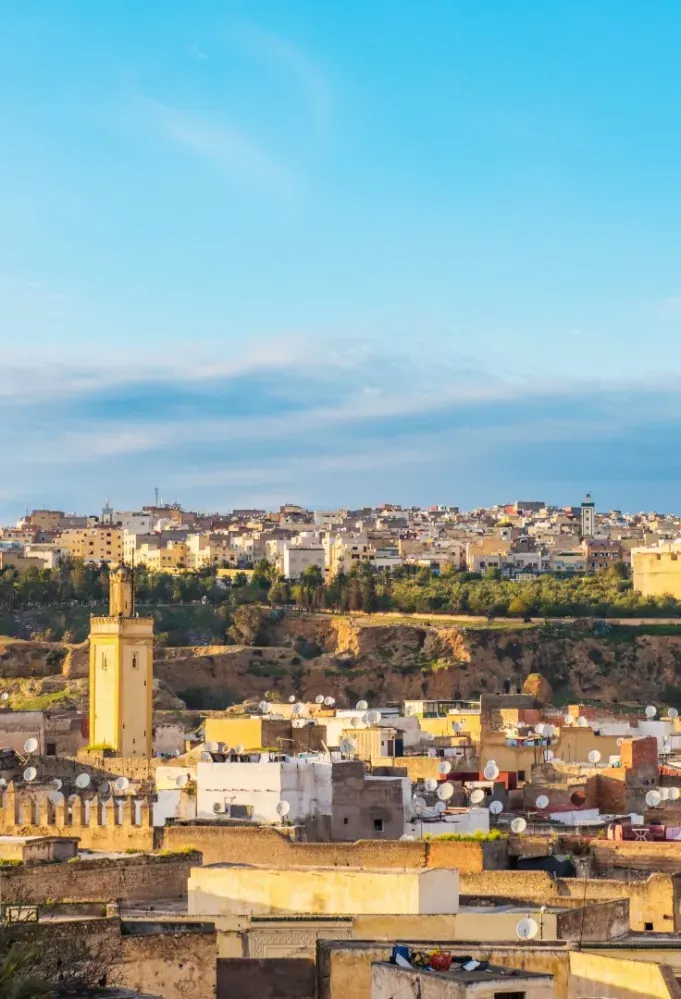

September is arguably one of the best times to visit Morocco, as it boasts mild weather and a calmer atmosphere with fewer tourists compared to the summer months. Among the destinations worth exploring during this period is Fes, one of Morocco's most historic cities, rich in culture, heritage, and traditional crafts. Fes is the oldest imperial city in Morocco and has served as the capital at least three times throughout its history, with many of its most notable landmarks dating back to the 13th and 14th centuries.
Today, Fes maintains its authentic character and stands as a key center for traditional arts and crafts in Morocco. The city is divided into three main sections: Fes el-Bali, the original old city; Fes el-Jdid, which was constructed in the 13th century to accommodate population growth; and the Ville Nouvelle, representing the modern part of the city. To truly appreciate the charm and rich history of Fes, here are eight essential activities and landmarks that deserve your attention during your visit to this enchanting city.
Experience the Atmosphere of Fes el-Bali
The old city of Fes, known as the Medina, is a UNESCO World Heritage Site and is recognized as one of the best-preserved historical cities in the Arab world. It is also one of the largest pedestrian-only urban areas globally, featuring a labyrinthine network of narrow alleys, bustling squares, and traditional markets lined with shops where you can find virtually anything you can imagine. During your stroll through the Medina, be sure to savor traditional Moroccan dishes or haggle with artisans for colorful pottery and intricately designed lamps. Keep an eye out for the donkey carts navigating the narrow streets, as well as the architectural wonders scattered among the shops and passageways. Perhaps the best way to explore this part of Fes is simply to allow yourself to get lost among its winding alleys.
Delve into Living History at Al Quaraouiyine Mosque
The Al Quaraouiyine Mosque, widely regarded as one of Fes's most notable buildings, is home to the University of Al Quaraouiyine, founded in 859. It is believed to be the oldest existing, continually operating university in the world and remains a crucial center for Islamic education. The mosque can accommodate around 20,000 worshipers during prayer times. Its library opened to the public in 2016 and is one of the oldest libraries still in existence. Visitors can glimpse the mosque's courtyard through the main entrance.
Fes is a paradise for history enthusiasts, offering a plethora of fascinating sites to explore. One such site is the Bou Inania Madrasa, established by the Marinid Sultan Abu Inan in 1350. Originally a college for religious studies, the madrasa has been meticulously restored, allowing visitors to admire its stunning mosaics, exquisite plasterwork, and intricately carved cedar wood features. The school also houses a mosque, which, unlike most other madrasas, includes a fully functional prayer hall. While the mosque itself is not open to visitors and the madrasa closes during prayer times, its beautiful minaret can be admired from various rooftops within the old city.
Furthermore, don't miss the opportunity to visit the Chouara Tannery, the oldest and largest traditional tannery in Fes, dating back to the medieval period. Here, animal hides are treated using ancient methods and components before being sun-dried. While the strong smell of ammonia and raw leather may be overwhelming for first-time visitors, the sight of the colorful dyeing pits in the central courtyard is breathtaking. Access to the leather shops built within the surrounding walls allows for a panoramic view of the tanning process, best witnessed in the morning when the vats are filled with dyes. After enjoying the tanning spectacle, you will be in the perfect spot to purchase leather goods made from the tanned hides.
As you continue your educational journey, make sure to visit the North Tower, built in 1582 as part of the fortifications that surrounded the city at that time. The tower offers stunning views of Fes and features an intriguing museum of weaponry, showcasing over 5,000 pieces that provide insight into Morocco's military history.
For a quieter experience, head to the Jardin Jnan Sbil, located just outside the old city's walls. Established in the 19th century, this garden is one of the oldest and most beautiful in Fes, boasting over 3,000 species of plants, trees, and flowers. It serves as a tranquil oasis away from the hustle and bustle of the Medina, offering winding pathways where you can enjoy the scent of fragrant eucalyptus and citrus trees while relaxing in the shade provided by towering palm trees.
Finally, immerse yourself in traditional woodworking at the Musee des Arts et Métiers du Bois, restored to its former glory. This museum is perfect for appreciating the craftsmanship of Moroccan artisans and the beauty of historical architecture. The museum’s halls, built around an inner courtyard, serve as exhibition spaces showcasing a diverse collection of items, from musical instruments to wedding furniture. After exploring, take some time to unwind in the café on the upper floor, where you can enjoy beautiful views of the city.
As reported by sayidaty.net.