
Embracing the Enigmatic Charm of Tangier
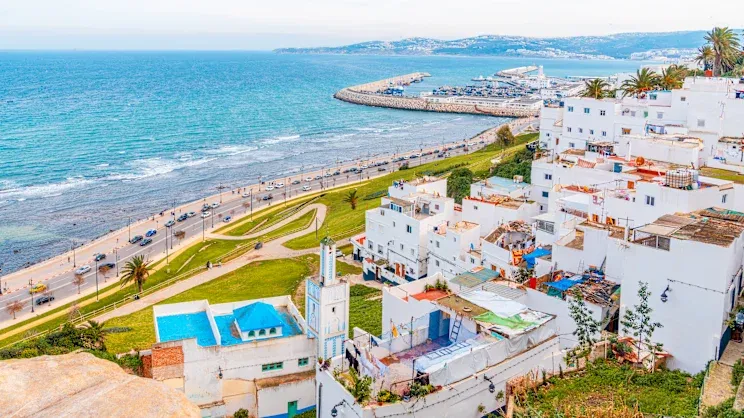
In the vibrant city of Tangier, Morocco, breakfast can be an adventure, especially when accompanied by the unexpected company of bees. As I settled down to enjoy my semolina pancakes, affectionately known as "thousand-hole bread," the arrival of these buzzing creatures turned my meal into a delicate dance of avoidance and distraction. Their persistence mirrored my own fascination with Tangier, a city that possesses a magnetic charm and a reputation that many find questionable. Once I caught sight of Tangier from the ferry, its white cubes perched on hills overlooking the majestic Strait of Gibraltar, I knew I was in for a captivating experience. The narrow alleyways beckoned me upwards, through bustling bazaars and quaint squares, ultimately leading to my hotel nestled in the kasbah at the city’s peak.
The Allure of a City with a Colorful History
My affinity for places with a tarnished reputation draws me to Tangier, a city that, from 1925 to 1956, was an international zone under the jurisdiction of various European powers. This unique governance transformed Tangier into a haven for misfits, drifters, and those seeking refuge from their pasts. Renowned figures like the heiress Barbara Hutton graced its streets, hosting extravagant parties attended by luminaries such as Jean Cocteau and Ava Gardner. Writers found inspiration in its eclectic ambiance; luminaries like William Burroughs, who penned the groundbreaking work _The Naked Lunch_ while indulging in the city's hedonistic offerings, and Paul Bowles, who spent over five decades immersed in Tangier's spellbinding essence. Bowles once remarked that the city existed in a "dreamlike suspension," an observation that still resonates today.
As I transitioned from my breakfast escapade to Cafe Colon on Rue de la Kasbah, I encountered familiar faces, including my friend Ayoub, who shared tales of addiction from his time as a taxi driver in Qatar. The eclectic atmosphere of the cafe, once featured in Bernardo Bertolucci’s adaptation of Bowles’ _The Sheltering Sky_, further fueled my exploration of this captivating city. A poster for Francois Ozon’s upcoming film adaptation of Albert Camus’ _L’Etranger_ caught my eye, prompting a quest to discover the film's various filming locations throughout Tangier. Although Camus’ work is set in Algiers, Ozon's choice of Tangier reflects the city’s architectural similarities to 1930s Algiers, making it an ideal backdrop for cinematic storytelling.
My journey continued to the Petit Socco, a former diplomatic hub, where the echoes of history linger in the air. The square, adorned with prewar icons like Hotel Fuentes and Gran Cafe Central, offers a glimpse into Tangier's rich past and its enduring cafe culture. However, the modern tourist scene at Cafe Central can be overwhelming, and one must be prepared for the slower pace of service. As I navigated the winding streets, I found myself drawn to the port, where digital manipulation had transformed the landscape into a recreation of Algiers’ seafront, further blurring the lines between reality and cinematic fantasy.
As I wandered through the kasbah, the aromas of local delicacies filled the air. Each step through the bustling carpet bazaar and eclectic shops reminded me of the sacrifices made for the joy of exploration. My daily ritual at Cafeteria Dopamine, where I indulged in espresso and pastries, provided a sweet respite amid the city’s vibrant chaos. However, as I inquired about my favorite honey cake, the owner, Ahmed, explained that the desert winds had brought the bees, leaving me to savor the bittersweetness of absence.
As reported by smh.com.au.