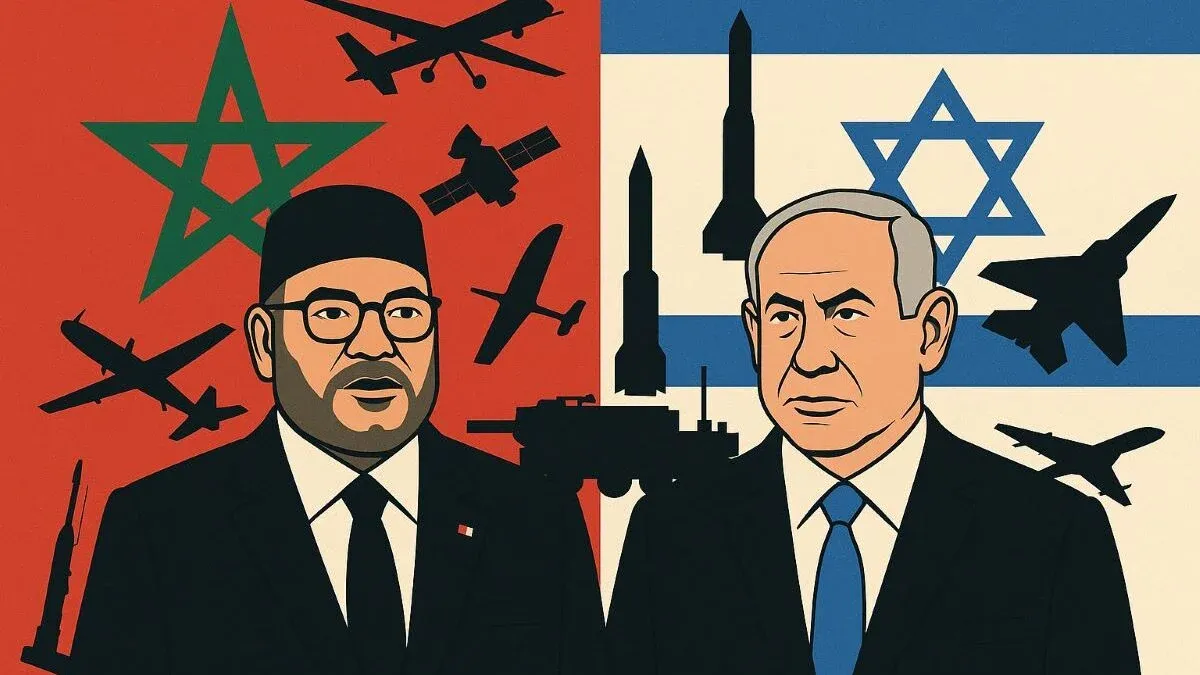

Significant Disparities in Trade Figures
The official trade statistics between Morocco and Israel for the year 2025 reveal a striking discrepancy. While Rabat reports nearly $381 million in imports from Israel, Israeli statistics only account for approximately $116 million worth of exports to Morocco. This gap of $265 million raises important questions regarding transparency, especially given that a substantial portion of Morocco's reported imports is classified under a category that lacks detailed breakdowns. A simple analysis of the data available from UN Comtrade highlights this issue. For 2025, Morocco's figures indicate imports totaling $380.75 million from Israel, whereas Israel reports exports amounting to $115.75 million destined for Morocco. The disparity is far from negligible; Moroccan imports are recorded at more than three times the value of the exports attributed to Israel's market.
Moreover, these figures do not stem from competing organizations; they originate from the same international statistical system, relying on the respective declarations from both nations. The categorization of Moroccan data complicates the interpretation of this gap even further. A significant majority of the total, amounting to $332.73 million, falls under the category of 'various manufactured goods,' which alone constitutes 87.4% of the Moroccan imports attributed to Israel. In contrast, other categories such as machinery, chemicals, inorganic chemicals, and optical and medical equipment each amount to only a few million dollars, rendering them almost trivial in comparison.
The Need for Transparency in Trade Reporting
The concern, therefore, extends beyond the mere difference between Moroccan and Israeli declarations; it also encompasses the capacity to discern what comprises the reported $332.73 million. The data fails to provide a detailed breakdown that would allow for precise identification of these goods. At a more granular level, the records show a negligible value for items such as brooms and brushes, which is significantly lower than the total figure for that category. International trade statistics frequently involve areas of confidentiality, and UN Comtrade indicates that certain countries may limit the accuracy of their declarations to protect sensitive commercial information. Morocco has implemented confidentiality mechanisms in its statistical declarations, allowing for the aggregation or presentation of information at a less detailed level. Nevertheless, the magnitude of the discrepancy remains substantial enough to warrant further explanation.
Nearly 90% of the reported Moroccan figure is concentrated in a category whose detailed content is not publicly accessible. This raises the question: could this involve military equipment? The answer is uncertain. The sensitivity of the diplomatic relations between Rabat and Israel adds a unique dimension to this issue. Since the establishment of diplomatic ties between the two nations, commercial exchanges have come under close scrutiny, particularly in strategic sectors. In this context, the publication of such divergent figures without sufficiently detailed breakdowns inevitably raises concerns and highlights the limitations of the currently available transparency.
The pressing question remains: how can Morocco justify the reported $380.75 million in imports while Israel only acknowledges $115.75 million? Until Rabat provides more clarity on the composition of its imports, the $265 million discrepancy will remain without a clear counterpart in Israeli statistics. This accounting gap raises further questions about the nature of the commercial exchanges declared between Morocco and Israel.
Beyond the customs figures, the relationship between Morocco and Israel encompasses several sectors. However, civil trade remains limited: according to an analysis by the Moshe Dayan Center, civil goods exchanges between the two countries amounted to about $180 million in 2024, constituting less than 0.1% of each country's foreign trade. Moroccan exports to Israel reached $141.55 million during that year, with textiles and clothing being the leading category at $76 million, followed by sweet products and food preparations valued at $34.41 million.
Additionally, agriculture, water management, and technology are identified as sectors for deepening cooperation. Facing increasing water stress, Morocco is particularly interested in Israeli technologies related to irrigation, water management, and precision agriculture. The Moshe Dayan Center suggests that Morocco could also serve as a platform for Israeli companies looking to access markets in West Africa, North Africa, or Southern Europe, with the overarching goal of establishing a trade corridor that could ultimately represent billions of dollars.
Military cooperation, however, stands out as one of the most significant and sensitive aspects of this rapprochement. In November 2021, Rabat and Tel Aviv signed a defense cooperation agreement. Since then, Moroccan purchases of Israeli weapons and military equipment have been estimated at around $2 billion by the Israeli Institute for National Security Studies (INSS), which also cites data from SIPRI indicating that Israel accounts for approximately 24% of Morocco's arms imports (up from 11% two years ago), ahead of France, which represents 10%. These amounts pertain to contracts and military acquisitions, which may follow different statistical recording methods.
The aerospace sector exemplifies this strategic dimension. In July 2024, reports indicated that Morocco planned to acquire two Ofek 13 reconnaissance satellites from Israel Aerospace Industries as part of a contract estimated at about $1 billion, with delivery expected over five years. This operation aligns with the defense cooperation initiated in 2021.
As reported by afrik.com.