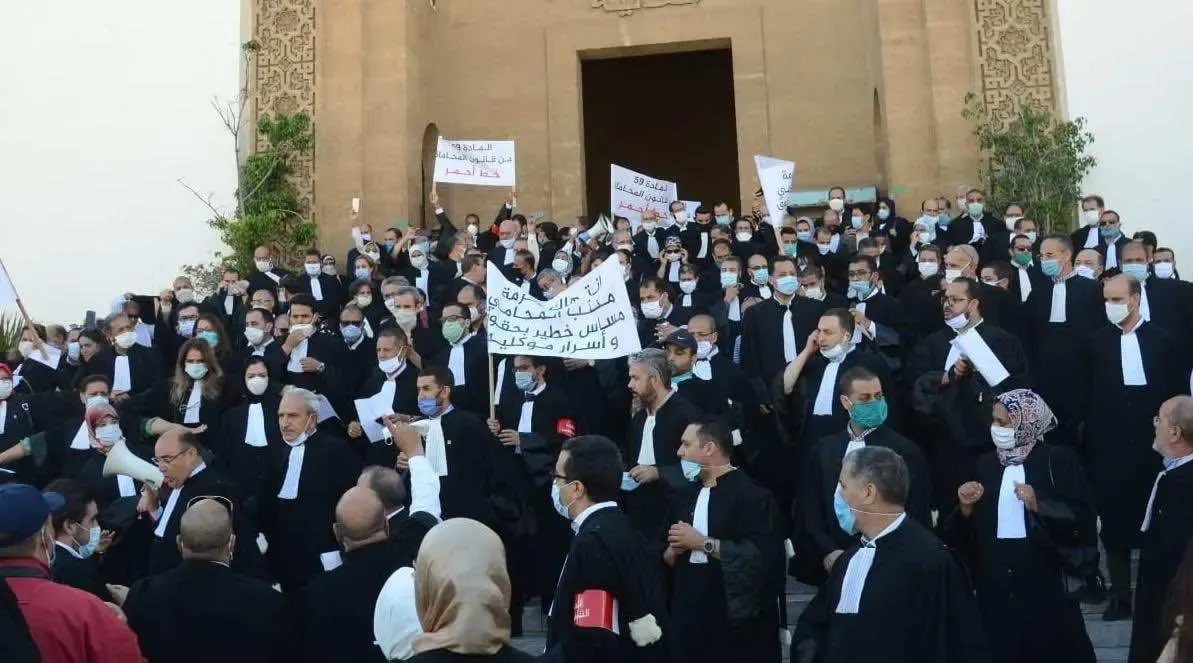

Discussions Reveal Varied Stances Among Legal Bodies in Morocco
The extraordinary meeting of the Moroccan Bar Association Council has unveiled a significant division among various bar associations regarding the future of professional services delivery, coinciding with the enforcement of Law No. 66.23, which regulates the legal profession. While the meeting concluded with a decision to continue the suspension of professional services, several associations expressed a desire to resume operations and return to their offices and courts.
Notably, associations from Fez, Khouribga, Beni Mellal, Safi, and Casablanca have signaled their inclination towards resuming professional services, contrasting with ongoing discussions within the legal community about the efficacy of continuing the suspension following the publication of the new law in the official gazette. This divergence highlights differing assessments of the upcoming phase, with some believing that the work stoppage still serves as a pressure tactic to advocate for law amendments, while others argue that the law’s implementation necessitates a shift towards alternative forms of professional and legal advocacy.
Additionally, the meeting noted the absence of the Bar Association of El Jadida, both in terms of the president and the council, as per the circulated data regarding the presence and stances of associations during the extraordinary meeting. This situation arises during a critical period for the Moroccan Bar Association, following weeks of halted professional services prior to the law's enforcement.
Prior to the extraordinary meeting, the association had decided to persist in the suspension of professional services and to halt the legal aid system as part of their protest against the new law and its provisions. However, with the law now in effect, questions regarding the options available to lawyers have resurfaced, particularly concerning whether the work stoppage can achieve its objectives following the transition of the text from legislative to operational status.
On the other hand, proponents of resuming work argue that returning to professional activity does not equate to abandoning lawyers' demands or acquiescing to the law’s provisions; instead, it could pave the way for adopting alternative means to advocate for the profession's independence and safeguards. The positions of the five associations—Fez, Khouribga, Beni Mellal, Safi, and Casablanca—reflect this trend within the legal community, even as the national association has opted to continue the suspension.
This divergence is part of a broader discussion about the future of the professional struggle, with the return to the courts being a compelling option for some associations, while other factions remain committed to ongoing protests. Former president of the Rabat Bar Association, Abd al-Rahim Al-Jamii, has also called for an end to the suspension and a return to offices and courts, asserting that the new phase necessitates a reevaluation of protest tools and a transition to legal, legislative, and institutional pathways.
Conversely, the Moroccan Bar Association insists on the continuation of the work stoppage, leading to a clear paradox in the upcoming phase: a national decision to persist in the suspension juxtaposed with stances from several associations leaning towards resuming professional services. This situation presents a challenge for professional institutions to maintain unity within the legal community amid differing assessments of the best strategies to address Law No. 66.23 after its implementation.
The ongoing debate raises questions about the nature of the next steps, particularly whether the associations inclined towards returning will actually commence service delivery or if their positions will remain contingent upon the outcomes of discussions within the association and its institutions.
As reported by febrayer.com.