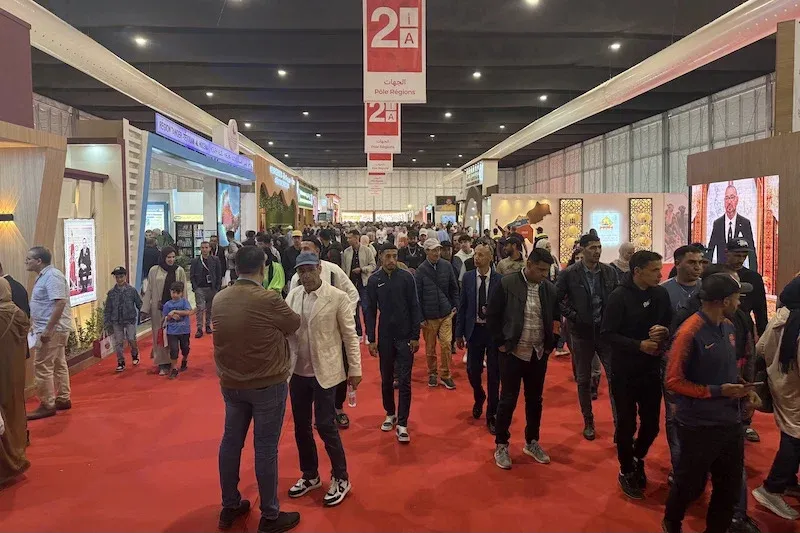

Diverse Agricultural Sectors Boost Food Sovereignty in Morocco's Agricultural Forum
Once again, Meknes transforms into the agricultural capital of Morocco for over a week during the 18th International Agricultural Exhibition (SIAM). The exhibition showcases the richness of Moroccan soil and its biological diversity through various exhibits in the "Regional Hub." Visitors are treated to an abundance of agricultural and livestock products that highlight the country’s agricultural wealth. The theme of this year's exhibition focuses on "animal production and food sovereignty," addressing current challenges within the sector and aiming to highlight innovative agricultural practices.
Within the designed spaces of the exhibition, the twelve regions of Morocco do not merely exhibit their products; they also present their developmental plans and achievements in line with the "Green Generation" strategy. From olive oil and roses in the Fes-Meknes region to citrus fruits and hawthorn in the Eastern region, regional officials provide a comprehensive overview of their achievements and sustainability goals. Despite years of drought, the agricultural sector continues to grow, which is evident to visitors of SIAM 2026.
Pioneering in Livestock Production
During the exhibition, Hespress spoke with Mohamed Mazour, the regional director of agriculture in Fes, who emphasized the remarkable participation of the Fes-Meknes region, particularly in showcasing its livestock production capabilities. This participation aligns perfectly with the theme of this year's exhibition, which aims to promote animal production and food sovereignty. The Fes-Meknes area is a crucial pillar in the dynamic of livestock production in Morocco, ranking high in milk production, especially in the Moulay Yacoub region. The region is also known for its red meat production, boasting a livestock population of approximately five million sheep, including prestigious breeds such as "Timahdit" and "Beni Kil." Moreover, the region offers unique local products such as "Khliâa" (prepared with fat or olive oil), "Aklich," and traditional butter, which are integral to its agricultural displays.
The Fes-Meknes region is well-known for its diverse agricultural products, including dried plums and apples, while also leading the country in olive oil production. The exhibition features other distinguished products such as "Aknoul" almonds from the Taza region, along with animal products from the Ifrane and Boulemane regions. This rich array of products provides a genuine opportunity for visitors and exhibitors to appreciate the potential of the Fes-Meknes region, which significantly contributes to the national economy, holding the second position in the agricultural sector's importance within Morocco.
Highlighting Agricultural Chains
On the other side of the exhibition, a variety of essential agricultural products from the Eastern region is showcased, including citrus fruits and the renowned "Hawthorn," which has received "Protected Geographical Indication" status. Kamal Masoudi, head of the agricultural chains development department in the Eastern Regional Directorate of Agriculture, confirmed that their participation aims to highlight the vast potential of the region. He stated that this exhibition serves as an excellent opportunity for the regional directorate to showcase the progress of agricultural projects outlined in the "Green Generation" strategy. Visitors can witness significant achievements in this area, especially concerning the development of livestock production chains.
The Eastern region boasts a significant livestock population, with around 1.8 million sheep and goats, along with a substantial cattle population. These chains play a vital role in food security, representing 8% of the national red meat production and also contributing approximately 8% to the national honey production. The regional directorate has activated a special program for the reformation of the national herd, allowing visitors to learn about ongoing projects supporting small farmers, particularly in solidarity agriculture and professional agricultural organizations. There is a current effort to enhance the production chain through the establishment and development of modern slaughterhouses.
In summary, this year's exhibition serves as a vibrant showcase of the agricultural potential across Morocco, particularly in enhancing food sovereignty and attracting investments in sustainable production practices. As reported by hespress.com.